Una giornata particolare
"A special film about two special people."
Director: Ettore Scola
Cast: Sophia Loren, Marcello Mastroianni, John Vernon, Françoise Berd, Patrizia Basso
A Special Day — Movie Quotes
Memorable Quotes
Io non credo che l'inquilino del sesto piano sia antifascista, semmai il fascismo è anti-inquilino del sesto piano!
Context
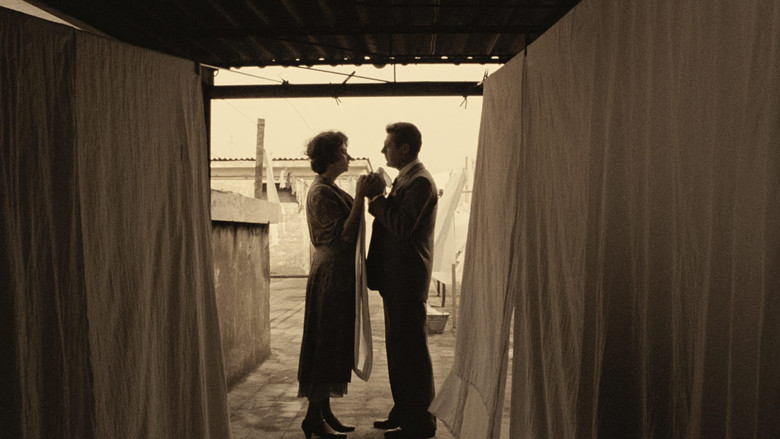
Gabriele says this to Antonietta after she confronts him about the caretaker's accusation that he is a "subversive." It is a pivotal moment where he begins to explain the true nature of his persecution to her.
Meaning
Translated as, "I don't think the tenant on the sixth floor is an anti-fascist; if anything, fascism is anti-tenant on the sixth floor!" This quote powerfully encapsulates Gabriele's situation. He isn't an active political dissident, but his very existence as a homosexual man is something the regime opposes, making him a victim by default. It re-frames political opposition from an active choice to a state of being when living under an oppressive ideology.
Piangere si può fare anche da soli, ma ridere bisogna essere in due.
Context
Gabriele says this over the phone to his partner, Marco, trying to lift his spirits and his own. It reveals his deep-seated loneliness and his belief in the power of shared experience.
Meaning
"Crying, you can do alone, but to laugh, you have to be two." This line speaks to the film's central theme of human connection as a vital necessity. It underscores the idea that shared joy and laughter are acts of solidarity and resistance against the isolation and misery imposed by their environment.
L'ordine è la virtù dei mediocri.
Context
Gabriele remarks this to Antonietta in his apartment, which is filled with books and art, contrasting his intellectual world with the rigid, prescribed order of Antonietta's life and the fascist state outside.
Meaning
"Order is the virtue of the mediocre." This is a direct jab at the fascist obsession with order, discipline, and conformity. Gabriele equates this rigid societal structure with a lack of imagination, depth, and true humanity, championing instead the complexities and 'disorder' of individual life.
Explore More About This Movie
Dive deeper into specific aspects of the movie with our detailed analysis pages