A Special Day
Una giornata particolare
"A special film about two special people."
Overview
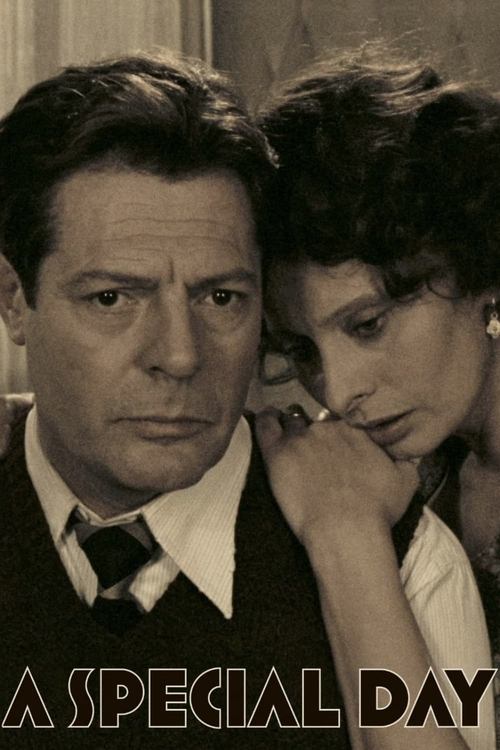
Set in Rome on May 6, 1938, the day of Adolf Hitler's state visit to Benito Mussolini, "A Special Day" chronicles the brief, transformative encounter between two people left behind in an otherwise empty apartment complex. Antonietta (Sophia Loren) is a weary, unappreciated housewife and mother of six, devoted to the Fascist regime. While her husband and children attend the massive parade, her pet myna bird escapes and leads her to the apartment of her neighbor, Gabriele (Marcello Mastroianni).
Gabriele is a former radio announcer, a cultivated and sensitive man who has been dismissed from his job and is awaiting deportation for his homosexuality, which the regime deems subversive. As the hours pass, these two lonely individuals, both ostracized and diminished by the society they live in—one by her prescribed gender role and the other by his sexual orientation—forge an unlikely and profound bond. They talk, dance, argue, and share their deepest vulnerabilities, creating a small, private space of understanding and empathy while the bombastic sounds of the Fascist parade echo from the radio outside.
Core Meaning
"A Special Day" is a powerful critique of fascism's impact on the individual. Director Ettore Scola explores how a totalitarian regime, obsessed with ideals of masculinity, conformity, and nationalism, crushes personal identity and isolates those who don't fit the mold. The film posits that true resistance and humanity are not found in grand political gestures but in small, personal acts of connection and empathy. It argues that by seeing and acknowledging the humanity in another person, especially someone deemed an 'outsider' by the state, one can awaken to their own oppression. The fleeting bond between Antonietta and Gabriele becomes a quiet, internal rebellion against the dehumanizing force of the regime.
Thematic DNA
Fascism and Conformity
The film is set against the backdrop of Hitler's visit to Mussolini's Rome, a peak moment of fascist spectacle. The omnipresent radio broadcasts of the parade serve as an auditory symbol of the regime's pervasive propaganda. Antonietta begins the day as a loyal follower, keeping a scrapbook of Mussolini. Gabriele, as a homosexual man, is a direct victim of the regime's rigid and violent ideals of masculinity. Their shared day reveals how both are oppressed by the same ideology that demands absolute conformity, whether in the domestic sphere or in personal identity.
Gender Roles and Patriarchy
Antonietta embodies the fascist ideal of the 'donna madre' (mother-woman), her worth measured by the six children she has produced for the state. Her life is an endless cycle of domestic chores, and she is largely ignored and disrespected by her brutish, patriarchal husband Emanuele. The film meticulously details her drudgery, contrasting it with the brief freedom she experiences with Gabriele. Her awakening is not just political but also a personal realization of her subjugation as a woman in a hyper-masculine society.
Loneliness and Human Connection
The core of the film is the unexpected connection between two profoundly lonely people. The empty apartment building symbolizes their isolation. Antonietta is emotionally abandoned by her family, while Gabriele is ostracized by society for his sexuality and is contemplating suicide. Their encounter, born of chance, allows them to find solace and understanding in each other, proving that empathy can transcend societal and political divides. Their shared laughter and vulnerability are a testament to the human need for connection as an antidote to oppressive ideologies.
Inner Resistance and Awakening
While the film contains no overt acts of political rebellion, it champions a form of "inner resistance". Antonietta's perspective is profoundly changed by her day with Gabriele. She begins to question the ideology she had blindly accepted. Gabriele, in turn, is pulled back from the brink of suicide by their interaction. The film's poignant ending suggests that while their circumstances haven't changed outwardly, a seed of critical consciousness has been planted. Antonietta beginning to read the book Gabriele gave her is a symbol of this newfound desire for a world beyond her prescribed role.
Character Analysis
Antonietta Taberi
Sophia Loren
Motivation
Initially motivated by duty to her family and a deeply ingrained belief in the fascist state, her primary motivation becomes a search for human connection and understanding as she confronts her deep-seated loneliness.
Character Arc
Antonietta begins the film as a downtrodden, uneducated housewife who has fully internalized the fascist regime's ideology and her subservient role within it. Her encounter with Gabriele challenges her worldview. Through their conversations, she begins to see the cracks in the patriarchal and political system she once revered. By the end of the day, she has undergone a profound internal transformation, moving from a state of "false consciousness" to a nascent awareness of her own oppression and a desire for something more, symbolized by her opening the book Gabriele gave her.
Gabriele
Marcello Mastroianni
Motivation
His motivation shifts from despair and a desire to end his suffering to a need to connect, to be seen as a human being, and to share a moment of solidarity with another lonely soul before he is taken away.
Character Arc
Gabriele starts the day on the verge of suicide, having been fired from his job and facing imminent deportation to Sardinia because he is gay. He is melancholic, intelligent, and deeply wounded by a society that has rejected him. His chance meeting with Antonietta pulls him back from despair. He finds in her an unexpected confidante and a moment of genuine human warmth. While his external fate is sealed, the encounter reaffirms the value of connection and allows him to face his future with a renewed, albeit tragic, sense of dignity.
Emanuele Taberi
John Vernon
Motivation
His motivations are rooted in his adherence to the fascist ideology: demonstrating loyalty to the state, maintaining absolute authority in his home, and upholding the hyper-masculine ideals of the regime.
Character Arc
Emanuele is a static character who represents the brutish, unthinking embodiment of fascist patriarchy. He treats his wife as a domestic servant, shows no affection, and is a fervent supporter of Mussolini. He exists to establish the oppressive domestic environment from which Antonietta seeks escape. He does not change throughout the film, returning from the parade just as arrogant and domineering as when he left.
Symbols & Motifs
The Escaped Myna Bird (Rosamunda)
The bird, Rosamunda, symbolizes Antonietta's own caged existence and her unconscious desire for freedom. It is the bird's flight that initiates the plot, literally leading Antonietta out of her domestic cage and into Gabriele's world, a space of potential liberation and new understanding.
At the beginning of the film, Antonietta's myna bird escapes from its cage and flies to Gabriele's window. Antonietta's pursuit of the bird is the reason she knocks on his door, sparking their encounter.
The Radio Broadcast
The radio is a constant, intrusive presence, symbolizing the voice of the fascist state and its pervasive propaganda. Its bombastic commentary on the parade contrasts sharply with the quiet, intimate, and human drama unfolding between Antonietta and Gabriele, highlighting the disconnect between state-sponsored spectacle and individual reality.
Throughout the day, the caretaker's radio blares the live broadcast of the Hitler-Mussolini parade. The sound fills the supposedly empty building, serving as a constant reminder of the political reality from which the two protagonists are temporarily hiding.
The Empty Apartment Building
The vast, deserted apartment complex (the Palazzo Federici) symbolizes the emotional emptiness and isolation fostered by the fascist regime, despite its emphasis on collective identity. It becomes a stage where two marginalized individuals, hidden from the public gaze, can explore a forbidden connection.
After Antonietta's family and all the neighbors leave for the parade, the film emphasizes the building's emptiness with long, quiet shots. This physical void mirrors the inner loneliness of the two remaining residents.
The Book (The Three Musketeers)
The book Gabriele gives Antonietta, Dumas' "The Three Musketeers", represents culture, knowledge, and a world of imagination and adventure beyond her dreary domestic life. Her decision to start reading it at the end signifies the beginning of her intellectual and personal awakening, a quiet act of defiance against her prescribed role.
During their time together, Gabriele gives Antonietta the book. In the final scene, after her husband is in bed, she turns on a light and begins to read it, suggesting her life will not be quite the same.
Memorable Quotes
Io non credo che l'inquilino del sesto piano sia antifascista, semmai il fascismo è anti-inquilino del sesto piano!
— Gabriele
Context:
Gabriele says this to Antonietta after she confronts him about the caretaker's accusation that he is a "subversive." It is a pivotal moment where he begins to explain the true nature of his persecution to her.
Meaning:
Translated as, "I don't think the tenant on the sixth floor is an anti-fascist; if anything, fascism is anti-tenant on the sixth floor!" This quote powerfully encapsulates Gabriele's situation. He isn't an active political dissident, but his very existence as a homosexual man is something the regime opposes, making him a victim by default. It re-frames political opposition from an active choice to a state of being when living under an oppressive ideology.
Piangere si può fare anche da soli, ma ridere bisogna essere in due.
— Gabriele
Context:
Gabriele says this over the phone to his partner, Marco, trying to lift his spirits and his own. It reveals his deep-seated loneliness and his belief in the power of shared experience.
Meaning:
"Crying, you can do alone, but to laugh, you have to be two." This line speaks to the film's central theme of human connection as a vital necessity. It underscores the idea that shared joy and laughter are acts of solidarity and resistance against the isolation and misery imposed by their environment.
L'ordine è la virtù dei mediocri.
— Gabriele
Context:
Gabriele remarks this to Antonietta in his apartment, which is filled with books and art, contrasting his intellectual world with the rigid, prescribed order of Antonietta's life and the fascist state outside.
Meaning:
"Order is the virtue of the mediocre." This is a direct jab at the fascist obsession with order, discipline, and conformity. Gabriele equates this rigid societal structure with a lack of imagination, depth, and true humanity, championing instead the complexities and 'disorder' of individual life.
Philosophical Questions
What is the nature of resistance under a totalitarian regime?
The film explores the idea that resistance is not always overt or violent. It suggests that the most profound acts of defiance can be small, personal, and internal. The simple act of two marginalized people forming a bond of empathy and understanding is presented as a form of rebellion. By finding solidarity, Antonietta and Gabriele reclaim the individuality and humanity that the fascist state seeks to erase. The film asks whether a change in consciousness is, in itself, a powerful form of resistance.
How does ideology shape personal identity and relationships?
"A Special Day" meticulously demonstrates how a pervasive political ideology infiltrates the most intimate aspects of life. Antonietta's identity as a woman, wife, and mother is entirely defined by fascist doctrine. Gabriele's identity is criminalized by it. The film examines how their pre-conceived notions, shaped by propaganda, initially create a barrier between them. It is only when they step outside these prescribed identities and see each other as lonely, vulnerable individuals that a genuine connection can form, questioning whether any authentic relationship is possible without challenging the dominant ideology.
Alternative Interpretations
While the film is widely seen as a critique of fascism, some interpretations focus more intensely on the sexual politics of the central encounter. The lovemaking scene between Antonietta and Gabriele has been a point of discussion. Some critics view it as a moment of profound human solidarity, a desperate gesture of shared humanity that transcends sexual orientation. In this reading, the act is not about sexual conversion but about a moment of tenderness and connection in the face of death and despair.
An alternative, more critical interpretation suggests the scene is somewhat contrived, falling back on melodramatic clichés where Gabriele's homosexuality is conveniently overcome by Antonietta's feminine allure. This reading argues that the moment undermines the film's otherwise subversive themes by suggesting that Gabriele is "not gay enough to resist" a beautiful woman, a perspective that can be seen as problematic. However, Gabriele's own words after the act—"It doesn't change anything"—are often cited to counter this, reaffirming his identity and framing the encounter as a unique, situational act of compassion rather than a change in his fundamental nature.
Cultural Impact
"A Special Day" is regarded as one of the most important Italian films to grapple with the country's fascist past. Released in 1977, during a period of significant political turmoil in Italy (the "Years of Lead"), the film offered a nuanced and humanistic critique of fascism at a time when its legacy was still being debated. Scola chose not to depict the grand battles or leaders of the era, but instead focused on the quiet, personal suffering of ordinary people, a perspective that resonated deeply with critics and audiences.
The film was a critical success, earning a Golden Globe for Best Foreign Language Film and two Academy Award nominations (Best Foreign Language Film and Best Actor for Mastroianni). It was praised for its brave and sensitive treatment of homosexuality, a topic still rarely explored with such empathy in cinema at the time. By casting superstars Loren and Mastroianni against type, Scola made a powerful statement and drew a wider audience to a story about marginalized people. The film's visual style, with its desaturated colors, has been influential, and its focus on the 'micro' story within the 'macro' historical event provided a powerful template for subsequent historical dramas.
Audience Reception
Audiences have generally praised "A Special Day" for its powerful and moving performances by Sophia Loren and Marcello Mastroianni, who are often cited as being at the peak of their dramatic abilities. Viewers frequently comment on the film's poignant atmosphere, its subtle political commentary, and its heartbreakingly tender story. The emotional core of the relationship between Antonietta and Gabriele is what resonates most strongly with audiences. The main point of criticism, raised by a minority of viewers and critics, centers on the believability of the sexual encounter between the two main characters, with some finding it forced or inconsistent with Gabriele's character. However, most viewers interpret the scene as a desperate act of human connection rather than a simple romantic cliché. The overall verdict is that it is a profound, beautifully crafted, and unforgettable masterpiece of Italian cinema.
Interesting Facts
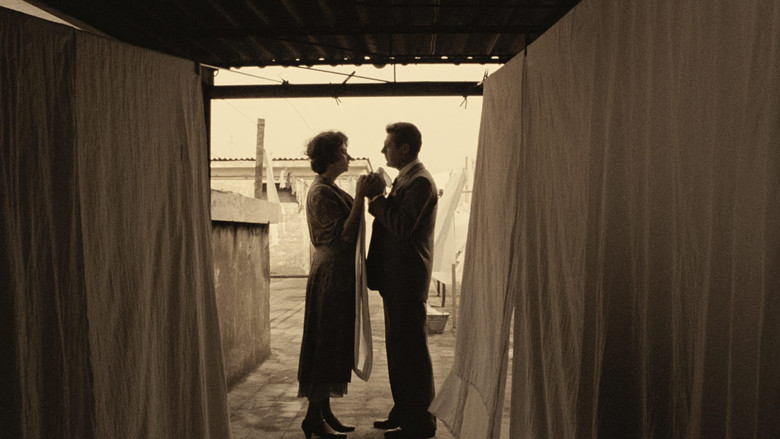
- The film was shot with a muted, sepia-toned color palette to evoke the look of 1930s newsreels and photographs, and to reflect the bleakness of the characters' lives.
- The role of Maria Luisa, one of Antonietta's daughters, was played by Alessandra Mussolini, the real-life granddaughter of Benito Mussolini.
- Director Ettore Scola and co-writer Ruggero Maccari were inspired to write the screenplay after learning about the arrest and internal exile of homosexuals during Italy's fascist era.
- The iconic lead actors, Sophia Loren and Marcello Mastroianni, were deliberately cast against their glamorous types. Loren played a dowdy housewife and Mastroianni, famous as the 'Latin lover', played a sensitive, persecuted gay man.
- The film opens with six minutes of actual newsreel footage of Hitler's 1938 visit to Rome, grounding the fictional story in historical reality.
- The film was a co-production between Italy and Canada, after Scola struggled to find sufficient funding from Italian producers.
- The main location, the apartment complex, is a real building in Rome known as Palazzo Federici, which was constructed during the fascist era.
⚠️ Spoiler Analysis
Click to reveal detailed analysis with spoilers
Frequently Asked Questions
Explore More About This Movie
Dive deeper into specific aspects of the movie with our detailed analysis pages
Comments (0)
No comments yet. Be the first to share your thoughts!