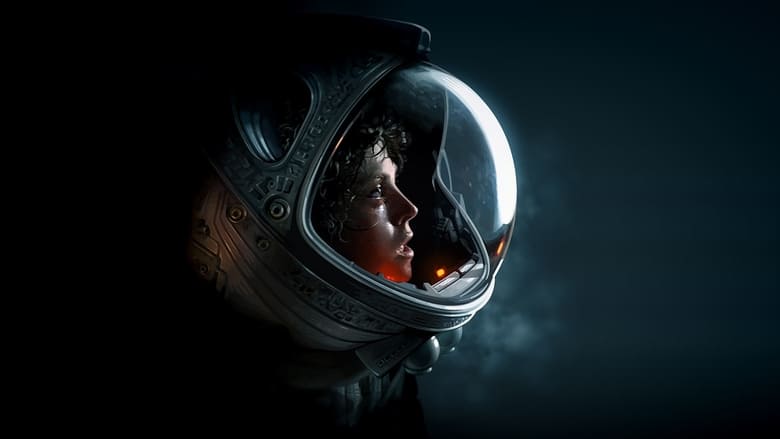
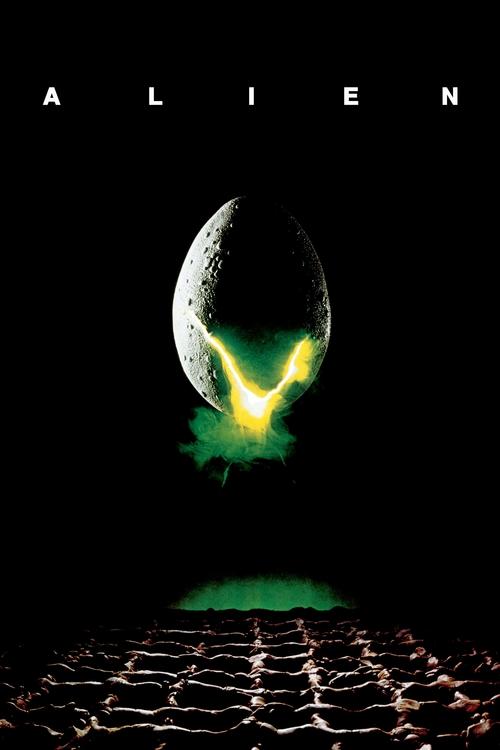
"In space no one can hear you scream."
Alien - Symbolism & Philosophy
Symbols & Motifs
The Xenomorph
The alien symbolizes a multitude of fears. On one level, it represents the ultimate predator and the terror of the unknown. More deeply, its design and life cycle are heavily laden with Freudian and sexual symbolism, embodying fears of rape, bodily violation, and a monstrous form of reproduction. Ash calls it the "perfect organism," admiring its purity as a survivor unburdened by morality, making it a symbol of primal, amoral nature.
The Xenomorph is the central antagonist. Its life cycle drives the plot: the facehugger's oral impregnation of Kane, the violent 'birth' of the chestburster, and the fully-grown creature's hunt through the Nostromo. Its biomechanical appearance, acidic blood, and phallic-shaped head are ever-present reminders of its horrific nature.
MU-TH-UR 6000 ("Mother")
The ship's computer, "Mother," is a deeply ironic symbol. Instead of being a nurturing, protective force as its name implies, it represents the cold, impersonal, and ultimately treacherous nature of the corporation. Mother prioritizes corporate directives over the well-being of its human "children," the crew. It symbolizes the dangerous fusion of technology and corporate influence, where artificial intelligence serves profit rather than humanity.
The crew interacts with Mother throughout the film, initially relying on it for information and guidance. The turning point comes when Ripley accesses Mother's secret interface and discovers Special Order 937, revealing the computer's—and the company's—true, malevolent purpose.
Ash (The Android)
Ash symbolizes the insidious nature of corporate power and the potential amorality of artificial intelligence. He is a literal corporate tool, a 'company man' whose loyalty is to his programming, not his crewmates. His admiration for the alien highlights a non-human perspective that values ruthless survival over human morality. He represents the fear of what happens when technology, devoid of empathy, is given control over human lives.
Ash serves as the Science Officer, but his actions are consistently suspicious, such as breaking quarantine to let Kane back on board. His true nature is revealed when he attacks Ripley to stop her from uncovering the company's plan. Parker's exclamation, "It's a robot! Ash is a goddamn robot!" is a pivotal moment of discovery.
Jones the Cat
Jonesy, the ship's cat, functions as a symbol of both innocence and primal instinct. As a non-human animal, he is unburdened by the complex fears and corporate machinations that plague the crew. His survival highlights Ripley's humanity and her desire to protect life, even in its simplest form. The cat often serves as a classic horror trope, creating false scares and heightening tension, but also represents a natural, earthly presence in the sterile, technological environment of the ship.
Jonesy appears throughout the film. Brett's search for the cat leads to his death at the hands of the alien. Ripley's determination to save Jonesy during the chaotic self-destruct sequence underscores her character's compassionate and resilient nature, making sure to rescue him before escaping on the shuttle.
Philosophical Questions
What is the ethical responsibility of a corporation to its employees?
"Alien" explores this question by presenting the Weyland-Yutani corporation as an entity that has completely abandoned ethical responsibility in favor of profit. The infamous Special Order 937, which designates the crew as "expendable," is the ultimate expression of corporate dehumanization. The film serves as a cautionary tale about unchecked capitalism, forcing the audience to consider where the line should be drawn between commercial interests and human life. Ash, the android, represents the perfect corporate tool—an agent that executes unethical orders without the hindrance of a conscience.
What defines humanity in the face of the 'Other'?
The film presents three forms of consciousness: human, artificial (Ash), and alien (the Xenomorph). By contrasting them, it questions what truly constitutes humanity. The crew exhibits flawed but recognizable human traits: fear, greed, bravery, and compassion. Ash, the android, is intelligent but lacks empathy, admiring the alien for its lack of "delusions of morality." The alien itself is pure, primal instinct and hostility. Ripley's survival is ultimately down to her uniquely human qualities: her intelligence, resilience, and her empathy (as shown by her rescue of Jones the cat), suggesting that these traits, not ruthless purity, are what truly matter.
How does humanity confront the truly unknown and incomprehensible?
The Xenomorph is a being that defies the crew's understanding. It is biologically, morphologically, and motivationally alien. The film explores how humans react to such a threat. Some, like Kane, react with a fatal curiosity. Others, like Dallas, attempt to confront it with familiar but ineffective heroics. Ash reacts with cold, scientific admiration. Ripley is the only one who adapts, using her intellect and understanding of her environment to defeat a creature that she cannot overpower physically. The film suggests that survival against the incomprehensible requires not dominance, but adaptability and resourcefulness.
Core Meaning
The core meaning of "Alien" is a powerful critique of corporate capitalism and its dehumanizing effects. The film posits that the true monster is not just the deadly xenomorph, but the faceless Weyland-Yutani corporation that knowingly sacrifices the crew for profit. This is explicitly revealed through "Special Order 937," which prioritizes the return of the alien organism over the lives of the crew, deeming them "expendable." The film uses the sci-fi horror genre to explore themes of labor exploitation and the moral void that can exist in the pursuit of corporate gain, suggesting that humanity's own greed and calculated indifference can be as terrifying as any extraterrestrial threat.