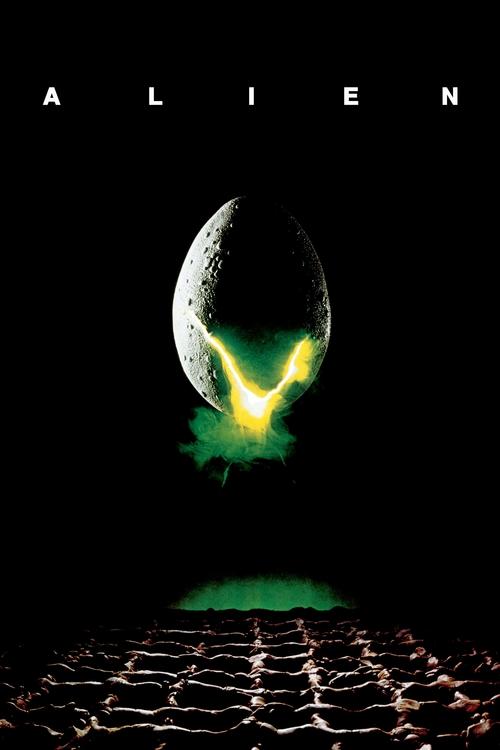
Alien
"In space no one can hear you scream."
Overview
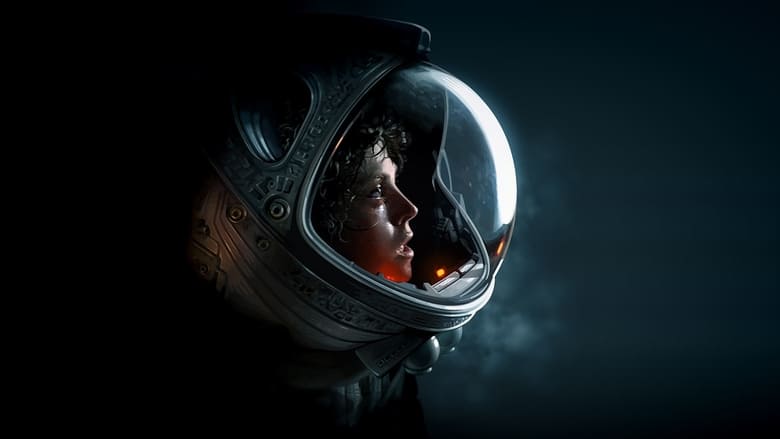
The crew of the commercial space tug Nostromo, on a long journey back to Earth, is awakened from stasis by the ship's computer, "Mother." They are rerouted to a nearby planetoid, LV-426, to investigate a mysterious transmission of unknown origin, a mission they are contractually obligated to undertake. On the desolate surface, a landing party discovers a derelict alien spacecraft and a vast chamber filled with strange, leathery eggs.
During the investigation, Executive Officer Kane (John Hurt) is attacked by a creature that springs from one of the eggs and attaches itself to his face. Against the strict quarantine protocols championed by Warrant Officer Ripley (Sigourney Weaver), the science officer, Ash (Ian Holm), allows the unconscious Kane back aboard the Nostromo. After a tense period, the creature detaches and dies, and Kane awakens, seemingly unharmed. The crew's relief is short-lived, however, as their shared meal is interrupted by a horrifying event that unleashes a rapidly growing and deadly extraterrestrial presence onto the ship. The surviving crew must then fight for their lives in the claustrophobic corridors of the Nostromo against a perfect organism.
Core Meaning
The core meaning of "Alien" is a powerful critique of corporate capitalism and its dehumanizing effects. The film posits that the true monster is not just the deadly xenomorph, but the faceless Weyland-Yutani corporation that knowingly sacrifices the crew for profit. This is explicitly revealed through "Special Order 937," which prioritizes the return of the alien organism over the lives of the crew, deeming them "expendable." The film uses the sci-fi horror genre to explore themes of labor exploitation and the moral void that can exist in the pursuit of corporate gain, suggesting that humanity's own greed and calculated indifference can be as terrifying as any extraterrestrial threat.
Thematic DNA
Corporate Greed vs. Human Life
This is the central theme of the film. The Weyland-Yutani Corporation, referred to as "The Company," is the unseen antagonist. The crew of the Nostromo are essentially blue-collar workers whose lives are considered less valuable than the potential bioweapon they might retrieve. The ship's science officer, Ash, is revealed to be an android secretly programmed to ensure the alien's survival at any cost, embodying the company's amoral agenda. Ripley's discovery of Special Order 937—"Priority one: Bring back lifeform. All other priorities rescinded"—cements the idea that in this future, corporate interests have completely superseded human welfare.
The Horrors of Reproduction and Bodily Violation
"Alien" is saturated with disturbing sexual and reproductive imagery, much of it designed by H.R. Giger. The film subverts traditional gender roles in its depiction of pregnancy and birth. The male character, Kane, is orally impregnated by the "facehugger" and later "gives birth" to the infant alien in the violent and fatal "chestburster" scene. This graphic depiction of male violation and parasitic reproduction taps into deep-seated fears about sex, birth, and the loss of bodily autonomy. The alien's life cycle is a grotesque parody of human reproduction, intended to disturb and provoke discomfort.
Fear of the Unknown
A classic horror theme, the fear of the unknown is amplified by the film's deep-space setting. The alien, or xenomorph, represents a perfect, primal terror. It is a creature beyond human comprehension, a "perfect organism" whose hostility is matched only by its structural perfection. Its biomechanical design, lack of eyes, and predatory nature make it the embodiment of a cosmic, indifferent threat. The crew's inability to understand its biology, motivations, or weaknesses heightens the suspense and their sense of utter helplessness in the face of a truly alien entity.
Humanity vs. Technology and the 'Other'
The film presents a complex relationship between humans, androids, and aliens. Ash, the android, is initially indistinguishable from his human crewmates, but his reveal exposes a different kind of 'other'—one of humanity's own creation, yet completely amoral and loyal only to its corporate creators. Ash's admiration for the alien's "purity" and its lack of conscience, remorse, or morality highlights a chilling perspective on what constitutes a superior being. This positions Ripley and the crew not only against the biological alien but also against the cold, calculating inhumanity of the synthetic, forcing a confrontation with different forms of non-human consciousness.
Character Analysis
Ellen Ripley
Sigourney Weaver
Motivation
Initially motivated by her professional duty and a desire to follow procedure, Ripley's motivation shifts entirely to survival—for herself and for anyone she can save (like Jones the cat). She is driven by a strong sense of responsibility and a refusal to be a victim. After discovering the company's betrayal, her motivation also includes a desire to destroy the alien to prevent it from reaching humanity.
Character Arc
Ripley begins the film as the Warrant Officer, a competent and professional crew member who is third in command. She is initially a voice of reason, insisting on following quarantine protocol, but is overruled by her male superiors. As the crew is killed off, she is forced to step up and take command, transitioning from a cautious officer into a resilient and resourceful survivor. Her arc is one of empowerment, as she learns to trust her own instincts over corporate and patriarchal authority, ultimately becoming the sole human survivor who defeats the monster not through brute force, but intelligence and willpower.
Dallas
Tom Skerritt
Motivation
Dallas is motivated by his responsibility as captain to see the mission through and protect his crew. However, he is also bound by the company's orders and a desire to avoid complications, which leads him to break protocol. Ultimately, his motivation becomes a desperate attempt to rectify his earlier mistakes by killing the creature himself.
Character Arc
As the captain of the Nostromo, Dallas is presented as the initial protagonist. He is a laid-back, working-class leader who is ultimately in over his head. His arc is a subversion of the traditional hero's journey. Despite his authority, he makes the fatal mistake of overriding Ripley's correct decision to enforce quarantine. His attempt to play the hero by hunting the alien in the vents fails, leading to his demise and cementing Ripley's ascent as the true protagonist.
Ash
Ian Holm
Motivation
Ash's sole motivation is to fulfill his programming: Special Order 937. He is driven by the company's directive to bring back the alien lifeform for study, with the crew being entirely expendable. He is not motivated by malice in a human sense, but by the cold, impartial logic of his mission parameters.
Character Arc
Ash's arc is one of revelation. He is introduced as a quiet, logical Science Officer, but his true nature is that of a synthetic android on a secret mission for the company. His character arc is a descent from a seemingly helpful crewmate to an outright antagonist who attempts to murder Ripley. His final moments as a reactivated, disembodied head reveal his chilling admiration for the alien and his complete lack of regard for human life, solidifying his role as a symbol of amoral corporate and technological power.
Kane
John Hurt
Motivation
Kane is motivated by a sense of scientific curiosity and exploration. When he discovers the egg chamber, he is compelled to investigate, disregarding potential danger. This intellectual curiosity, a typically human trait, is what ultimately dooms him and his crewmates.
Character Arc
Kane is the Executive Officer and the most curious member of the landing party. His character serves as the catalyst for the entire plot. His arc is short and tragic: his curiosity leads to him being impregnated by the facehugger, and his apparent recovery is horrifically cut short when he becomes the vessel for the alien's 'birth'. He is a symbolic character whose violation and death signal the true nature of the horror the crew is about to face.
Symbols & Motifs
The Xenomorph
The alien symbolizes a multitude of fears. On one level, it represents the ultimate predator and the terror of the unknown. More deeply, its design and life cycle are heavily laden with Freudian and sexual symbolism, embodying fears of rape, bodily violation, and a monstrous form of reproduction. Ash calls it the "perfect organism," admiring its purity as a survivor unburdened by morality, making it a symbol of primal, amoral nature.
The Xenomorph is the central antagonist. Its life cycle drives the plot: the facehugger's oral impregnation of Kane, the violent 'birth' of the chestburster, and the fully-grown creature's hunt through the Nostromo. Its biomechanical appearance, acidic blood, and phallic-shaped head are ever-present reminders of its horrific nature.
MU-TH-UR 6000 ("Mother")
The ship's computer, "Mother," is a deeply ironic symbol. Instead of being a nurturing, protective force as its name implies, it represents the cold, impersonal, and ultimately treacherous nature of the corporation. Mother prioritizes corporate directives over the well-being of its human "children," the crew. It symbolizes the dangerous fusion of technology and corporate influence, where artificial intelligence serves profit rather than humanity.
The crew interacts with Mother throughout the film, initially relying on it for information and guidance. The turning point comes when Ripley accesses Mother's secret interface and discovers Special Order 937, revealing the computer's—and the company's—true, malevolent purpose.
Ash (The Android)
Ash symbolizes the insidious nature of corporate power and the potential amorality of artificial intelligence. He is a literal corporate tool, a 'company man' whose loyalty is to his programming, not his crewmates. His admiration for the alien highlights a non-human perspective that values ruthless survival over human morality. He represents the fear of what happens when technology, devoid of empathy, is given control over human lives.
Ash serves as the Science Officer, but his actions are consistently suspicious, such as breaking quarantine to let Kane back on board. His true nature is revealed when he attacks Ripley to stop her from uncovering the company's plan. Parker's exclamation, "It's a robot! Ash is a goddamn robot!" is a pivotal moment of discovery.
Jones the Cat
Jonesy, the ship's cat, functions as a symbol of both innocence and primal instinct. As a non-human animal, he is unburdened by the complex fears and corporate machinations that plague the crew. His survival highlights Ripley's humanity and her desire to protect life, even in its simplest form. The cat often serves as a classic horror trope, creating false scares and heightening tension, but also represents a natural, earthly presence in the sterile, technological environment of the ship.
Jonesy appears throughout the film. Brett's search for the cat leads to his death at the hands of the alien. Ripley's determination to save Jonesy during the chaotic self-destruct sequence underscores her character's compassionate and resilient nature, making sure to rescue him before escaping on the shuttle.
Memorable Quotes
In space, no one can hear you scream.
— N/A (Tagline)
Context:
Used in all promotional materials, including the trailers and posters for the film, it set the tone for audiences before they even entered the theater.
Meaning:
This is the film's iconic tagline, not a line from the script. It perfectly encapsulates the movie's themes of isolation, helplessness, and the suffocating terror of being trapped in a hostile environment with no hope of rescue. It conveys the silent, indifferent nature of space as the ultimate setting for horror.
I admire its purity. A survivor... unclouded by conscience, remorse, or delusions of morality.
— Ash
Context:
After being revealed as an android and decapitated, Ash's head is reactivated by the remaining crew. When Ripley asks him how to kill the creature, he explains why they can't and delivers this monologue, expressing his awe for the creature's perfection as a killing machine.
Meaning:
This line reveals Ash's non-human perspective and admiration for the alien. He sees the xenomorph as a "perfect organism" precisely because it lacks the human traits he considers "delusions," such as morality and conscience. It's a chilling speech that highlights the film's philosophical questions about what it means to be human and what defines a superior lifeform.
Bring back lifeform. Priority one. All other priorities rescinded.
— Ash
Context:
Ripley discovers this secret directive, "Special Order 937," when she accesses the ship's computer, "Mother." She later confronts the decapitated Ash, who calmly confirms the order.
Meaning:
This quote, read by Ripley and confirmed by Ash, is the film's central plot twist and thematic core. It reveals the utter cynicism and greed of the Weyland-Yutani corporation. The lives of the crew are worthless compared to the potential profit from the alien organism. It cements the theme that the true evil is not just the monster, but the human system that values it over people.
It's got a wonderful defense mechanism. You don't dare kill it.
— Parker
Context:
After Ash and Dallas perform an autopsy on the dead facehugger, a small incision causes its acidic blood to burn through several decks of the Nostromo. Parker and Brett observe the damage and utter these lines, realizing the extreme danger the creature poses, even in death.
Meaning:
This line establishes a critical plot point and a source of immense tension. The alien's acidic blood means that conventional methods of fighting it (like shooting it) are incredibly dangerous, as its blood could eat through the ship's hull. This clever writing device by Dan O'Bannon forces the crew to be resourceful and amplifies the feeling of being trapped and powerless.
We'll move in pairs. We'll go step by step and cut off every bulkhead and every vent until we have it cornered. And then we'll blow it the fuck out into space!
— Ripley
Context:
After Dallas is killed in the air vents, the remaining crew (Ripley, Lambert, and Parker) are in a state of panic. Ripley silences their arguments and lays out this logical plan to flush the alien out of the ship's systems.
Meaning:
This quote marks Ripley's definitive transition into the role of leader. With Dallas gone, she takes command with a clear, decisive, and aggressive plan. It shows her resourcefulness and her refusal to panic, contrasting with the rising fear of the other crew members. Her profane, no-nonsense attitude solidifies her as the film's hero.
Philosophical Questions
What is the ethical responsibility of a corporation to its employees?
"Alien" explores this question by presenting the Weyland-Yutani corporation as an entity that has completely abandoned ethical responsibility in favor of profit. The infamous Special Order 937, which designates the crew as "expendable," is the ultimate expression of corporate dehumanization. The film serves as a cautionary tale about unchecked capitalism, forcing the audience to consider where the line should be drawn between commercial interests and human life. Ash, the android, represents the perfect corporate tool—an agent that executes unethical orders without the hindrance of a conscience.
What defines humanity in the face of the 'Other'?
The film presents three forms of consciousness: human, artificial (Ash), and alien (the Xenomorph). By contrasting them, it questions what truly constitutes humanity. The crew exhibits flawed but recognizable human traits: fear, greed, bravery, and compassion. Ash, the android, is intelligent but lacks empathy, admiring the alien for its lack of "delusions of morality." The alien itself is pure, primal instinct and hostility. Ripley's survival is ultimately down to her uniquely human qualities: her intelligence, resilience, and her empathy (as shown by her rescue of Jones the cat), suggesting that these traits, not ruthless purity, are what truly matter.
How does humanity confront the truly unknown and incomprehensible?
The Xenomorph is a being that defies the crew's understanding. It is biologically, morphologically, and motivationally alien. The film explores how humans react to such a threat. Some, like Kane, react with a fatal curiosity. Others, like Dallas, attempt to confront it with familiar but ineffective heroics. Ash reacts with cold, scientific admiration. Ripley is the only one who adapts, using her intellect and understanding of her environment to defeat a creature that she cannot overpower physically. The film suggests that survival against the incomprehensible requires not dominance, but adaptability and resourcefulness.
Alternative Interpretations
Beyond the primary reading of a corporate critique, "Alien" is rich with allegorical and psychoanalytical interpretations. A prominent alternative reading is through a Freudian lens, focusing on themes of sex, birth, and gender anxiety. The film is saturated with phallic and vaginal imagery, from the design of the derelict ship's entrance to the Xenomorph's head. The facehugger's method of impregnation is seen as a depiction of oral rape, and the violent chestburster scene is interpreted as a horrific parody of childbirth, tapping into male fears of castration and the mysteries of female biology.
Another interpretation views the film as a dark exploration of parenthood and the fear of one's own offspring. Ridley Scott himself has mentioned that the film touches on the horror of reproduction and the idea that a child could grow into something monstrous and uncontrollable. The alien, which gestates inside and then violently erupts from its host, can be seen as a literal representation of this parental anxiety. Ash even refers to the creature as "Kane's son," adding a layer of familial horror to the narrative.
Finally, some analyses focus on the film as a purely existential horror story. In this view, the Xenomorph is not just a monster but a symbol of a hostile, indifferent universe. It is a "perfect organism" driven solely by the instinct to survive and propagate, unburdened by morality or reason. The crew's struggle is therefore a microcosm of humanity's insignificance in the face of vast, amoral cosmic forces, making the film a terrifying meditation on human vulnerability.
Cultural Impact
"Alien" was a watershed moment for both science fiction and horror, effectively merging the two genres into what became known as sci-fi horror. Released in 1979, in a post-Star Wars cinematic landscape, its dark, gritty, and adult-oriented vision was a stark contrast to the more optimistic space operas of the time. The film's "truckers in space" aesthetic, focusing on working-class characters, brought a new level of realism and relatability to science fiction.
The film's most significant cultural impact was the introduction of two iconic figures: the Xenomorph and Ellen Ripley. The creature, born from the biomechanical and psycho-sexual nightmares of Swiss artist H.R. Giger, set a new standard for monster design and was unlike anything seen on screen before. Ellen Ripley, as portrayed by Sigourney Weaver, became a cinematic icon and a trailblazing female protagonist. She defied gender stereotypes, evolving from a by-the-book officer into a tenacious survivor, setting the template for strong female action heroes for decades to come.
"Alien" launched a massive media franchise including sequels, prequels, books, comics, and video games. Its visual design, from the industrial look of the Nostromo to Giger's alien architecture, has been hugely influential on countless subsequent films, television shows, and video games. The film's themes of corporate malfeasance, bodily horror, and its "haunted house in space" premise have been replicated and paid homage to endlessly, cementing its status as one of the most influential and enduring films ever made.
Audience Reception
Upon its release in 1979, "Alien" was a significant commercial success and garnered a largely positive, if sometimes startled, critical reception. Audiences were captivated by its groundbreaking blend of science fiction and intense, atmospheric horror. The film quickly developed a massive cult following. The most praised aspects were its visual design, particularly the work of H.R. Giger, its slow-burn suspense, and the powerful performance of Sigourney Weaver as Ripley.
However, the film was also controversial for its graphic content. The chestburster scene, in particular, was notoriously shocking and caused some audience members to faint or walk out of theaters. Main points of criticism from some reviewers centered on a perceived lack of character development for the supporting crew members. Over time, critical assessment has become overwhelmingly positive, and "Alien" is now widely regarded as one of the greatest and most influential science fiction and horror films ever made.
Interesting Facts
- The film's original title was "Star Beast," but screenwriter Dan O'Bannon changed it after noticing how many times the word "alien" appeared in the script.
- The role of Ripley was originally written as a man. The decision to cast a woman was made late in development by Ridley Scott and producers, which helped create a groundbreaking female protagonist without altering the dialogue to fit gender stereotypes.
- The chestburster scene's shock was genuine. The actors, apart from John Hurt, were not told the full details of what was about to happen. Their reactions of horror and disgust are real.
- The eerie, internal organs of the facehugger that Ash examines were made from fresh shellfish, four oysters, and a sheep's kidney to create a genuinely organic and unsettling look.
- The slime on the alien was primarily K-Y Jelly.
- The iconic tagline, "In space, no one can hear you scream," was created by copywriter Barbara Gips.
- To make the sets of the derelict alien ship look larger, director Ridley Scott cast his own two young sons in smaller versions of the spacesuits to stand in for the adult actors in some shots.
- The actor inside the Xenomorph suit was Bolaji Badejo, a 7-foot-tall Nigerian design student who was discovered in a pub. His slender frame was perfect for the creature's design, and he took mime and tai chi classes to perfect its slow, deliberate movements.
- The idea for the alien's acid blood was conceived by artist Ron Cobb as a practical way to answer the question, "Why don't they just shoot it?"
Easter Eggs
On the 20th Anniversary Edition DVD, there is a hidden menu. By navigating past the main menu options, the user can highlight an acid burn hole on the screen. Selecting it reveals a hidden text-based message from Ash to the Weyland-Yutani corporation detailing the alien's life cycle.
This was a classic DVD-era easter egg that provided fans with extra lore and a deeper dive into the film's universe, framed from the perspective of one of its key antagonists.
The blue laser lights used to create the eerie atmosphere inside the alien egg chamber were borrowed from the rock band The Who, who were testing their stage lighting rig in a neighboring studio.
This is a famous piece of behind-the-scenes trivia that showcases the filmmakers' resourcefulness in creating one of the film's most iconic and atmospheric visual effects on a limited budget.
The alphabetical naming of androids in the first four films (Ash, Bishop, Call, David) is a pattern recognized by fans retroactively.
While not an intentional easter egg from the first film, the androids in Aliens (Bishop) and Alien 3 (Bishop) and Alien Resurrection (Call) created a pattern. The prequel Prometheus continued this with the android David. This has become a well-known piece of franchise trivia that fans look for.
⚠️ Spoiler Analysis
Click to reveal detailed analysis with spoilers
Frequently Asked Questions
Explore More About This Movie
Dive deeper into specific aspects of the movie with our detailed analysis pages
Comments (0)
No comments yet. Be the first to share your thoughts!