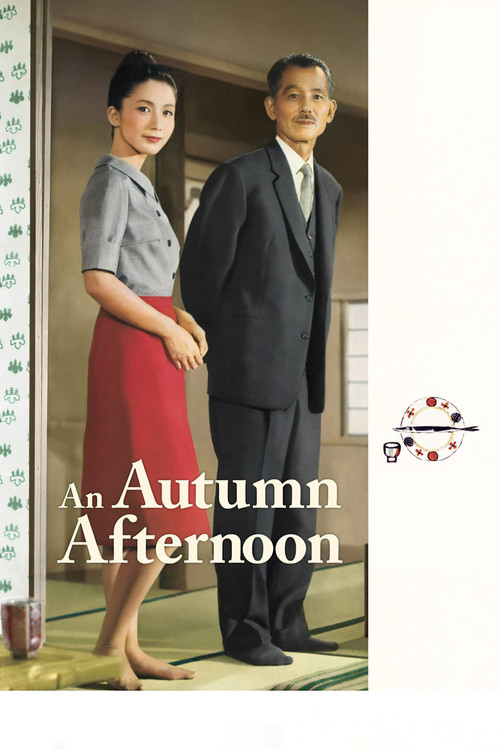
The central turn in "An Autumn Afternoon" is not a dramatic twist but a slow, inevitable progression. Hirayama, initially content, is spurred into action by witnessing the lonely regret of his old teacher, Sakuma, whose unmarried daughter sacrificed her own life to care for him. Haunted by this vision of the future, Hirayama resolves to marry Michiko off. He first investigates whether Michiko is fond of her brother's colleague, Miura, only to discover Miura is already engaged. Michiko's quiet, tearful reaction upon hearing the news confirms her hidden feelings, making her subsequent agreement to an arranged marriage all the more heartbreaking.
Ozu famously uses an ellipsis, skipping over the matchmaking and wedding ceremony entirely. We cut from Michiko agreeing to meet a suitor to her being dressed in her traditional bridal attire. This technique focuses the emotional weight not on the event, but on its aftermath. The film culminates in Hirayama returning to a silent, empty home after the wedding. Drunk and alone, he slumps in his kitchen and mutters, "Alone, eh?". The ending reveals the film's core tragedy: in performing his ultimate act of fatherly love, Hirayama has guaranteed his own desolation. The "happy ending" of a wedding is, for him, the beginning of a profound and irreversible loneliness.