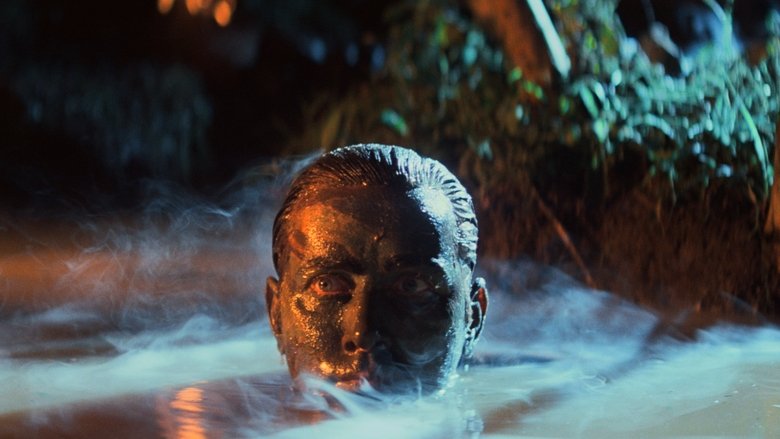
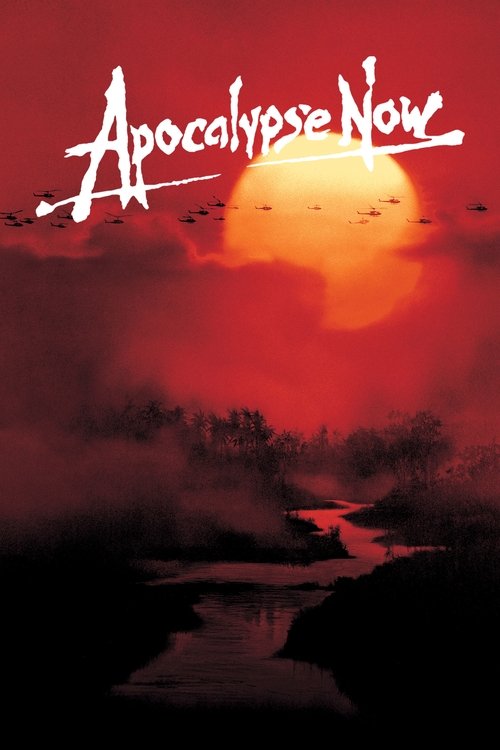
"This is the end..."
Director: Francis Ford Coppola
Cast: Martin Sheen, Marlon Brando, Frederic Forrest, Albert Hall, Laurence Fishburne
Apocalypse Now — Movie Quotes
Memorable Quotes
I love the smell of napalm in the morning.
Context
Spoken on a beach after the Air Cavalry, under his command, has just laid waste to a Viet Cong outpost. The purpose of the attack was primarily to clear the area so that his men, particularly the famous surfer Lance, could enjoy the waves. The line is delivered matter-of-factly as explosions continue in the background.
Meaning
This iconic line encapsulates the character of Kilgore and the film's theme of the madness of war. It's delivered with a casual, almost cheerful tone after a devastating helicopter attack on a Vietnamese village. The quote chillingly illustrates how war has warped his mentality, allowing him to find aesthetic pleasure in the scent of horrific destruction, which he equates with 'victory.' It highlights the surreal and detached way in which some participants experienced the conflict.
The horror... the horror.
Context
After Willard has attacked him with a machete in his chamber, Kurtz falls to the ground and utters these two words. The scene is intercut with the ritual sacrifice of a water buffalo outside. The words are repeated in voiceover by Willard as his boat sails away from the compound at the end of the film.
Meaning
These are Kurtz's final words, whispered as he lies dying. The quote is a direct reference to Joseph Conrad's Heart of Darkness. Its meaning is ambiguous and profound. It can be interpreted as Kurtz's final judgment on his own actions, the nature of war, the darkness inherent in the human soul, or the totality of his experiences. It is the ultimate expression of a man who has journeyed to the absolute extremity of human experience and found only an abyss.
Charlie don't surf!
Context
Kilgore shouts this line to his men on the beach to motivate them to clear the area of Viet Cong soldiers. He is frustrated that the enemy's presence is preventing Lance Johnson from surfing the excellent waves at the mouth of the Nung River.
Meaning
A succinct and arrogant dismissal of the enemy, used as a justification for taking their beach. The line exposes the ethnocentric and dehumanizing attitude of the American forces. It reduces the complex conflict to a simple, almost comical clash of cultures, where the enemy is deemed unworthy of the territory simply because they don't share American leisure pursuits. It's a stark example of the absurdity and arrogance that permeates the war effort as depicted in the film.
You're an errand boy, sent by grocery clerks, to collect a bill.
Context
Spoken to a captive Willard inside Kurtz's compound. Kurtz is in shadow, philosophizing and interrogating Willard, trying to understand the man who has been sent to kill him while simultaneously asserting his own intellectual and moral superiority over the system that condemned him.
Meaning
With this line, Kurtz dismisses Willard and the authority he represents. He sees the generals who sent Willard as insignificant bureaucrats ('grocery clerks') who lack the will and understanding to truly wage war. He belittles Willard's mission, framing it not as a righteous act of justice, but as a mundane, cowardly transaction. It is a powerful statement of Kurtz's contempt for the military hierarchy and its perceived hypocrisy.
Never get out of the boat.
Context
Willard reflects on this idea in his narration after Chef has a terrifying encounter with a tiger in the jungle while searching for mangoes. The phrase is later repeated by Chef himself. Willard's full thought is, 'Never get out of the boat. Absolutely goddamn right. Unless you were going all the way.'
Meaning
This becomes a recurring mantra and a central metaphor in the film. On a literal level, leaving the relative safety of the PBR boat leads to death and danger, as when Chef encounters a tiger. Metaphorically, 'the boat' represents the fragile structure of civilization, sanity, and mission protocol. To 'get out of the boat' is to stray into the primal chaos of the jungle and the human soul. Kurtz is the man who 'got off the boat' and went 'all the way.'
Explore More About This Movie
Dive deeper into specific aspects of the movie with our detailed analysis pages