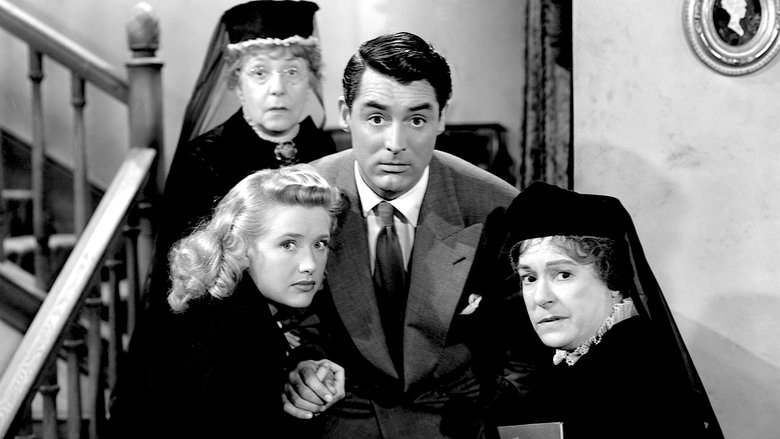
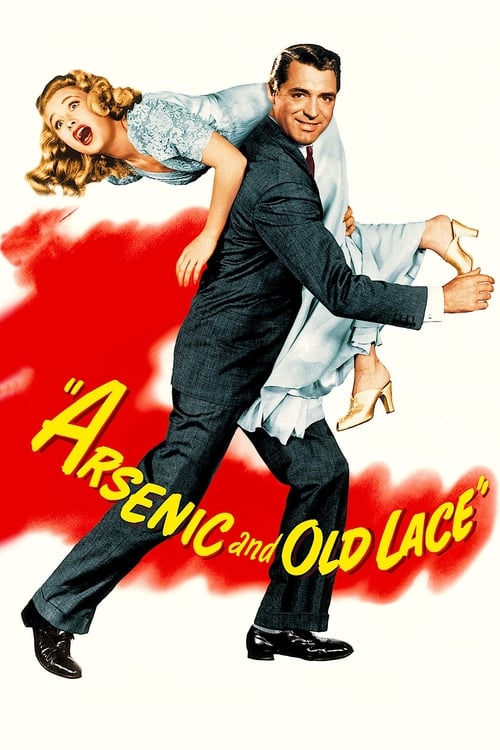
"She Passed Out On Cary! No Wonder . . . She's just discovered his favorite aunts have poisoned their 13th gentleman friend!"
Arsenic and Old Lace - Symbolism & Philosophy
Symbols & Motifs
Elderberry Wine
A symbol of deceptive appearances, misguided charity, and deadly comfort. It represents how evil can be cloaked in the most traditional, welcoming, and polite forms of Americana.
Served by the aunts in their cozy living room from a beautiful decanter, offered specifically to lonely old men under the guise of old-fashioned hospitality.
The Window Seat
It symbolizes the thin, fragile veil separating normal, respectable domestic life from dark, hidden horrors and madness.
Located directly in the center of the charming living room, it acts as a temporary holding cell for corpses before they are moved to the cellar, serving as the physical centerpiece of Mortimer's panic.
The Cellar (The Panama Canal)
It represents the burying of America's dark, violent history. Teddy's delusion of digging the Panama Canal masks the grim reality of mass graves, symbolizing how society sanitizes and hides its ugliest truths under the guise of progress and patriotism.
Teddy spends the film cheerfully digging graves in the basement, unknowingly assisting his aunts in covering up their serial murders.
Philosophical Questions
Does a polite demeanor and good intentions excuse monstrous actions?
The film explores this by contrasting the aunts' charitable murders with Jonathan's malicious ones. Because the aunts are sweet and believe they are doing a good deed, the audience and the other characters instinctively want to protect them, raising questions about how much weight we give to intent versus the horrific outcome of an action.
Are we doomed by our genetics and family history?
Mortimer spends the entire film in dread of his own bloodline, convinced that the Brewster madness will inevitably consume him. The film asks whether individuals have free will to break away from toxic family legacies, a question famously resolved here by a convenient loophole of illegitimacy rather than a philosophical triumph.
What separates harmless eccentricity from dangerous insanity?
Teddy is completely delusional but poses no direct threat, while his aunts seem socially functional but are prolific killers. The film challenges the viewer to define what truly makes someone a danger to society, highlighting how polite society often ignores quiet, systematic violence.
Core Meaning
At its core, Arsenic and Old Lace is a satirical dismantling of the American ideal of wholesome domesticity and the notion that politeness equates to goodness. Frank Capra, known for his populist, uplifting tales, uses this pitch-black comedy to reveal the monsters lurking behind lace curtains and sweet smiles.
The film suggests that madness and violence are deeply ingrained in the American family tree—literally, as the Brewsters proudly trace their lineage back to the Mayflower and boast of ancestors who scalped Native Americans. By contrasting the polite serial killings of the aunts with the brutal murders committed by Jonathan, the director forces the audience to confront the absurdity of moral double standards, ultimately stating that civilized society often excuses horrific acts as long as they are done with a pleasant demeanor and a cup of tea.