
Skip to content
As You Stood By
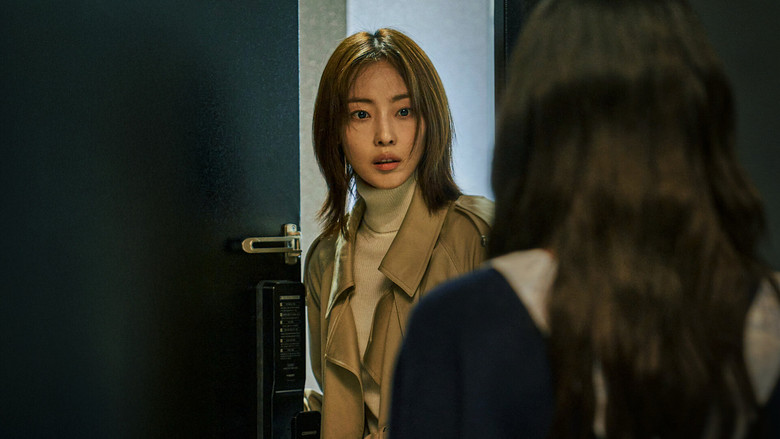
A suffocating, rain-slicked psychological thriller where the quiet ache of suppressed trauma erupts into desperate violence, mirroring two fractured souls clawing through the fog toward an elusive dawn.
As You Stood By

As You Stood By

당신이 죽였다

"Two desperate souls. One desperate choice."

07 November 2025 — 07 November 2025 South Korea 1 season 8 episode Ended 8.2 (102)

Cast: Jeon So-nee, Lee You-mi, Jang Seung-jo, Lee Mu-saeng, Lee Hyun-jun

Drama Crime Mystery Systemic Indifference and Institutional Failure The Cycle of Trauma and Bystander Guilt Female Solidarity as Co-Survival Identity, Doubles, and Erasure

Overview

As You Stood By (당신이 죽였다) is an eight-episode psychological crime thriller adapted from Hideo Okuda's 2014 novel Naomi and Kanako. Directed by Lee Jeong-rim and scripted by Kim Hyo-jeong, the series centers on Jo Eun-su, an introverted luxury retail sales associate at Lavie Department Store, and Jo Hui-su, an aspiring children's book illustrator living in silent terror under her abusive, high-powered husband, Noh Jin-pyo.

Bound by deep empathy and childhood wounds of domestic abuse, Eun-su realizes that legal institutions and societal structures routinely abandon victims of domestic violence. When Hui-su's life is placed in imminent mortal danger, the two women make a harrowing pact: the only path to survival is to orchestrate Jin-pyo's murder and engineer a foolproof disappearance using an uncanny lookalike, the undocumented worker Jang Kang.

As their calculated conspiracy is set in motion, unexpected complications mount—including the watchful involvement of shadowy market boss Jin So-baek and the tenacious, biased investigation spearheaded by Jin-pyo's sister, police detective Noh Jin-young. Over the course of its run, the series evolves from a meticulously planned murder scheme into a high-stakes psychological war exploring systemic failure, solidarity, and the moral weight of retribution.


Core Meaning

The foundational message of As You Stood By is an indictment of systemic complacency and the societal indifference that treats domestic violence as a "private family affair." The title itself confronts the bystander effect, interrogating the complicity of neighbors, law enforcement, and family members who look away while abuse festers behind closed doors.

The narrative contends that when civil and judicial institutions fail completely to protect the vulnerable, desperate survival becomes radicalized into violent self-defense. Ultimately, the series underscores female solidarity not as a romanticized bond, but as a visceral, life-or-death lifeline born from shared survival instincts.

Thematic DNA

Systemic Indifference and Institutional Failure 30%
The Cycle of Trauma and Bystander Guilt 25%
Female Solidarity as Co-Survival 25%
Identity, Doubles, and Erasure 20%

Systemic Indifference and Institutional Failure

The show systematically demonstrates how police refusal to intervene, marital privacy norms, and corporate status protect abusers while leaving victims defenseless. The narrative reveals that law enforcement only becomes proactive when investigating the abuser's disappearance, exposing a hypocritical justice apparatus.

The Cycle of Trauma and Bystander Guilt

Eun-su's motivation stems from her childhood inability to save her own mother from domestic violence. Her refusal to remain a passive bystander in Hui-su's life drives the plot, illustrating how unhealed historical trauma can manifest as extreme protective agency.

Female Solidarity as Co-Survival

Rather than competing or turning on each other under pressure, Eun-su and Hui-su forge an unbreakable alliance. Their bond shifts from mutual solace to shared criminal culpability, highlighting solidarity as a radical reclamation of life.

Identity, Doubles, and Erasure

Through the dual role of the wealthy Noh Jin-pyo and the marginalized, undocumented Jang Kang, the series explores socio-economic disparity and the literal commodification of human identity to execute an escape.

Character Analysis

Jo Eun-su

Jeon So-nee

Archetype: The Protector / Reluctant Antihero Key Trait: Unshakable resolve disguised beneath a calm exterior

Motivation

To prevent Hui-su from suffering the tragic fate of her mother, redeeming her past bystander guilt.

Character Arc

Begins as a quiet, emotionally guarded luxury retail clerk burdened by childhood trauma. As she witnesses Hui-su's life unravel, she sheds her passivity, evolving into the cold, calculated mastermind of an intricate murder scheme.

Jo Hui-su

Lee You-mi

Archetype: The Traumatized Survivor / Reclaimed Agent Key Trait: Fragile exterior harboring profound inner resilience

Motivation

Basic physical survival and reclaiming her shattered identity.

Character Arc

Starts in acute psychological and physical paralysis, crushed by Jin-pyo's escalating violence. Through her bond with Eun-su, she transforms her despair into cold courage, actively executing the murder plan to reclaim her life.

All 5 characters and cast

Symbols & Motifs

The Bruises and Make-up

Meaning:

Physical bruises hidden beneath heavy cosmetics and luxury apparel represent the dissonance between pristine societal facade and brutal domestic reality.

Context:

Used throughout Hui-su's daily routines and interactions to conceal the persistent physical abuse inflicted by Jin-pyo.

Jang Kang's Dual Existence

Meaning:

The physical double serves as a motif for disposable social classes; his identical face allows the erasure of a wealthy predator while highlighting the invisibility of undocumented laborers.

Context:

Utilized during the planning and execution of Jin-pyo's staged disappearance and international flight.

The Children's Book Illustrations

Meaning:

Represents the transformation of Hui-su's psychological state from helpless prey into a resolute conspirator.

Context:

Hui-su's suppressed artwork transitions from bright, innocent fairy tales to ominous, shadowed motifs as the murder plot develops.

The Lavie Luxury Department Store

Meaning:

Symbolizes superficial perfection, consumerist distraction, and the polished veneer used to disguise systemic rot.

Context:

The primary workplace setting of Jo Eun-su where upper-class consumers interact with retail workers.

Rain and Enclosed Hallways

Meaning:

Reflects the characters' suffocating entrapment and inability to breathe within conventional societal boundaries.

Context:

Repeated visual motifs showing claustrophobic corridors and torrential downpours during moments of escalating tension.

Memorable Quotes

죽거나 죽이지 않으면 벗어날 수 없어.
— Jo Eun-su (Jeon So-nee)

Context

Delivered in early episodes when Eun-su realizes that institutional channels offer no genuine escape for domestic violence victims.

Meaning

Captures the stark, desperate reality that lawful avenues have failed and radical action is required to preserve Hui-su's life.

이번에는 그냥 지켜보고만 있지 않을 거야.
— Jo Eun-su (Jeon So-nee)

Context

Spoken when deciding to intervene directly in Hui-su's life rather than remaining a silent witness.

Meaning

A direct thematic encapsulation of the show's title, signaling Eun-su's break from her childhood trauma and passive bystander guilt.

All 4 quotes

Episode Highlights

The Invisible Bruises

S1E1

Establishes Hui-su's horrifying domestic entrapment, Eun-su's resurfacing childhood trauma, and the systemic dismissal of abuse by Jin-young and local authorities.

Significance:

Premiered at the Busan International Film Festival 'On Screen' section; sets up the moral crisis and institutional failure driving the plot.

The Lookalike

S1E2

Eun-su encounters Jang Kang, discovering his striking resemblance to Jin-pyo, leading to the conception of the murder-and-substitution plan.

Significance:

Marks the crossing of the moral Rubicon from passive endurance to premeditated conspiracy.

The Execution

S1E4

The mid-season climax where the murder of Noh Jin-pyo is carried out by Eun-su and Hui-su.

Significance:

Shifts the entire narrative dynamic from suspenseful premeditation to procedural cover-up and psychological panic.

The Benefactor's Gaze

S1E5

Jin So-baek detects discrepancies in the plan while Jin-young initiates an off-the-books investigation into her brother's missing funds and disappearance.

Significance:

Alters the power dynamics by introducing external scrutiny from both the underworld and biased law enforcement.

Tightening Net

S1E7

Jin-young discovers surveillance gaps and traces Jang Kang's movements, pushing Eun-su and Hui-su to the brink of exposure.

Significance:

Builds peak suspense through a claustrophobic psychological duel between the conspirators and the investigator.

The Verdict of the Bystander

S1E8

Unspools the high-stakes confrontation between the conspirators, Jin-young, and the consequences of their crime.

Significance:

Concludes the series by resolving the thematic tension between legal justice, survival, and bystander complicity.

Philosophical Questions

When the state refuses its monopoly on protection, does the victim possess a moral right to violent self-preservation?

Explored through Eun-su and Hui-su's realization that legal remedies fail to halt lethal domestic violence, forcing them to choose between murder and death.

Can a passive bystander ever be morally neutral in the face of ongoing atrocities?

Examined via Eun-su's lingering childhood guilt and Jin-young's initial dismissal of domestic abuse as a private family matter.

Does escaping an oppressor through murder genuinely liberate the survivor, or does it construct a new psychological prison?

Analyzed in the series' aftermath as the protagonists must permanently live with the legal risk, paranoia, and moral weight of their conspiracy.

Alternative Interpretations

The narrative can be analyzed through several distinct thematic frameworks:

Full ending explanation

Cultural Impact

In South Korea, where public discourse surrounding legal protections for domestic violence victims and judicial reluctance to interfere in marital affairs remains intense, As You Stood By tapped into deep societal conversations.

Critics highlighted how accurately the series portrayed the systemic failure of protective orders and dismissive police attitudes. The series was praised internationally for elevating a standard revenge-thriller formula into a serious exploration of institutional complicity and trauma-informed solidarity.

Audience Reception

Critics and viewers widely lauded the nuanced, deeply emotional performances of Jeon So-nee and Lee You-mi, alongside Jang Seung-jo's chilling dual performance. Director Lee Jeong-rim's restrained approach to violent scenes received substantial commendation for avoiding exploitation.

Minor criticisms noted occasional pacing slowdowns in Episodes 5 and 6 when the narrative shifted heavily into procedural logistics. Overall, the series was received as a gripping, emotionally heavy, and socially urgent psychological thriller that honors its source material while sharpening its contemporary critique.

Interesting Facts

  • The series is an official South Korean screen adaptation of Japanese author Hideo Okuda's bestselling 2014 novel Naomi and Kanako.
  • Actor Jang Seung-jo undertook a demanding double role, portraying both the sociopathic executive Noh Jin-pyo and the undocumented worker Jang Kang.
  • The first two episodes received an official world premiere in the 'On Screen' section of the 30th Busan International Film Festival on September 18, 2025.
  • Director Lee Jeong-rim deliberately minimized gratuitous on-screen domestic violence, focusing on psychological tension and emotional aftermath.
  • Acclaimed producer and composer Primary directed the show's musical score, utilizing minimalist and rhythmic tension cues.

Easter Eggs

Structural Social Realism in Jingang Market

The inclusion of undocumented migrant labor via Jingang Market reflects contemporary Korean socio-economic realities, grounding the thriller mechanics in structural marginalization.

Cinematic Homages to Neo-Noir and Thrillers

Lee Jeong-rim's visual framing pays homage to classic neo-noir and female-led psychological thrillers like Thelma & Louise and Single White Female, filtering noir tropes through a Korean social lens.

Frequently Asked Questions

Explore More About This Movie

Dive deeper into specific aspects of the movie with our detailed analysis pages

Comments (0)

Leave a comment

No comments yet. Be the first to share your thoughts!

Similar Movies