Skip to content
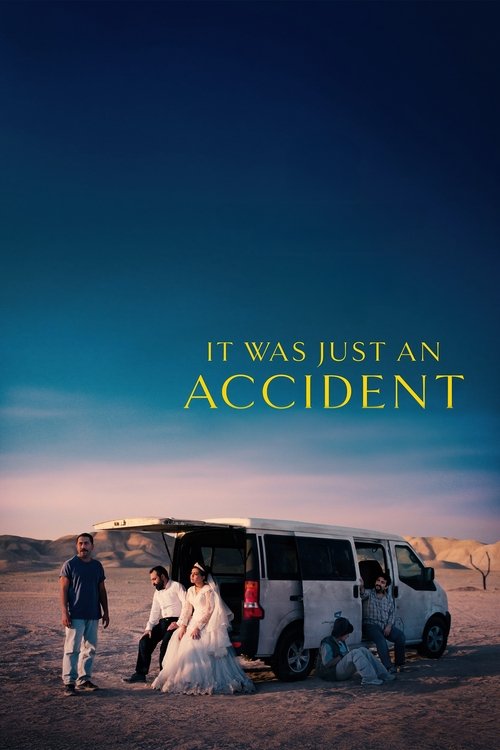
It Was Just an Accident
Claustrophobic road-thriller meets moral tragedy: a harrowing dive into unresolved trauma where the persistent squeak of an iron limb echoes through the desert like an unhealed psychological wound.
It Was Just an Accident

It Was Just an Accident

Un simple accident

01 October 2025 Iran 104 min 7.2 (638)

Director: Jafar Panahi

Cast: Vahid Mobasseri, Mariam Afshari, Ebrahim Azizi, Hadis Pakbaten, Majid Panahi

Drama Crime Thriller Mystery Retributive Justice vs. Moral Integrity The Fragility and Distortion of Memory under Trauma Authoritarian Oppression and Everyday Resistance The Continuity of Intergenerational Trauma
Budget: $6,000,000
Box Office: $9,602,793

Overview

It Was Just an Accident (Un simple accident) is a 2025 Iranian political thriller and moral drama written and directed by Jafar Panahi. The film begins on a dark, unlit rural highway outside Tehran when a driving mishap—running over a stray dog—disables a family's car. Seeking emergency repairs at a nearby roadside garage, the driver, Eghbal, encounters Vahid, an ethnic Azerbaijani auto mechanic and former political prisoner. Having been blindfolded during his past interrogations and torture under Iran’s regime, Vahid immediately recognizes the distinctive, squeaking limp of Eghbal’s prosthetic leg.

Driven by flashes of lingering trauma, Vahid covertly stalks and abducts Eghbal. However, when his captive fiercely asserts his innocence and claims to be a harmless family man named Rashid, doubt begins to creep in. Unable to carry out summary execution on sound alone, Vahid forces the captive into his van and embarks on a journey across Tehran and its surrounding deserts to gather other former political prisoners who were tortured by the same man, hoping they can verify his identity and help decide his fate.

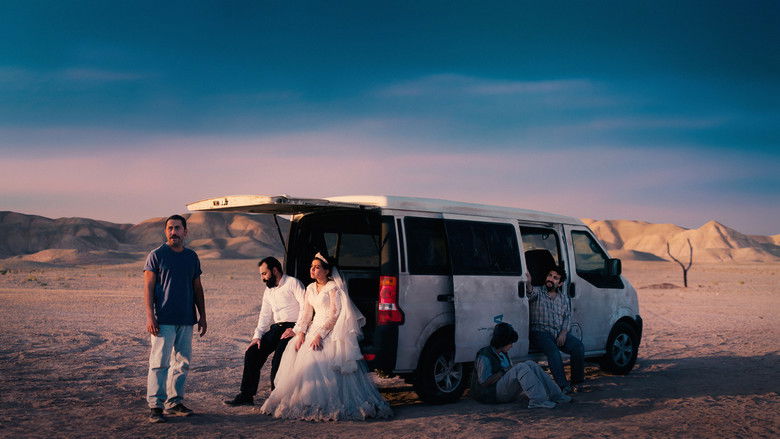
As the group travels through the night, bringing together a wedding photographer, a bride-to-be, and a volatile victim seeking immediate revenge, what begins as a tense pursuit of justice devolves into a dark, darkly comic, and deeply tense deliberation on memory, morality, and retribution.
Core Meaning

The central thesis of It Was Just an Accident is an exploration of the moral choices that confront victims of state oppression: whether to break the endless cycle of retributive violence or succumb to the urge for vengeance. Panahi presents a society where authoritarian brutality has so distorted normal legal channels that victims are forced into extrajudicial vigilante roles.

Through the characters' debates, the film argues that while revenge offers temporary catharsis, adopting the cruel methods of the state risks stripping the oppressed of their own humanity. Panahi highlights how trauma isolates individuals, yet suggests that preserving one’s moral integrity—even when dealing with a former tormentor—is the ultimate act of resistance against totalitarianism.

Thematic DNA

Retributive Justice vs. Moral Integrity 35%
The Fragility and Distortion of Memory under Trauma 25%
Authoritarian Oppression and Everyday Resistance 20%
The Continuity of Intergenerational Trauma 20%

Retributive Justice vs. Moral Integrity

Revealed through the central conflict among the captive victims in the van. Hamid demands immediate execution, arguing that state officials show no mercy; Shiva and Vahid insist that without absolute moral certainty and ethical boundaries, they become no better than their former torturers.

The Fragility and Distortion of Memory under Trauma

Revealed through the physical limitation of the victims' memories. Because political prisoners in Iran are routinely blindfolded during interrogation, their recall relies entirely on auditory cues (the squeak of a prosthetic leg, tone of voice) and tactile details, creating a psychological space where absolute certainty is difficult to establish.

Authoritarian Oppression and Everyday Resistance

Revealed through subversive imagery throughout the narrative. Female characters move freely without mandatory hijabs, citizens quietly bypass state authority, and ordinary domestic activities are continually disrupted by the looming shadow of prison trauma.

The Continuity of Intergenerational Trauma

Revealed through parallel family dynamics. Eghbal’s young daughter and pregnant wife are drawn into the crisis when his car breaks down, demonstrating how state-inflicted violence and retaliation ripple outward, impacting innocent family members across generations.

Character Analysis

Vahid

Vahid Mobasseri

Archetype: The Traumatized Avenger / Reluctant Vigilante Key Trait: Methodical, observant, burdened by chronic physical pain from past torture.

Motivation

To confirm whether his captive is his former interrogator and seek closure for his lingering physical and mental pain.

Character Arc

Moves from impulsive rage (attempting to bury Eghbal alive) to deliberate moral reflection, ultimately deciding to spare the man after extracting a confession.

Eghbal / "Peg Leg" / Rashid

Ebrahim Azizi

Archetype: The Antagonist / Pitiable Captive Key Trait: Duality—appearing as an affectionate father on one hand and a cruel state agent on the other.

Motivation

To survive capture, convince his captors of his innocence or bargain for his life.

Character Arc

Shifts from an assertive family man claiming to be "Rashid" to a defiant ex-interrogator boasting of his regime duties, finally breaking into desperate tearful pleas.

All 4 characters and cast

Symbols & Motifs

The Squeaking Prosthetic Leg

Meaning:

Represents the inescapable auditory stain of guilt and trauma.

Context:

Introduced in the garage sequence as a trigger for Vahid's memory; it echoes throughout the film as an auditory horror motif, culminating in the final haunting shot.

The Blindfold

Meaning:

Represents state-enforced sensory deprivation and the ambiguity of truth.

Context:

Refers to the prisoners' past interrogations; it serves as a visual metaphor for the characters' struggle to "see" the truth of Eghbal’s identity.

The Van / Mobile Prison

Meaning:

Represents Iran as a moving enclosure where victims and victimizers are trapped together.

Context:

Serves as the primary setting where the characters bicker, debate, and confront Eghbal while driving across Tehran.

The Struck Dog

Meaning:

Represents random, collateral damage of life under an unpredictable system.

Context:

The opening incident that triggers the vehicle breakdown, prompting the wife's comment: "It was just an accident."

Memorable Quotes

یک تصادف ساده بود.
— Eghbal's wife (Afssaneh Najmabadi)

Context

Spoken at the beginning of the film after their car hits a dog on an unlit road.

Meaning

Gives the film its ironic title, contrasting an ordinary vehicular accident with the deliberate, heavy choices that follow.

وقتی تمام مدت چشم‌بند داشتم، چگونه می‌توانم ۱۰۰٪ مطمئن باشم؟
— Vahid (Vahid Mobasseri)

Context

Spoken to Shiva while standing over the wooden crate holding Eghbal in the desert.

Meaning

Captures the moral crux of the film: the horror of state-imposed blindfolds depriving victims of absolute certainty.

All 3 quotes

Philosophical Questions

Is true justice possible when state institutions are themselves the perpetrators of crime?

The film shows how victims are forced into illegal extrajudicial acts when official courts offer no avenue for accountability.

Does sparing an oppressor liberate the victim, or does it leave them vulnerable to further harm?

Explored through the tension between Shiva’s moral high ground and the final ambiguous sequence, questioning whether ethical choices guarantee physical safety.

Can memory alone serve as valid proof when trauma impairs sensory perception?

Examined through the motif of the blindfold, highlighting how authoritarian systems intentionally rob victims of objective evidence.

Alternative Interpretations

The film’s final sequence—where Vahid sits at home while the distinct squeak of a prosthetic leg approaches his front door—has sparked three distinct interpretations among critics and audiences:

Full ending explanation

Cultural Impact

Created in the wake of the post-2022 "Woman, Life, Freedom" movement in Iran, It Was Just an Accident reflects the heightened social tension and demands for accountability in contemporary Iranian society. Panahi transitions from his earlier docu-fiction style (This Is Not a Film, Taxi) into a structured moral thriller, signaling a shift in Iranian cinema toward directly addressing the psychological scars left by state interrogations.

Critically, the film was hailed worldwide as a cinematic landmark. Released internationally by distributors like NEON and Memento, it achieved significant arthouse box-office success across France, North America, and Europe, becoming an intellectual touchstone in global debates regarding truth, reconciliation, and resistance.

Audience Reception

  • Praised Aspects: Critics universally praised Panahi's tight script, the tension sustained within confined spaces, and the sharp blending of dark humor with moral drama. The performances of Vahid Mobasseri and Ebrahim Azizi were singled out for their depth.
  • Main Points of Criticism: A minority of reviewers felt the middle section in the van relied heavily on lengthy dialogue debates, leaning slightly toward theatrical exposition rather than visual action.
  • Controversial Moments: The opening sequence involving the dead dog and the harrowing early scene where Vahid begins burying Eghbal alive sparked intense audience discussions regarding the ethical boundaries of the characters.
  • Overall Verdict: Holding a 97% rating on Rotten Tomatoes and a 90 Metascore, the film is widely regarded as one of Panahi's finest works—a masterclass in moral suspense.

Interesting Facts

  • Despite Panahi's formal filmmaking ban in Iran, the movie was shot completely in secret without state filming permits, using low-profile digital cameras and a minimalist local crew.
  • The film premiered at the 78th Cannes Film Festival in May 2025, where it won the Palme d'Or and received an eight-minute standing ovation.
  • With his Palme d'Or win, Jafar Panahi joined an elite group of directors (alongside Henri-Georges Clouzot, Michelangelo Antonioni, and Robert Altman) to win the top prize at Cannes (Palme d'Or), Venice (Golden Lion for The Circle), and Berlin (Golden Bear for Taxi).
  • Panahi conceived the story following his seven-month imprisonment in Tehran’s Evin Prison (2022–2023), incorporating conversations and memories shared with fellow political prisoners.
  • Female cast members appear in public settings without hijabs, explicitly defying Iran's mandatory hijab regulations.
  • Jafar Panahi's son, Majid Panahi, not only worked on production aspects but also appears on screen in the role of the groom, Ali.
  • The film became the first Iranian production to earn Golden Globe nominations for Best Motion Picture – Drama, Best Director, and Best Screenplay, alongside dual Academy Award nominations for Best International Feature and Best Original Screenplay.

Easter Eggs

Reference to Samuel Beckett’s Waiting for Godot

The long, circular conversations inside the parked van in the desert directly homage Beckettian absurdist theater, treating retributive justice as an elusive resolution that never quite arrives as expected.

Visual Callback to The Circle (2000)

Panahi utilizes circular camera tracking movements in closed spaces, echoing the claustrophobic visual motifs of his 2000 Venice-winning masterpiece The Circle.

Meta-Casting of Majid Panahi

The casting of Panahi's real-life son as a young groom entering married life serves as a subtle meta-commentary on the younger Iranian generation trying to build a future amidst political baggage.

Frequently Asked Questions

Explore More About This Movie

Dive deeper into specific aspects of the movie with our detailed analysis pages

Comments (0)

Leave a comment

No comments yet. Be the first to share your thoughts!

Similar Movies