
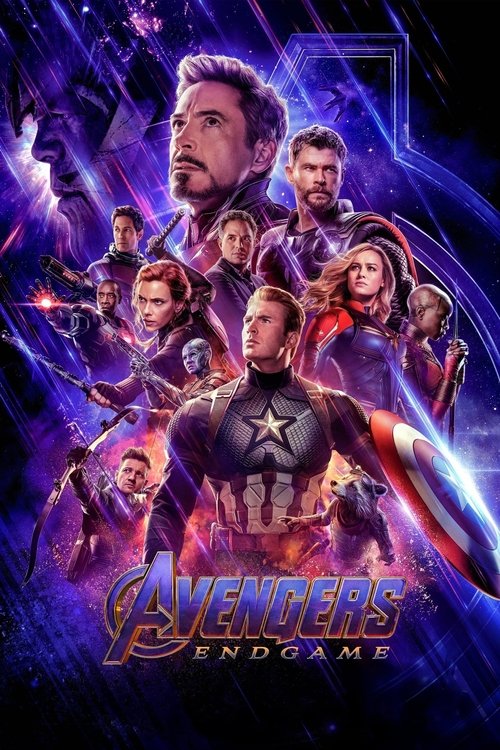
Avengers: Endgame's plot is built on several major twists. The first occurs early on when the Avengers find Thanos, only to discover he has already destroyed the Infinity Stones, making a reversal of his snap seemingly impossible. This leads to Thor decapitating a defenseless Thanos, a shocking moment that establishes the film's initial tone of hopelessness.
The narrative then jumps forward five years, revealing a broken world and drastically changed heroes: Tony Stark is a reclusive family man, Thor is an overweight alcoholic, and Bruce Banner has merged his two identities into 'Professor Hulk'. The central plot device is the 'Time Heist,' a plan to use the Quantum Realm to travel to different points in the past (2012 New York, 2013 Asgard, and 2014 Morag/Vormir) to 'borrow' the Infinity Stones.
The most significant sacrifices occur during this heist. On Vormir, Black Widow and Hawkeye discover that one must sacrifice someone they love to obtain the Soul Stone. After a struggle, Natasha sacrifices herself, a devastating turn that provides the mission with its first major casualty. A crucial twist involves the two versions of Nebula. The 2014 Thanos captures the present-day Nebula and, learning of the Avengers' plan, sends her evil 2014 counterpart to the future in her place, allowing his entire warship to travel to 2023.
The climax reveals that Hulk's successful reverse-snap, which brings everyone back, also allows the 2014 Thanos to attack the Avengers compound. The final battle sees all the restored heroes return in a spectacular fashion. The ultimate twist comes when Tony Stark, realizing Doctor Strange's 'one' winning scenario, creates a new Nano Gauntlet in his suit, steals the stones from Thanos, and performs his own snap to disintegrate Thanos and his army. The power of the stones is too much for his human body, and he dies surrounded by his friends, a heroic sacrifice that concludes the saga. The film's final surprise is Steve Rogers's decision not to return to the present after returning the stones, instead choosing to live out his life in the past with Peggy Carter, reappearing as an old man to pass his shield to Sam Wilson.