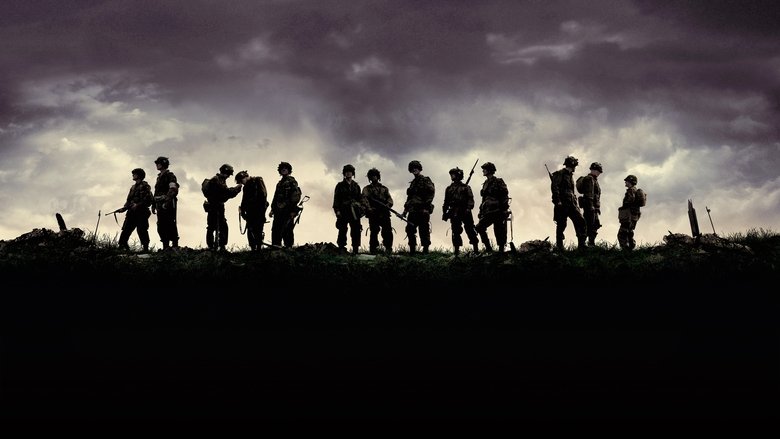
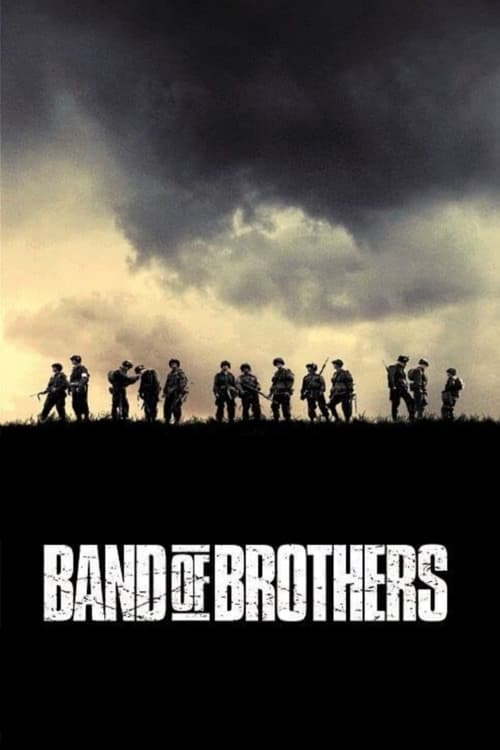
"There was a time when the world asked ordinary men to do extraordinary things."
Cast: Kirk Acevedo, Tom Hardy, Michael Cudlitz, Rick Gomez, Scott Grimes
Band of Brothers — Movie Quotes
Memorable Quotes
Grandpa, were you a hero in the war?' 'No,' I answered, 'but I served in a company of heroes.'
Context
This quote is spoken by the real Richard Winters in the documentary portion of the final episode, "Points," as he reflects on his service. It serves as the series' powerful concluding thought.
Meaning
This quote encapsulates the humble ethos of the real veterans and the series' central theme of collective heroism. It deflects individual praise, instead honoring the entire company and the brotherhood they formed. It defines heroism not as a singular act, but as being part of a collective that achieved extraordinary things together.
We're paratroopers, Lieutenant. We're supposed to be surrounded.
Context
Spoken in Episode 5, "Crossroads," after Easy Company has successfully held off a superior German force at a crossroads in Holland. When a concerned officer points out their precarious position, Winters delivers this classic line with calm confidence.
Meaning
A line demonstrating Winters' cool-headed leadership and the elite, unflappable mindset of the airborne troops. It turns a dire tactical situation—being cut off—into a statement of identity and purpose, boosting morale and reinforcing their unique role as shock troops who operate behind enemy lines.
Captain Sobel, we salute the rank, not the man.
Context
In the final episode, "Points," a post-war Winters, now a Major, encounters Sobel, who is still a Captain. Sobel gives a half-hearted gesture of recognition, and Winters stops him to enforce the proper salute due to a superior officer, delivering this cutting line.
Meaning
This quote is a sharp, satisfying assertion of military protocol over personal animosity. It's a moment of quiet victory for Winters over his former tormentor, Captain Sobel, demonstrating that while respect for the chain of command is absolute, respect for an individual must be earned.
The only hope you have is to accept the fact that you're already dead. The sooner you accept that, the sooner you'll be able to function as a soldier is supposed to function.
Context
This advice is given to a replacement soldier in Episode 3, "Carentan," as the veterans try to explain the mental state required to endure the horrors they face daily.
Meaning
This quote expresses a grim philosophy of survival in combat. It suggests that overcoming fear requires a fatalistic acceptance of death, which in turn frees a soldier to act without hesitation, remorse, or compassion—qualities considered essential for effective fighting in the brutal calculus of war.
From this day to the ending of the world... we in it shall be remembered. We lucky few, we band of brothers. For he today that sheds his blood with me shall be my brother.
Context
Lipton recites this line from Shakespeare's play in Episode 7, "The Breaking Point," during the brutal fighting around Foy, Belgium. It serves as a poignant reminder of the source of their strength during one of their darkest moments.
Meaning
This quote, from which the series takes its title, explicitly states the central theme of brotherhood forged in battle. It elevates the bond between soldiers to a timeless, almost sacred level, suggesting that their shared sacrifice creates a connection deeper than family and worthy of historical remembrance.
Explore More About This Movie
Dive deeper into specific aspects of the movie with our detailed analysis pages