The core meaning of "Better Call Saul" is an exploration of choice, consequence, and the nature of identity. It posits that a person's path is not a single, dramatic break from morality, but a series of small, often well-intentioned compromises that lead to an inescapable destination. The creators, Vince Gilligan and Peter Gould, examine the question, "What problem does becoming Saul Goodman solve?" for Jimmy McGill. The answer is that the persona of Saul Goodman is both a shield against his insecurities and a fulfillment of his worst impulses. The series serves as a profound character study, suggesting that while external forces and relationships shape us, we are ultimately the architects of our own character through the choices we repeatedly make. It is a tragedy about a man who, despite moments of genuine goodness, cannot escape his own self-destructive nature.
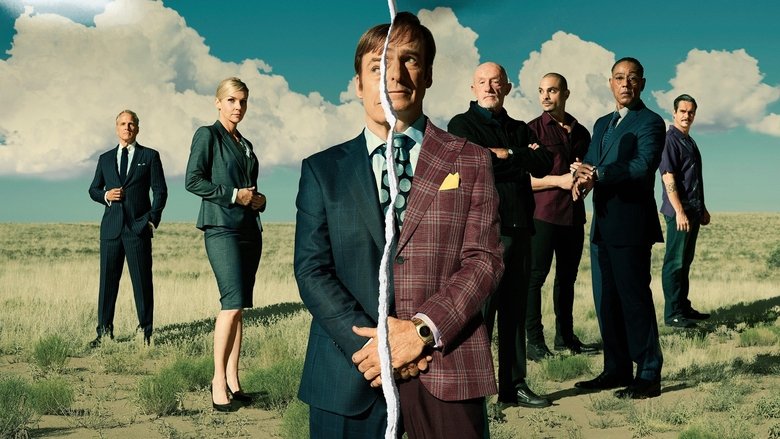
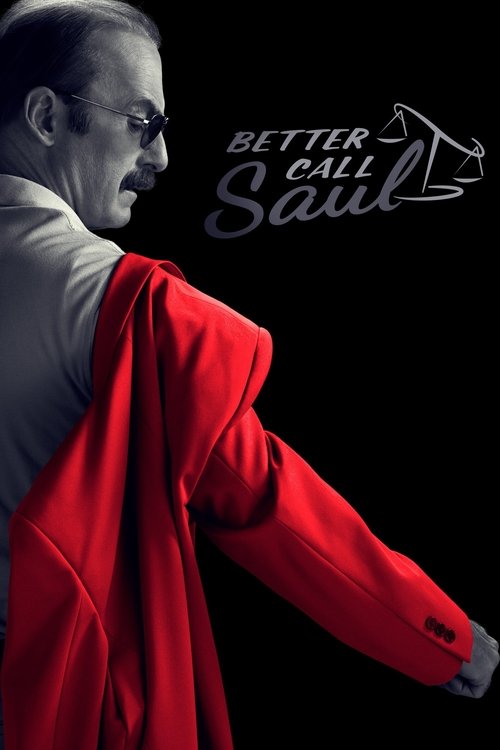
"Putting the "criminal" in "criminal lawyer.""
Cast: Bob Odenkirk, Jonathan Banks, Rhea Seehorn, Patrick Fabian, Michael Mando
Better Call Saul — Symbolism & Philosophy
Symbols & Motifs
Color Palette
Colors are used symbolically to represent characters' morality and environment. Jimmy is often associated with bright, flashy colors (like his suits), signifying his 'Saul Goodman' persona. In contrast, the world of corporate law (HHM) is depicted in cool, sterile blues and grays. The black-and-white of the "Gene" flash-forwards represents a life devoid of vibrancy and a soul in purgatory.
Throughout the series, Jimmy's wardrobe becomes more flamboyant as he leans into his Saul identity. The stark black-and-white sequences that open most seasons set a somber tone for his future, which is paid off in the final episodes that are almost entirely in monochrome until a single flame of color appears in a shared cigarette with Kim, symbolizing a brief moment of genuine connection.
Zafiro Añejo Tequila
The fictional brand of premium tequila, with its distinctive agave-shaped bottle stopper, symbolizes the spoils of a successful con, ill-gotten gains, and the bond between Jimmy and Kim. It represents a point of no return—a memento of their choice to break bad together.
First appearing when Jimmy and Kim con a stockbroker, the expensive tequila becomes a recurring motif. They keep the intricate stopper as a souvenir. In the final season, Kim sees the stopper in a jewelry store, triggering her guilt and leading her to confess her role in Howard Hamlin's death. It serves as a tangible reminder of their shared past and transgressions.
Montages
The series frequently uses stylized montages to depict process, the passage of time, and the meticulous nature of both legal work and criminal schemes. They visually represent the slow, methodical nature of Jimmy's transformation and the intricate planning of characters like Mike and Gus.
Numerous montages appear across all seasons, from Jimmy's efforts to build his elder law practice to Mike's systematic dismantling of a vehicle. A notable split-screen montage in Season 6 shows Jimmy and Kim's lives diverging while still being connected, visually emphasizing their growing emotional distance despite their physical proximity.
Philosophical Questions
Are we defined by our worst impulses or our best intentions?
The series constantly explores the duality of Jimmy McGill. He has genuine moments of kindness and a desire to do good, particularly for his clients and for Kim. However, he is repeatedly drawn to his 'Slippin' Jimmy' persona. The show asks whether his good intentions are negated by the disastrous consequences of his actions. The finale suggests that redemption is possible not by erasing the bad, but by finally taking responsibility for it, implying that our ultimate definition comes from accepting the totality of who we are.
Can a person truly change, or are we slaves to our nature?
This question is central to the conflict between Jimmy and his brother Chuck. Chuck believes people don't change and that Jimmy will always be 'Slippin' Jimmy.' Jimmy spends much of the series trying to prove him wrong, only to seemingly prove him right by becoming Saul Goodman. The finale offers a nuanced answer: Jimmy doesn't change back into his 'good' self, but he does make a different choice. He chooses accountability over escape. This suggests that while our fundamental nature might be fixed, we always retain the agency to make choices that defy our ingrained patterns, even if it's at the very end.
What is the nature of justice?
"Better Call Saul" critiques the legal system from multiple angles. There's the formal, often rigid justice of the courtroom, represented by HHM, and the 'street justice' of the cartel. Jimmy operates in the gray area between them, often bending the law to achieve what he perceives as a fairer outcome for his underdog clients. The series questions whether true justice is about adherence to process or achieving a moral outcome, and it shows how easily the pursuit of one's own version of justice can lead to profound injustice, as seen in the death of Howard Hamlin.
Core Meaning
Explore More About This Movie
Dive deeper into specific aspects of the movie with our detailed analysis pages