Big Deal on Madonna Street
A neorealist-infused comedic caper, this film is the cinematic equivalent of a charming, well-intentioned stumble, portraying the poetry of failure with a warm, empathetic grin.
Big Deal on Madonna Street

I soliti ignoti

"The Story of a Perfect Crime ... Perfectly Hilarious!"

26 July 1958 Italy 106 min ⭐ 8.1 (742)
Director: Mario Monicelli
Cast: Vittorio Gassman, Renato Salvatori, Memmo Carotenuto, Rossana Rory, Carla Gravina
Crime Comedy
The Comedy of Incompetence Poverty and Social Struggle Parody of the Heist Genre Friendship and Community

Big Deal on Madonna Street - Ending Explained

⚠️ Spoiler Analysis

The entire plot of "Big Deal on Madonna Street" is an elaborate setup for a spectacular failure. After numerous comical setbacks during the planning phase, the remaining members of the gang finally break into the apartment they believe adjoins the pawnshop. Their plan is already in tatters: Tiberio's arm is broken, Mario has abandoned the heist for love, and Cosimo is dead after a botched purse-snatching.

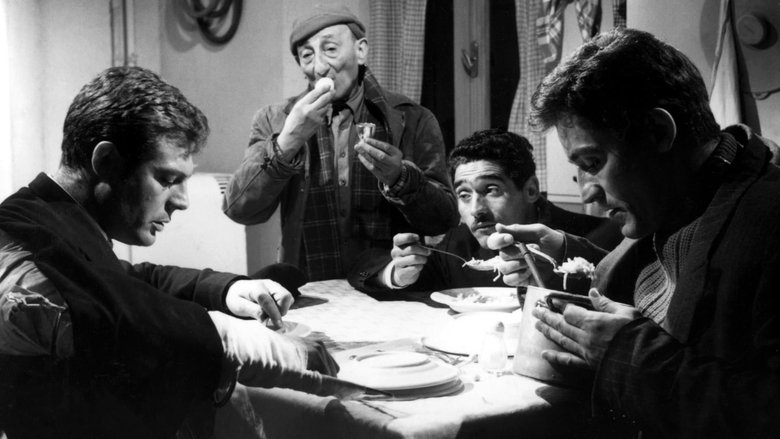
The climax of their ineptitude occurs when, after painstakingly breaking through the wall, they emerge not into the pawnshop's safe room, but into the apartment's own kitchen. They have breached the wrong wall. As the realization of their complete and utter failure dawns on them, and with morning approaching, they abandon the heist entirely. In a moment of supreme anticlimax, they decide to raid the refrigerator and cook a meal of pasta and chickpeas. Their grand criminal endeavor is thwarted not by police or a rival gang, but by their own incompetence. The heist ends with Capannelle accidentally causing a small gas explosion. The final scene shows the gang members dispersing one by one into the early morning light, heading back to their lives of quiet desperation, with Peppe resolving to get a real job. A newspaper clipping at the very end reports on a strange burglary where the culprits only stole some pasta with chickpeas, the final, pathetic epitaph for their "big deal."

Alternative Interpretations

While primarily viewed as a comedy, some critics interpret "Big Deal on Madonna Street" through a darker, more cynical lens. In this view, the film is less a gentle parody and more a bleak commentary on the impossibility of social mobility for the underclass in post-war Italy. The characters' incompetence is not just funny; it's a symptom of a society that has left them with no viable skills or opportunities. Their failure is preordained, and the final scene, where they disperse back into their lives of petty struggle, can be read not as a return to charming normalcy but as a tragic confirmation of their inescapable circumstances.

Another interpretation focuses on the film's subtle moral structure. The only character who dies is Cosimo, the most selfish and traditionally "criminal" member of the group. The others, who are motivated more by family and friendship, are allowed to fail without severe consequences. This suggests a moral universe where genuine malice is punished, while well-intentioned foolishness is treated with a kind of gentle, comedic forgiveness. The failure of the heist, in this reading, is a form of redemption, pushing them away from a life of crime and back toward more honest, if difficult, lives.