I soliti ignoti
"The Story of a Perfect Crime ... Perfectly Hilarious!"
Big Deal on Madonna Street - Symbolism & Philosophy
Symbols & Motifs
The Pawnshop Safe
The safe symbolizes the unattainable dream of wealth and a better life. It is the MacGuffin that drives the plot, representing a quick fix for the characters' deep-seated economic problems. Its ultimate impenetrability for the gang highlights the futility of their criminal aspirations.
The entire film revolves around the gang's plan to crack the safe in the Monte di Pietà pawnshop. They scout it, study it, and acquire an expert to teach them how to open it, but they never even manage to reach it, humorously underscoring the gap between their ambitions and their abilities.
The Wall
The wall they must break through represents the obstacles—both physical and personal—that stand between the characters and their goals. Their comical struggle to breach it, only to end up in the wrong room, symbolizes the misguided nature of their entire endeavor.
The climax of the film involves the gang laboriously breaking through a wall in the apartment they believe is adjacent to the pawnshop. After much effort, they break through into the apartment's own kitchen, a moment of supreme anticlimax and comedic failure.
Pasta e Ceci (Pasta and Chickpeas)
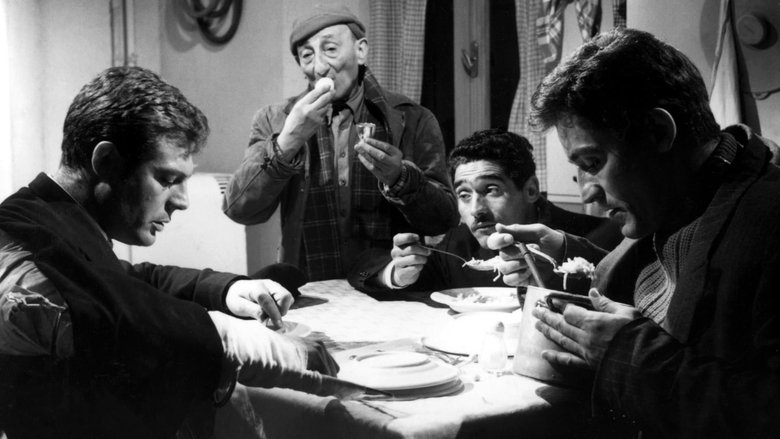
The simple meal of pasta and chickpeas symbolizes a return to reality and the small comforts of their actual lives. After the grand failure of their heist, they abandon their criminal ambitions and share a humble meal, finding solace not in stolen riches but in food and fellowship. It represents the grounding of their lofty, unrealistic dreams in the face of mundane reality.
Having broken into the wrong room and with dawn approaching, the defeated gang raids the apartment's refrigerator and cooks a pot of pasta and chickpeas. Their grand criminal enterprise ends not with a bang, but with a communal, slightly pathetic, supper.
Philosophical Questions
Is failure more revealing of character than success?
The film argues a resounding "yes." The characters' grand plan to achieve success through crime completely unravels, but it's in this failure that their true natures are revealed. We see their loyalty (or lack thereof), their paternal instincts, their romantic longings, and their fundamental decency. The catastrophic end of the heist doesn't define them as losers so much as it strips away their pretensions, revealing the flawed but sympathetic humans underneath.
What is the relationship between comedy and tragedy?
Monicelli masterfully walks the line between comedy and tragedy. The characters' poverty and desperation are real and tragic, yet their attempts to overcome them are hilariously inept. The death of Cosimo is a stark, tragic moment in an otherwise lighthearted film. The film suggests that comedy is not the opposite of tragedy, but rather a different lens through which to view it. The laughter it provokes is deeply empathetic, born from the recognition of human folly in the face of hardship.
Core Meaning
The core meaning of "Big Deal on Madonna Street" lies in its satirical yet affectionate portrayal of the struggles of the working class in post-war Italy. Director Mario Monicelli uses the framework of a heist film not to celebrate criminal prowess, but to explore themes of poverty, friendship, and the absurdity of aspiring to a life of crime without the necessary skills or ruthlessness. The film serves as a parody of slick American and French crime dramas like "Rififi" and "The Asphalt Jungle," replacing their cool professionalism with heartfelt ineptitude. It suggests that for these characters, crime is not a path to glamour or riches, but a desperate, and ultimately futile, attempt to escape their circumstances. The true treasure they find isn't in the pawnshop safe, but in their shared camaraderie and the small, human moments amidst their chaotic failure.