Full spoilers below, limited to what the sources consulted actually establish; the film's final mechanics are described in outline rather than invented in detail.
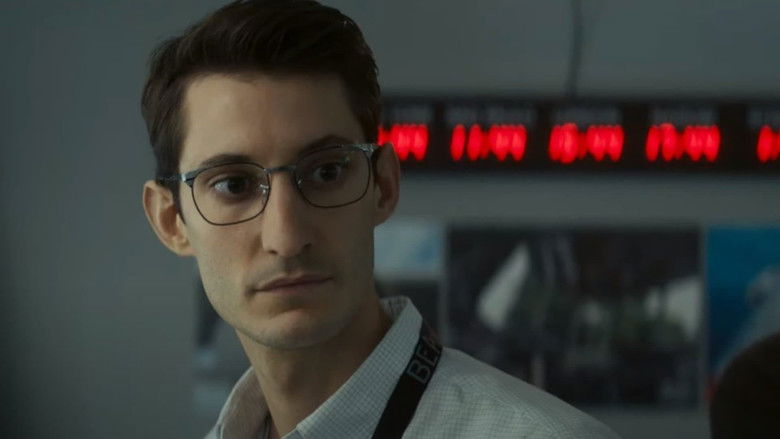
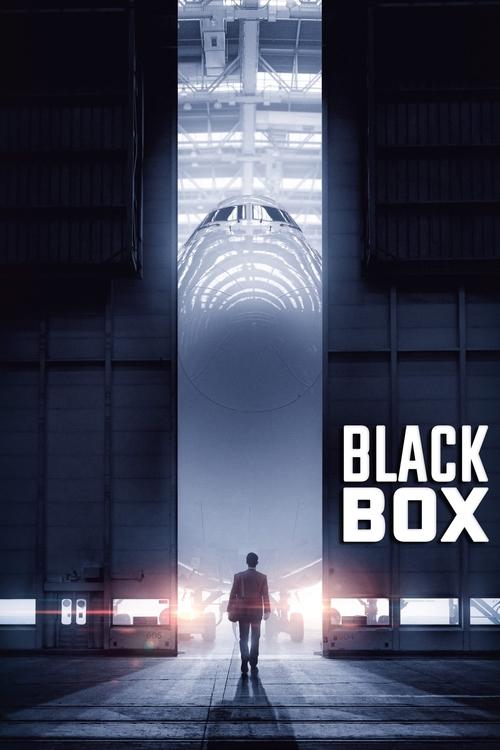
The set-up. An Atrian 800 — a brand-new, top-of-the-range airliner flying Dubai to Paris — crashes over the French Alps with the loss of everyone aboard. Mathieu Vasseur is assigned the cockpit voice recorder. Deep in the degraded audio he isolates the sound of someone forcing his way into the cockpit moments before impact, which points to a terrorist attack rather than technical failure.
The suppression. The case is closed by the authorities above Mathieu's head, and the evidence he is shown stops matching what he remembers hearing. His refusal to let go turns him into a rogue investigator inside his own agency.
The domestic breach. Mathieu covertly downloads test-flight data from the computer of his wife Noémie, who works for Atrian — the manufacturer's side of the equation. Atrian's management discovers the missing data and Noémie is suspended, which both confirms how much the company has at stake and destroys the one relationship that could have anchored Mathieu.
The suspect. Caroline Delmas, an investigative journalist at Mediapart, gives him the name David Keller: a former Pegase employee previously arrested for attempting to hack an aircraft's communication systems. Mathieu establishes that Keller was aboard the doomed Atrian 800 — an apparently perfect fit for the intrusion theory, and exactly the kind of ready-made culprit the film has been teaching us to distrust.
The reversal. The film does not stop there. It delivers a further twist that reframes the terrorism reading and redirects responsibility away from the lone attacker and back toward the interests circling the aircraft and the inquiry — the manoeuvre several critics judged one turn too many, arguing it cost the film plausibility. Retroactively, this recasts the earlier scenes: the intrusion sound Mathieu fought so hard to defend functions less as a discovery than as a hypothesis he was permitted, or encouraged, to reach.
What becomes clear afterwards. The title's double meaning lands only in hindsight. The recorder is a black box in the aviation sense — the object that should explain the disaster — and in the systems sense: an opaque process whose interior nobody can inspect. The same is true of Mathieu himself. Having spent the film insisting that his ear is the last honest instrument in the chain, he ends it as the one component whose reliability can no longer be independently verified, and the film's real horror is that this is not an accident of his character but the predictable result of how the system handles anyone who won't close the file.