Skip to content
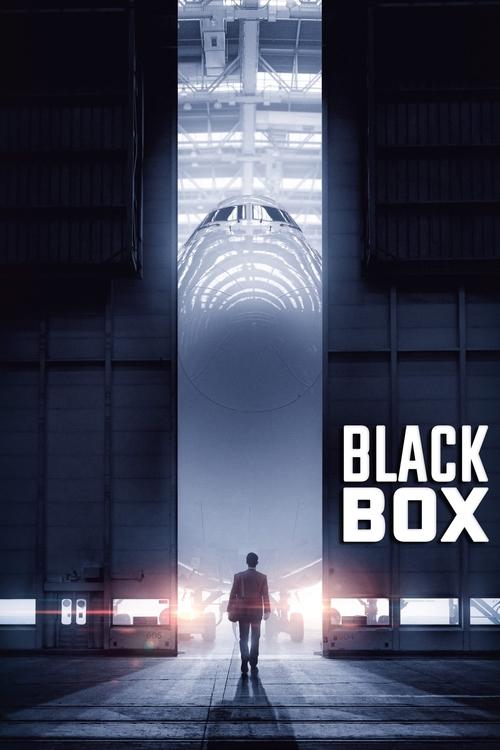
Black Box
A taut French conspiracy thriller where truth arrives as static and breath: one man presses headphones to his skull and hears an entire industry lying inside thirty seconds of wreckage.
Black Box

Black Box

Boîte noire

"Some clues are better left unheard."

08 September 2021 France 130 min 7.3 (1,478)

Director: Yann Gozlan

Cast: Pierre Niney, Lou de Laâge, André Dussollier, Sébastien Pouderoux, Olivier Rabourdin

Drama Thriller Mystery Truth, evidence and the corruptibility of the record Obsession and the erosion of the self Institutions, corporate interest and cover-up Sound as knowledge and as deception Terrorism, paranoia and the ready-made narrative
Budget: $10,722,240
Box Office: $9,738,741

Overview

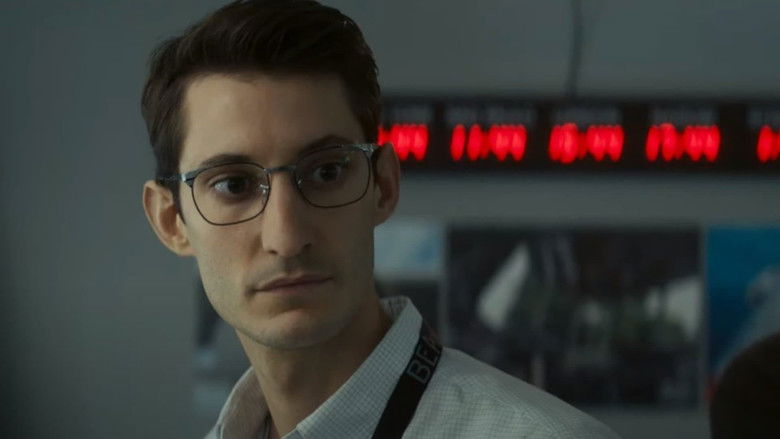
Directed by Yann Gozlan, Black Box (Boîte noire) is a French-Belgian mystery thriller built around a profession cinema rarely looks at: the acoustic analysis of cockpit voice recorders. When a brand-new, top-of-the-range Atrian 800 airliner goes down over the French Alps on a flight from Dubai to Paris, killing everyone aboard, the Bureau of Enquiry and Analysis for Civil Aviation Safety (BEA) opens an investigation, and the task of listening to the recovered recorder falls to Mathieu Vasseur (Pierre Niney), a gifted young analyst with an almost unnatural ear.

What Mathieu hears in the final seconds does not match the story the authorities are willing to tell. The case is closed above his head, but the discrepancies keep sounding in his headphones, and he begins a rogue inquiry that pulls in his wife Noémie (Lou de Laâge), who works inside the aviation industry, an investigative journalist from Mediapart, and a former airline-systems employee with a history of hacking aircraft communications who happened to be on the doomed flight.

Gozlan structures the film as a procedural of the ear rather than the eye: waveforms, spectrograms, filtered breath, a door forced open somewhere behind a wall of engine noise. As the evidence multiplies, so does the question of whether Mathieu is the only person hearing correctly, or a man whose obsession is quietly rewriting what he hears. The result is a conspiracy thriller of the kind Hollywood used to make in the 1970s, transposed into the bureaucratic, technocratic world of European aviation safety.

Core Meaning

Gozlan's film is about the modern condition of evidence: in a world where truth is stored as data, the person who controls the recording controls reality. The black box is meant to be the incorruptible witness, the one object that cannot lie — and the film's central provocation is that even this witness passes through human hands, institutional interests and a fallible listener before it becomes a "finding."

Underneath the procedural sits a portrait of obsession as both virtue and pathology. Mathieu's refusal to accept a closed file is heroic, but it is fed by the same compulsive perfectionism that makes him unable to stop listening, to trust anyone, or to distinguish a signal from his own need to find one. The director wants the audience to experience this ambiguity directly: much of the film's technique is designed to direct the spectator's listening, so that we, too, hear what we are primed to hear.

Finally, it is a film about how catastrophe is managed rather than explained — how commercial stakes, national industrial pride and career self-preservation quietly shape what an official inquiry is permitted to conclude, and what it costs an individual to say the unsayable out loud.

Thematic DNA

Truth, evidence and the corruptibility of the record 28%
Obsession and the erosion of the self 24%
Institutions, corporate interest and cover-up 20%
Sound as knowledge and as deception 18%
Terrorism, paranoia and the ready-made narrative 10%

Truth, evidence and the corruptibility of the record

The film's engine is the gap between a recording and its interpretation. Mathieu believes the cockpit voice recorder holds an objective account of the crash, but every step — restoration, filtering, transcription, official validation — is a human decision. The 'incorruptible witness' turns out to be as contestable as any human one, and the closing of the case from above shows how quickly an inconvenient truth can be administratively resolved rather than answered.

Obsession and the erosion of the self

Niney plays Mathieu as a man who listens his way out of his own life. The rogue investigation costs him his standing at the BEA, his marriage's trust and eventually his grip on which perceptions are real. The same hypersensitivity that makes him the best analyst in the room makes him the least reliable narrator of his own experience, and the film deliberately refuses to reassure us about where expertise ends and monomania begins.

Institutions, corporate interest and cover-up

The investigation is never a neutral search. A new flagship aircraft, a manufacturer with everything to lose, certification bodies, and a state invested in its aviation industry all press on the inquiry. Noémie's position inside the industry turns the couple's home into a second front of the conspiracy, and her suspension after data goes missing shows how institutions punish leakage faster than they examine failure.

Sound as knowledge and as deception

Uniquely for a thriller, the film's evidence is almost entirely auditory: breath, an alarm, the sound of someone forcing the cockpit door. Gozlan and his sound team built the film so that the audience investigates by ear alongside Mathieu — and so that the audience can be misled by ear too. Hearing becomes the film's epistemology: what is audible feels true, which is exactly what makes it exploitable.

Terrorism, paranoia and the ready-made narrative

When Mathieu identifies an intrusion into the cockpit, the terrorist hypothesis assembles itself instantly, complete with a plausible suspect: a former aviation-systems employee once arrested for hacking a plane's communications, who was aboard the flight. The film shows how a post-2001 imagination supplies a story before the evidence does, and how comfortable that story is for everyone whose interests lie elsewhere.

Character Analysis

Mathieu Vasseur

Pierre Niney

Archetype: Obsessive investigator / unreliable hero Key Trait: Extraordinary, obsessive ear

Motivation

An almost physical inability to leave a discrepancy unresolved — part professional integrity, part vanity, part compulsion.

Character Arc

Begins as a brilliant, ambitious BEA acoustic analyst hungry for the career-defining case. Handed the recorder from the Atrian 800, he finds anomalies that contradict the official line and, once the case is closed over his head, pursues it illegally — downloading protected data, going to a journalist, and burning through his professional and marital credibility. By the final act he has become a man who can no longer prove that his own perceptions are trustworthy, which is precisely the position his adversaries need him in.

Noémie

Lou de Laâge

Archetype: Complicit intimate / the compromised insider Key Trait: Guarded, professionally invested

Motivation

To protect a career and a life built inside the very system her husband is attacking, while deciding how much of him she still believes.

Character Arc

Mathieu's wife, employed on the industry side of aviation — the world that builds and certifies the aircraft her husband investigates. Her professional loyalty and her marriage are set on a collision course when Mathieu covertly takes test-flight data from her computer; her employers discover the loss and she is suspended, turning her from ally into casualty and into a figure Mathieu can no longer read.

All 4 characters and cast

Symbols & Motifs

The black box itself

Meaning:

The fantasy of a perfect, incorruptible memory — and, in its other sense, the opaque system whose internal workings cannot be seen. The film plays both meanings at once: the object that should explain everything is also the thing nobody can look inside.

Context:

The recovered cockpit voice recorder is the film's MacGuffin and its moral centre; the entire narrative consists of extracting, restoring and re-interpreting what it holds.

Headphones and the closed listening room

Meaning:

Isolation as both method and prison. Headphones grant Mathieu privileged access to the truth while sealing him off from every human relationship that could check his judgement.

Context:

Recurring images of Mathieu alone at the console, and later listening obsessively outside working hours, chart his slide from professional rigour into private compulsion.

The waveform and the spectrogram

Meaning:

The modern face of evidence: truth rendered as an image to be read by specialists. It symbolises how contemporary knowledge is mediated by instruments and by whoever is qualified to interpret them.

Context:

Visual displays of audio stand in for the crash itself — the disaster is never fully shown, only represented as data on screens.

The cockpit door

Meaning:

The threshold between safety and catastrophe, and the post-hijacking architecture of fear. A door built to keep danger out becomes the very detail on which a false narrative can be hung.

Context:

The sound of someone forcing entry into the cockpit is the discovery that redirects the whole investigation toward terrorism.

The new-generation aircraft

Meaning:

Technological progress as an object of faith. The Atrian 800 embodies the promise that automation makes flight safe, and the film uses it to ask what happens when that promise becomes too commercially important to question.

Context:

The aircraft's newness is repeatedly stressed as the reason the crash is scandalous — and the reason so many parties need a particular explanation for it.

The mountain wreckage

Meaning:

Fragmentation and the impossibility of reconstruction. Three hundred lives reduced to scattered debris mirror the shattered audio Mathieu must reassemble.

Context:

The Alpine crash site frames the investigation's opening and haunts it as an image of what cannot be undone, only narrated.

Philosophical Questions

Can a recording ever be neutral evidence?

The film systematically shows that data must be restored, filtered, transcribed and validated before it means anything, and that each of those steps is performed by someone with interests. The black box does not speak; it is spoken for.

Where does expertise end and obsession begin?

Mathieu's abnormal sensitivity is simultaneously the reason he is right and the reason nobody should believe him. Gozlan refuses to separate the two, presenting rigour and pathology as the same trait viewed from different institutional positions.

Is an individual conscience any match for an institution?

Once the case is administratively closed, Mathieu can only continue by breaking rules — stealing data, leaking to the press — which conveniently converts a truth-teller into a criminal. The film asks whether systems are designed so that the only way to be honest is to be discreditable.

Why do we find a terrorist so much easier to believe in than a design flaw?

The intrusion sound instantly summons a suspect and a narrative, while structural or corporate failure requires patience, expertise and someone powerful to accept blame. The film treats this asymmetry of plausibility as the real vulnerability in the system.

What do we owe the dead when the truth is inconvenient?

Three hundred people are reduced to seconds of audio. The film keeps the human cost off-screen and abstract, which sharpens the question of whether the inquiry exists to honour those lives or to close the file on them.

Alternative Interpretations

The vindicated whistleblower reading. Taken at face value, the film is a straight conspiracy thriller: an honest technician is right, the institution is compromised, and the cost of being right is everything he has. On this reading the ending is a bleak civic warning about how safety systems protect industries rather than passengers.

Full ending explanation

Cultural Impact

Black Box arrived in September 2021 as a conspicuously French answer to a genre France had largely ceded: critics repeatedly framed it as 'the kind of smart, taut conspiracy thriller Hollywood used to consistently make', placing it in the lineage of 1970s paranoia cinema and, inevitably, of Coppola's sound-obsessed The Conversation and De Palma's Blow Out. Its recognition at home was substantial: five nominations at the 47th César Awards, competition selection at the Angoulême Film Festival, and a lead performance widely singled out as the film's strongest asset.

Its cultural charge comes from proximity to real aviation trauma. A brand-new flagship airliner falling out of the sky, a manufacturer and certification apparatus with enormous commercial exposure, and an investigation whose conclusions matter to a national industry — this is material that European audiences read against actual crash inquiries and against the credibility crises that have surrounded modern aircraft certification. The film also taps directly into post-2001 reflexes about cockpit doors and terrorism, using the ease with which that explanation is accepted as part of its subject.

Internationally the film travelled through the festival circuit and specialist distribution (including a Rendez-Vous with French Cinema slot and a BBC Four broadcast in the UK), consolidating Pierre Niney's standing as one of French cinema's most bankable dramatic leads and Gozlan's as a genre director working in a register — technical, procedural, morally cold — that is comparatively rare in French production.

Audience Reception

Praised: almost unanimously, Pierre Niney's performance — reviewers described a 'fine main character who is perfectly played' — along with the film's originality of premise (a thriller conducted through sound analysis), its technical credibility, and its sustained tension. Anglophone critics welcomed it as a well-made, old-fashioned conspiracy picture of a kind Hollywood has largely abandoned. It carries a solid audience score, sitting around 7.2 on IMDb.

Criticised: the plotting. The most common complaint is over-complication — one review argued the film 'added a second twist and thus they made the movie less plausible and truthful', while others found the tone unnecessarily heavy, one calling it a 'smart thriller undone by convoluted solemnity'. Reception was accordingly described as mixed on execution even where the craft was admired.

Contested: how far the film's late reversals are earned, and whether Mathieu's deteriorating reliability is a rich ambiguity or a screenwriting escape hatch. Overall verdict: a strongly acted, technically distinctive and genuinely gripping thriller whose reach for one more revelation divides viewers who are otherwise on its side.

Interesting Facts

  • Black Box (Boîte noire) is a French-Belgian co-production directed by Yann Gozlan; it was his second film with Pierre Niney.
  • Principal photography began in September 2019.
  • The film competed at the Angoulême Film Festival in 2021 and opened in French cinemas on 8 September 2021.
  • To prepare, Pierre Niney spent several weeks with agents of the BEA (Bureau of Enquiry and Analysis for Civil Aviation Safety), and found a real investigator whose profile matched his character, following him and learning his gestures and working methods because the acousticians' work is highly technical.
  • The audio 'contents' of the black box were built from scratch: the production made numerous studio recordings with actors and fabricated three separate cockpit voice recorders representing different stages of degradation.
  • Gozlan described the film's design in terms of controlling the audience's ear, summarised in his remark to the CNC that in Boîte noire 'we direct the spectator's listening'.
  • The film received five nominations at the 47th César Awards.
  • Pierre Niney and Lou de Laâge discussed the shoot together in an interview published by AlloCiné on 7 September 2021.
  • Gozlan gave a nearly hour-long podcast interview on 8 September 2021 devoted to the writing and filmmaking rather than the plot.
  • The film later reached wider English-language audiences through festival play (including the Rendez-Vous with French Cinema festival) and a UK broadcast on BBC Four.

Frequently Asked Questions

Explore More About This Movie

Dive deeper into specific aspects of the movie with our detailed analysis pages

Comments (0)

Leave a comment

No comments yet. Be the first to share your thoughts!

Similar Movies