Skip to content
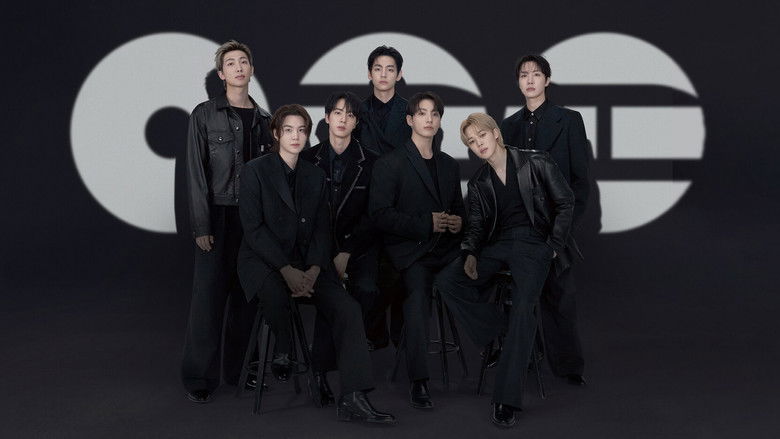
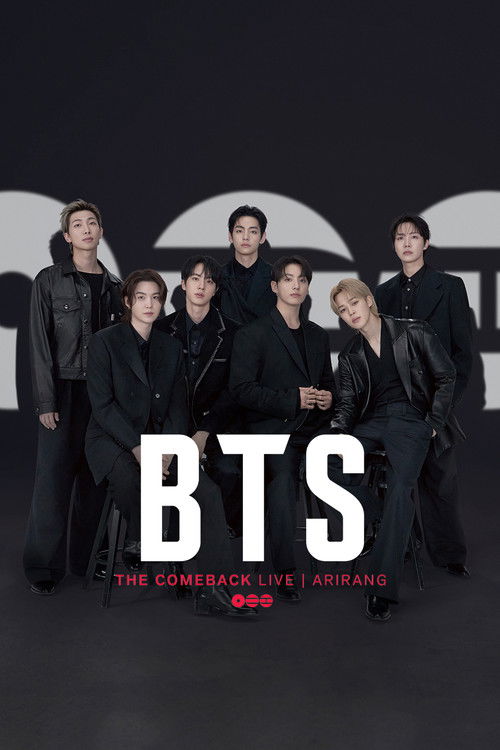
BTS THE COMEBACK LIVE | ARIRANG
An electric reunion forged beneath ancient palace gates, where a storm of purple light meets royal Korean heritage—capturing the euphoric, long-awaited homecoming of global pop icons returning to their cultural roots.
BTS THE COMEBACK LIVE | ARIRANG

BTS THE COMEBACK LIVE | ARIRANG

BTS 컴백 라이브: ARIRANG

21 March 2026 United Kingdom 66 min 8.8 (114)

Director: Hamish Hamilton, Cameron Whitelaw

Cast: RM, Jin, Suga, j-hope, Jimin

Music Documentary Cultural Identity & Heritage Reclamation Reunion, Brotherhood & Collective Resilience Maturation & Self-Reinvention ("BTS 2.0") Communal Healing & Shared Longing (Artist & Audience)

Overview

BTS THE COMEBACK LIVE | ARIRANG (2026) is a landmark live concert film and global broadcast documentary directed by television veteran Hamish Hamilton and produced by Done+Dusted in partnership with BigHit Music / HYBE and Netflix. The special captures the monumental reunion performance of BTS (RM, Jin, Suga, j-hope, Jimin, V, Jung Kook) on March 21, 2026, staged directly at the historic Gwanghwamun Square and Gyeongbokgung Palace in central Seoul.

The concert serves as the premiere live unveiling of BTS’s fifth full-length studio album, ARIRANG, celebrating their reunion following the completion of South Korea’s mandatory military service by all seven members. Framed by the illuminated heritage gates of Seoul and an audience exceeding 100,000 attendees, the film showcases a 12-song set balancing brand-new anthems with career-defining global smash hits.

Rather than relying on standard arena mechanics, the production combines cinematic cinematography, live Korean traditional music ensembles (gugak), and cutting-edge stagecraft. It functions as both a celebratory homecoming spectacle and an intimate artistic statement about maturation, resilience, and identity.
Core Meaning

The core message is that true artistic evolution requires embracing one's origin and roots. By centering the performance on Arirang—the ancient folk anthem of Korea embodying sorrow, endurance, and joyful reunion—the director and the group assert that no matter the scale of global fame, the identity of BTS is rooted in Korean heritage, brotherhood among the seven members, and the reciprocal bond with their audience (ARMY). It proclaims the arrival of BTS 2.0, where maturity in their 30s coexists with energetic hip-hop foundations and stadium pop mastery.

Thematic DNA

Cultural Identity & Heritage Reclamation 30%
Reunion, Brotherhood & Collective Resilience 25%
Maturation & Self-Reinvention ("BTS 2.0") 25%
Communal Healing & Shared Longing (Artist & Audience) 20%

Cultural Identity & Heritage Reclamation

Highlighted through the historic backdrop of Gwanghwamun and Gyeongbokgung Palace, featuring traditional hanbok aesthetics, Korean folk vocalists, and gugak instrumentation intertwined with modern trap and pop rhythms.

Reunion, Brotherhood & Collective Resilience

Emphasized by the group performing exclusively as a seven-piece collective after a three-and-a-half-year hiatus, reinforcing their solidarity and unity.

Maturation & Self-Reinvention ("BTS 2.0")

Reflected across new tracks like 2.0, NORMAL, and SWIM, demonstrating the group's transition into their thirties with refined lyrical themes and composure.

Communal Healing & Shared Longing (Artist & Audience)

Captured in the interaction with the massive sea of 100,000+ fans in Seoul and millions watching worldwide, turning the concert into a cathartic resolution to years of waiting.

Character Analysis

RM

Kim Nam-joon

Archetype: The Philosopher / Sovereign Key Trait: Articulate leadership, stoic charisma

Motivation

Reclaiming group identity and grounding BTS in Korean heritage.

Character Arc

Overcomes a sudden rehearsal ankle injury to anchor the group's message and lyrical direction from center stage.

Jin

Kim Seok-jin

Archetype: The Eldest / Emotional Pillar Key Trait: Steadfast warmth, resonant belt

Motivation

Uplifting the morale of the team and audience through joy and vocal stability.

Character Arc

Returns to grand stadium vocals with newfound gravitas after leading the members' enlistment discharge cycle.

All 5 characters and cast

Symbols & Motifs

Gwanghwamun Gate & The Royal Procession Path (Woldae)

Meaning:

Symbolizes the group’s symbolic coronation and homecoming, framing BTS as modern cultural ambassadors stepping onto ancient sovereign ground.

Context:

Used as the dramatic entry path through Geunjeongmun and Heungnyemun onto the royal courtyard.

The "Arirang" Melody and Folk Singers

Meaning:

Acts as an emotional motif of enduring through hard trials (the hill of Arirang) and overcoming separation to reunite.

Context:

Embedded musically during the opening and woven across traditional vocal arrangements in front of palace gates.

The Picture-Frame Arch Stage

Meaning:

Represents the merging of traditional Korean antiquity with futuristic lighting and global digital broadcast.

Context:

Designed by Florian Wieder, the arched LED structure framed the historic Joseon architecture directly behind the group.

The Purple Ocean (ARMY Bombs)

Meaning:

Serves as a recurring visual motif of fidelity, solidarity, and mutual protection.

Context:

Illuminates the expansive urban plaza across Gwanghwamun Square throughout the performance.

Water & "SWIM" Imagery

Meaning:

A thematic symbol of resilience—navigating turbulent currents of public pressure, time away, and age without sinking.

Context:

Expressed through the lead single performance and lyrical themes of endurance.

Memorable Quotes

안녕, 서울 – 우리 돌아왔다.
— RM

Context

Spoken as the opening command after stepping onto the main stage at Gwanghwamun Square.

Meaning

Signaled the official end of their four-year group hiatus and announced the dawn of their new chapter to 190 countries.

아리랑은 우리가 헤어지고 다시 만나는 모든 순간의 이야기입니다.
— RM

Context

Delivered during the group's mid-concert address.

Meaning

Explains why the historic Korean folk song was chosen as the album title and comeback theme.

All 3 quotes

Philosophical Questions

What constitutes cultural identity in a hyper-globalized world?

The film explores how an act with worldwide fame remains tethered to native linguistic and folkloric heritage.

Can a musical collective transcend the linear decay of youth?

By re-emerging in their thirties after mandatory civic duty, BTS questions the idol industry's age limitations, proposing a mature '2.0' framework of lifelong artistic fraternity.

How does collective memory endure physical separation?

The performance demonstrates that time spent apart can amplify communal meaning rather than erode it.

Alternative Interpretations

Interpretations of the event diverge across two primary perspectives:

Full ending explanation

Cultural Impact

Staged in March 2026, the broadcast marked a watershed moment in live streaming and K-pop history. Following South Korea's strict mandatory military conscription system that required all members to step away between late 2022 and mid-2025, many critics questioned whether a boy band could retain peak global dominance into their 30s.

BTS THE COMEBACK LIVE demonstrated the durability of their cultural influence. Produced on the visual scale of a Super Bowl halftime broadcast, it set a benchmark for Netflix's live broadcast infrastructure and proved that non-Western pop events can command unified global viewing appointments.

Audience Reception

The special was met with widespread critical and popular acclaim alongside specific talking points:

  • Praise: Universally lauded for its cinematic camera work, crisp sound engineering, dynamic set progression, and the raw vocal stability of all seven members after four years off stage. The fusion of traditional gugak with modern choreography was singled out as a masterstroke.
  • Criticisms: Some viewers and critics felt the one-hour, 12-song runtime was too brief for a reunion of this magnitude, wishing for longer unscripted talking segments.
  • Controversies: The complete shutdown of Gwanghwamun Square caused logistical and traffic disruptions across central Seoul, prompting localized debate in Korean media over municipal permits for pop concerts in public transit hubs.
  • Verdict: Widely celebrated as an exhilarating triumph and one of the definitive live pop culture events of 2026.

Interesting Facts

  • Director Hamish Hamilton completed a historic directing sweep in early 2026: The Grammys, the Super Bowl LX Halftime Show, the Academy Awards, and BTS THE COMEBACK LIVE | ARIRANG within a span of seven weeks.
  • The Seoul Metropolitan Government approved shutting down central Seoul and the Street of the Six Ministries (Yukjo-geori) for a musical concert of this magnitude for the first time in South Korean history.
  • Because Gwanghwamun is a bustling major thoroughfare, the production team could not hold multi-day stage rehearsals; the live show relied heavily on workshops in Los Angeles/Seoul and technical precision from Done+Dusted.
  • RM suffered an ankle sprain during stage rehearsals on March 19, requiring modified routines and partial seated staging, which he performed with vigorous upper-body choreographies.
  • The stage featured 87 on-stage professionals, including a 50-person dancer crew and 13 traditional Korean gugak instrumentalists and folk singers in hanbok.
  • Over 104,000 people attended the in-person event, while real-time live viewership on Netflix drew millions across more than 190 territories, ranking #1 in 24 countries.

Easter Eggs

National Treasure No. 29 Homage

The transition into the new tracks subtly references the sound of the Divine Bell of King Seongdeok (National Treasure No. 29 of Korea), echoing deep cultural permanence.

"Street of Six Ministries" Staging

The stage setup in the Yukjo Yard north of Gwanghwamun honors the historical administrative center of the Joseon Dynasty, visually equating BTS's cultural reach to historical statecraft.

"MIC Drop" & "Mikrokosmos" Bookends

The setlist intentionally balances hard-hitting hip-hop classics with cosmic fan anthems, linking the 2017–2019 eras with the 2026 ARIRANG tracks.

Gugak Fusion in "Body to Body"

The opening song embeds a live traditional vocal arrangement of Arirang performed by female hanbok-clad vocalists positioned right in front of the Gyeongbokgung Palace gates.

Frequently Asked Questions

Explore More About This Movie

Dive deeper into specific aspects of the movie with our detailed analysis pages

Comments (0)

Leave a comment

No comments yet. Be the first to share your thoughts!

Similar Movies