Skip to content
Jackass: Best and Last
A bittersweet slapstick elegy drenched in bruised flesh, manic laughter, and unvarnished aging; like an old, battered shopping cart taking one final joyride down a steep hill, refusing to brake until the wheels fly off in pure celebratory chaos.
Jackass: Best and Last

Jackass: Best and Last

"One. Last. Ride."

25 June 2026 United States of America 92 min 7.6 (204)

Director: Jeff Tremaine

Cast: Johnny Knoxville, Steve-O, Chris Pontius, Jason 'Wee Man' Acuña, Dave England

Action Comedy Documentary Aging, Mortality, and the Body’s Limits Unconditional Brotherhood and Camaraderie Nostalgia and Grief Transgression as Catharsis
Budget: $10,000,000
Box Office: $27,795,255

Overview

Directed by franchise architect Jeff Tremaine and produced alongside Spike Jonze and Johnny Knoxville, Jackass: Best and Last (2026) serves as the official theatrical epilogue and retrospective milestone for the iconic stunt comedy crew. Marking over 25 years since Jackass originally premiered on MTV, the film functions as a hybrid format: blending newly staged, punishing stunts with previously unaired vault footage, restored classic highlights, and intimate behind-the-scenes interviews.

The film gathers the surviving original troupe—including Knoxville, Steve-O, Chris Pontius, Jason "Wee Man" Acuña, Dave England, "Danger" Ehren McGhehey, and Preston Lacy—alongside the next generation introduced in Jackass Forever (Sean "Poopies" McInerney, Zach Holmes, Jasper Dolphin, Rachel Wolfson, and Jasper’s father, Compston "Dark Shark" Wilson). Together, the ensemble embarks on a victory lap that confronts the realities of middle age, physical vulnerability, and the enduring bonds of friendship.

Across its 92-minute runtime, the film alternates between side-splitting physical comedy and candid, emotionally vulnerable reflections. Rather than attempting to out-spectacle previous installments with pure danger, Best and Last frames their lifelong pursuit of shared absurdity as a loving, collective farewell to a cultural phenomenon.
Core Meaning

The core thesis of Jackass: Best and Last is that joy, friendship, and radical vulnerability can transform physical degradation and pain into an authentic celebration of human connection. Tremaine and Knoxville use the film to dismantle toxic masculinity through absolute transparency: middle-aged men willingly looking foolish, laughing through agony, holding hands through medical tests, and openly weeping over the passage of time. The film argues that growing older is inevitable, but true fraternity and the childlike instinct to laugh in the face of suffering can endure until the very end.

Thematic DNA

Aging, Mortality, and the Body’s Limits 35%
Unconditional Brotherhood and Camaraderie 30%
Nostalgia and Grief 20%
Transgression as Catharsis 15%

Aging, Mortality, and the Body’s Limits

The physical toll of stunts that previously relied on youth is now replaced with challenges addressing the absurdity of aging bodies (such as medical-prep pranks and robotic examinations), acknowledging that physical decline is nature's ultimate stunt.

Unconditional Brotherhood and Camaraderie

The enduring emotional bond between the crew members remains the heart of the franchise. Pain is universally shared, diffused by collective laughter, and met with genuine mutual affection.

Nostalgia and Grief

The presence of archival footage and the palpable absence and remembrance of late and estranged members (notably Ryan Dunn) underscores the passage of a quarter-century and the emotional cost of their journey.

Transgression as Catharsis

Subverting societal taboos regarding bodies, bodily functions, and social decorum continues to act as a freeing, democratic form of comedy that unites audiences worldwide.

Character Analysis

Johnny Knoxville

Himself

Archetype: The Ringmaster / Patriarch Key Trait: Sadistic playfulness mixed with deep emotional sincerity.

Motivation

To give the franchise and his lifelong friends a proper, heartfelt send-off.

Character Arc

Evolves from a fearless daredevil taking direct bull hits to a protective, sentimental elder statesman directing the madness from the sidelines.

Steve-O

Himself

Archetype: The Ascetic / Resilient Clown Key Trait: Unyielding willingness to push past comfort thresholds.

Motivation

To test the absurd limits of his body while staying completely sober and present.

Character Arc

Transitions from destructive self-harm fueled by addiction to sober, disciplined mastery of physical comedy and existential humor.

All 5 characters and cast

Symbols & Motifs

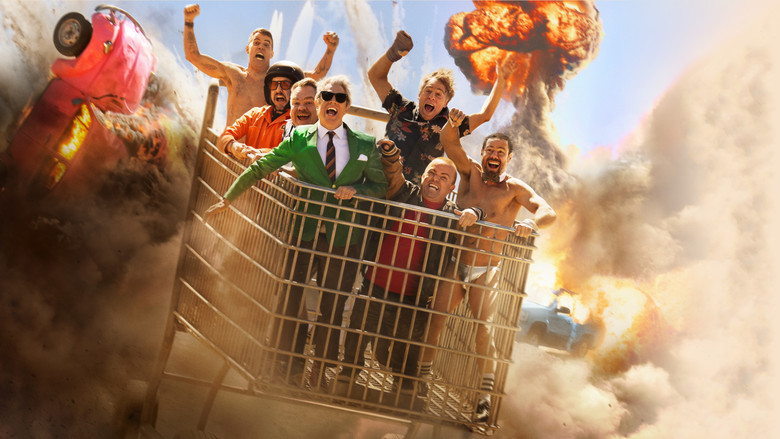
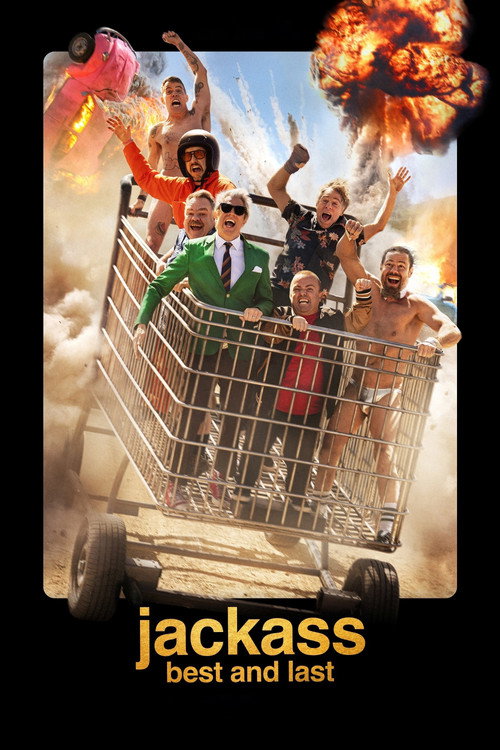
The Giant Shopping Cart

Meaning:

Represents the franchise's eternal chariot—an ordinary, utilitarian object repurposed into an engine of communal recklessness.

Context:

Featured in recurring stunt imagery as the entire cast rides aboard down steep inclines.

The Skull and Crutches Logo

Meaning:

Symbolizes the troupe's badge of honor: embracing injury and physical vulnerability not as defeat, but as a comedic signature.

Context:

Used throughout branding, promotional backdrops, and introductory visual markers.

Medical Equipment

Meaning:

Visualizes the crew's transition into middle age and bodily decline, shifting the setting from extreme sports to clinical reality.

Context:

Appears in the form of colonoscopy solutions, robotic probes, and doctor-prescribed examinations repurposed for stunts.

The High-Speed Phantom Camera

Meaning:

Elevates violent, messy physical slapstick into baroque, poetic tableaus of human reaction and kinetic impact.

Context:

Employed during slow-motion captures of blunt impacts, liquid explosions, and physical failures.

Laughing Crew Behind the Camera

Meaning:

Acts as a motif of trust, safety, and reassurance, emphasizing that danger is softened by shared community and collective amusement.

Context:

The audible and visible presence of director Jeff Tremaine and camera operators cackling off-mic during dangerous moments.

Memorable Quotes

I’m Johnny Knoxville, and this is the last time we'll ever say: welcome to Jackass.
— Johnny Knoxville

Context

Spoken directly to the camera during the opening sequence of the movie.

Meaning

Marks the official farewell of the original crew and establishes the bittersweet tone of the entire film.

Getting old is nature’s way of hitting you in the balls every single day.
— Dave England

Context

Delivered during the confessional interviews reflecting on filming in their 50s.

Meaning

Comically articulates the film's core theme regarding the unavoidable indignities of physical aging.

All 4 quotes

Philosophical Questions

Can physical pain transcend suffering to become an act of love?

The film demonstrates that consensual, shared suffering, when framed by humor and mutual support, transforms raw physical pain into a powerful vehicle for social bonding.

How does human dignity evolve with age?

By leaning into prostate exams, colonoscopies, and bodily wear-and-tear, the film asks whether embracing physical decay openly and laughingly is more dignified than attempting to conceal it.

What is the boundary between courage and foolishness?

The film illustrates that embracing utter absurdity and public humiliation often requires the exact same psychological bravery and resilience as traditional heroics.

Alternative Interpretations

The Elegy on Masculine Friendship: Critical commentators have noted that beneath the toilet humor, the film acts as an accidental masterclass in male emotional support—where physical intimacy, hugs, shared crying, and mutual care are openly expressed without irony or shame.

Full ending explanation

Cultural Impact

When Jackass launched in 2000, it ran on MTV for only three brief seasons (spanning just 10 months), yet spawned a multi-decade multimedia empire. Its raw, handheld aesthetic and DIY stunt culture effectively laid the blueprint for modern internet video, pre-dating YouTube, viral pranks, and TikTok daredevils by years.

By 2026, Jackass: Best and Last arrived in a media landscape saturated with polished, algorithmic content, offering a nostalgic reminder of physical reality, practical effects, and authentic danger. Critics and audiences widely embraced the film as a poignant victory lap that elevated low-brow slapstick into legitimate folk-art Americana.

Audience Reception

Aggregated reception for Jackass: Best and Last was generally positive and bittersweet, leaving audiences feeling nostalgic and satisfied.

  • Key Strengths: Critics and fans highlighted the surprising emotional warmth, sincere cast retrospectives, and the enduring comedic chemistry that has survived 25 years.
  • Key Criticisms: Reviewers and Letterboxd users noted that the heavy reliance on archival vault footage made the project feel at times more like a retrospective television special or victory-lap epilogue than a standalone feature film.

Interesting Facts

  • Rather than consisting entirely of newly filmed material, the film was designed as an 80/20 balance of unreleased archival vault footage and new stunts to spare the aging cast severe traumatic brain injuries.
  • Produced on a tight $10 million budget by MTV Entertainment Studios and Dickhouse Entertainment, the movie grossed $27.8 million at the worldwide theatrical box office.
  • Following severe brain damage suffered from a bull hit in Jackass Forever, Johnny Knoxville's doctor strictly forbade him from taking direct head trauma, shifting his role toward orchestrating pranks like the 'Pitching Machine'.
  • Jasper Dolphin’s father, Compston 'Dark Shark' Wilson, who was a breakout recurring guest in Jackass Forever, was given top billing as an official main cast member.
  • Editors Matthew Kosinski, Matthew Probst, Jeff Buchanan, and Ian Kornbluth sifted through hundreds of hours of raw Hi8, miniDV, and 4K footage filmed between 1999 and 2025 to curate the film's retrospective narrative.

Easter Eggs

Tribute to Ryan Dunn

The film incorporates previously unreleased 2000s vault footage of the late Ryan Dunn, framing his laughter as a cornerstone of the original group chemistry and honoring his memory.

Lance Bangs Puking Behind the Lens

Longtime collaborator and camera operator Lance Bangs makes his signature auditory and on-screen appearance, visibly retching behind the camera during the colonoscopy prep stunt.

Tory Belleci Cameo

MythBusters alum Tory Belleci contributed mechanical stunt design concepts and appears on-set assisting with the apparatuses.

Echoes of the Pilot

Specific camera angles and framings during the Los Angeles backlot shoots intentionally mimic the scruffy skate-video aesthetic of the original 2000 MTV pilot episode.

Frequently Asked Questions

Explore More About This Movie

Dive deeper into specific aspects of the movie with our detailed analysis pages

Comments (0)

Leave a comment

No comments yet. Be the first to share your thoughts!

Similar Movies