Skip to content
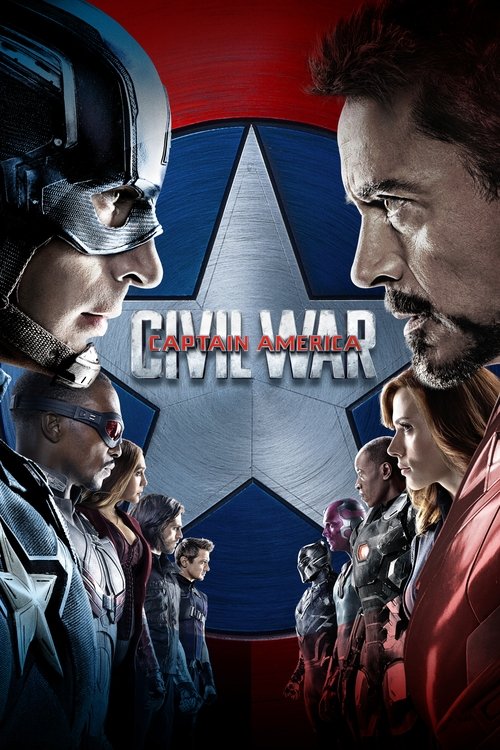
Captain America: Civil War
A gritty superhero political thriller fractured by tragic betrayal, where fractured bonds of brotherhood shatter like a heavy vibranium shield across a cold, steel-gray battlefield.
Captain America: Civil War

Captain America: Civil War

"United we stand. Divided we fall."

27 April 2016 United States of America 147 min 7.5 (24,285)

Director: Joe Russo, Anthony Russo

Cast: Chris Evans, Robert Downey Jr., Scarlett Johansson, Sebastian Stan, Anthony Mackie

Action Adventure Science Fiction Security vs. Individual Liberty / Accountability vs. Autonomy Friendship, Loyalty, and Secret Betrayal The Cycle of Vengeance vs. Moral Restraint Trauma, Guilt, and Personal Responsibility Manipulation and Vulnerability from Within
Budget: $250,000,000
Box Office: $1,155,046,416

Overview

Following international collateral damage involving enhanced individuals in Sokovia, Johannesburg, and Lagos, the United Nations drafted the Sokovia Accords. This international treaty mandates government oversight and regulation of the Avengers, forbidding them from operating across sovereign borders without explicit committee approval.

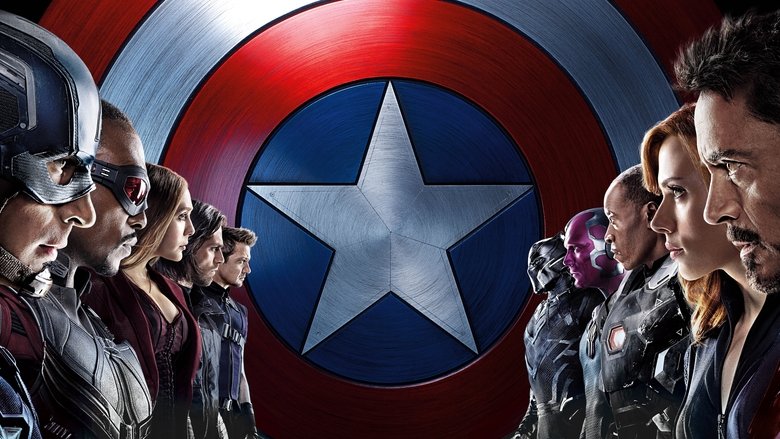
The treaty splits the team into two opposing ideological factions. Tony Stark (Iron Man), burdened by guilt over civilian deaths caused by his past creations and battles, advocates for strict government accountability. Steve Rogers (Captain America), deeply suspicious of political agendas following the infiltration of S.H.I.E.L.D. by HYDRA, argues that surrendering autonomy disables the Avengers from acting when lives are at risk.

Tensions explode when a bomb detonates at a UN summit in Vienna, killing King T'Chaka of Wakanda. Steve's brainwashed former ally, Bucky Barnes (the Winter Soldier), is named the prime suspect. As T'Chaka’s grieving son T'Challa (Black Panther) embarks on a quest for vengeance, Steve defies international law to protect his friend, forcing former allies into an inescapable personal and political confrontation.
Core Meaning

Directed by Anthony and Joe Russo, Captain America: Civil War explores how rigid ideological convictions, unhealed personal trauma, and secret betrayals can dismantle the most formidable alliances from within.

The film demonstrates that tragedy arises not merely from evil, but when two opposing sides both possess legitimate moral justifications. Absolute individual autonomy without accountability breeds unaccountable vigilantes; conversely, total government control subjects justice to shifting political agendas. Ultimately, the movie asserts that no empire or institution can be conquered from the outside as effectively as it can crumble when torn apart by internal grief and mistrust.

Thematic DNA

Security vs. Individual Liberty / Accountability vs. Autonomy 30%
Friendship, Loyalty, and Secret Betrayal 25%
The Cycle of Vengeance vs. Moral Restraint 20%
Trauma, Guilt, and Personal Responsibility 15%
Manipulation and Vulnerability from Within 10%

Security vs. Individual Liberty / Accountability vs. Autonomy

The central sociopolitical conflict pits Kantian deontological duty (Cap's belief in absolute individual moral choice) against Utilitarian pragmatism (Iron Man's desire to minimize harm through regulation). Cap fears political oversight will dictate where heroes go, while Stark believes unrestricted power inevitably causes catastrophic harm.

Friendship, Loyalty, and Secret Betrayal

Steve’s loyalty to Bucky tests his relationship with Tony. Steve prioritizes saving his childhood friend over the Avengers' political harmony, while Tony feels deeply betrayed when he learns Steve concealed the truth about Howard and Maria Stark's murders.

The Cycle of Vengeance vs. Moral Restraint

Vengeance acts as a destructive force driving T'Challa, Tony Stark, and Helmut Zemo. While Tony succumbs to vengeance upon seeing his parents' killer, T'Challa realizes how vengeance has consumed everyone around him and actively chooses to break the cycle.

Trauma, Guilt, and Personal Responsibility

Tony Stark’s post-traumatic guilt over Sokovia drives his willingness to accept government leashes. Bucky Barnes carries severe psychological trauma from decades of forced brainwashing, struggling with guilt for actions he could not control.

Manipulation and Vulnerability from Within

Helmut Zemo proves that superhumans cannot be defeated by force alone; instead, their human emotional vulnerabilities—grief, ego, and hidden secrets—are what make them fragile.

Character Analysis

Steve Rogers / Captain America

Chris Evans

Archetype: The Moral Idealist / Reluctant Rebel Key Trait: Unyielding moral conviction

Motivation

Protecting individual free will and saving his innocent, brainwashed friend.

Character Arc

Moves from serving official institutions to becoming an outlaw fighting for individual liberty.

Tony Stark / Iron Man

Robert Downey Jr.

Archetype: The Burdened Futurist / Tragic Antihero Key Trait: Deep-seated guilt and emotional volatility

Motivation

Mitigating guilt over civilian casualties and keeping the Avengers together.

Character Arc

Shifts from an anti-establishment billionaire to an enforcer of UN oversight, ultimately unraveling under sudden emotional grief.

All 5 characters and cast

Symbols & Motifs

Captain America’s Shield

Meaning:

Represents ideal protection, trust, and patriotism. When Tony claims Steve does not deserve the shield because Howard Stark created it, Steve surrenders it, symbolizing his detachment from the U.S. government and the break in his bond with Tony.

Context:

Used throughout Captain America's battles and ultimately surrendered to Tony Stark in the Siberian bunker climax.

The Red HYDRA Trigger Notebook

Meaning:

Symbolizes loss of human agency, psychological vulnerability, and Bucky’s past as a weaponized victim.

Context:

Utilized by Zemo and former HYDRA handlers to recite trigger words that activate Bucky's Winter Soldier programming.

The B.A.R.F. Hologram (Binocular Augmented Retro-Fixation)

Meaning:

Represents Tony’s obsession with rewriting past trauma, his unresolved grief, and his inability to process his parents' death.

Context:

Demonstrated by Tony Stark at MIT during his guest lecture to replay his last interaction with his parents.

The Flip Phone and Letter

Meaning:

Symbolize enduring friendship, hope, and open lines of communication despite ideological divides.

Context:

Delivered to Tony Stark at the end of the film as a personal gesture from Steve Rogers.

The Wakandan Royal Ring

Meaning:

Symbolizes royal duty, the weight of leadership, and the initial burden of vengeance.

Context:

Passed from King T'Chaka to T'Challa immediately following the UN summit bombing in Vienna.

Memorable Quotes

He's my friend. / So was I.
— Steve Rogers & Tony Stark

Context

Exchanged during the final fight inside the Siberian bunker.

Meaning

Captures the tragic death of their friendship and the personal heartbreak underneath the political clash.

Our very strength incites challenge. Challenge incites conflict. And conflict breeds catastrophe.
— Vision

Context

Spoken during the Avengers' debate at the compound regarding the Sokovia Accords.

Meaning

Encapsulates the philosophical dilemma of superhero escalation.

All 6 quotes

Philosophical Questions

Deontology vs. Utilitarianism

Is an action morally right based on absolute adherence to principles (Steve) or based on calculating outcomes and minimizing damage (Tony)?

State Sovereignty vs. Personal Autonomy

Does any state or international body have the right to dictate when an individual may use their power to save lives?

Moral Responsibility under Coercion

Is a person morally accountable for murderous acts committed while subjected to complete brainwashing?

Justice vs. Retribution

Where does legitimate justice end and destructive personal vengeance begin?

Alternative Interpretations

Interpretation A: Ideological Tragedy — Neither Steve nor Tony is wrong. The Accords represent a valid political system, while Steve’s resistance represents a valid defense of individual morality against systemic corruption.

Full ending explanation

Cultural Impact

Released in 2016, Captain America: Civil War reflected a world grappling with post-9/11 security apparatuses, international oversight, surveillance, and increasing political polarization.

In cinema history, the film redefined the 'event blockbuster'. Instead of uniting heroes against a CGI threat destroying a city, it pitted established heroes against each other over personal and philosophical disagreements. It grossed over $1.153 billion globally, making it the highest-grossing film of 2016, and established directors Anthony and Joe Russo as Marvel’s flagship directors.

Audience Reception

Critics praised the nuanced balancing of a massive ensemble cast, the airport battle choreography, the introduction of Chadwick Boseman’s Black Panther and Tom Holland’s Spider-Man, and Zemo’s grounded, non-superpowered villainy.

Conversely, the film faced criticism for its muted, desaturated gray visual tone. Some viewers felt the Sokovia Accords storyline was sidelined in the third act to make room for a personal brawl, while Steve's brief romantic subplot with Sharon Carter sparked debate given her relation to Peggy Carter. Additionally, fans heavily debated whether Steve’s concealment of Howard Stark's murder was a betrayal of character.

Overall, with a Rotten Tomatoes score of 90% and Metacritic at 75/100, it is widely considered one of the highest achievements in the Marvel Cinematic Universe.

Interesting Facts

  • Sony Pictures initially rejected Marvel's proposal for Spider-Man, but after corporate negotiations following financial disappointment with The Amazing Spider-Man 2, signed a historic deal allowing Tom Holland's Peter Parker to join the MCU.
  • When Bucky hides in Bucharest, Romania, Sebastian Stan (born in Constanța, Romania) spoke fluent native Romanian in those market scenes.
  • Screenwriters Markus and McFeely originally wrote a smaller, non-Civil War story focusing heavily on Steve and Bucky, before producer Kevin Feige suggested adapting the Civil War comic arc.
  • During the iconic shot where Cap physically holds a helicopter from taking off, Chris Evans genuinely strained his bicep performing the stunt.
  • The mercenary holding the virus vial in Lagos is played by Damon Poitier, who originally portrayed Thanos in the post-credits scene of The Avengers (2012) before Josh Brolin took over.

Easter Eggs

Arrested Development Stair Car

Directors Joe and Anthony Russo, who directed seminal episodes of Arrested Development, placed the famous Bluth Company stair car in the background of the Leipzig airport tarmac fight.

Community Cameo

Jim Rash (Dean Pelton in Community, also produced by the Russos) appears as an MIT liaison talking to Tony Stark.

Iconic Comic Panel Recreation

The shot where Iron Man fires his repulsors full-blast into Cap’s raised shield is an exact visual recreation of Steve McNiven’s iconic cover art from Civil War #7 (2007).

Stan Lee Cameo

Stan Lee plays a FedEx delivery man at the end of the film who asks for 'Tony Stank'.

The Raft / Prison 42

The underwater supermax prison holding Cap’s allies is an adaptation of Prison 42 from the Marvel Comics Civil War storyline.

Frequently Asked Questions

Explore More About This Movie

Dive deeper into specific aspects of the movie with our detailed analysis pages

Comments (0)

Leave a comment

No comments yet. Be the first to share your thoughts!

Similar Movies