Skip to content
Thor: Ragnarok
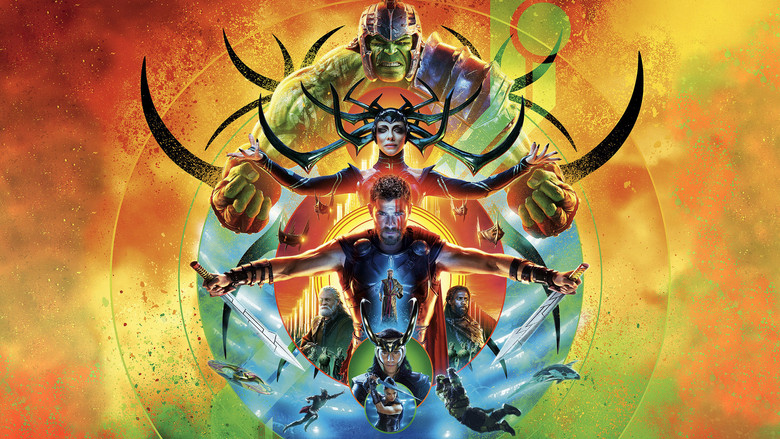
A neon-lit galactic action-comedy pulsing with electrifying joy, where mythic royalty collides with cosmic arena madness like a psychedelic lightning bolt striking a disco palace of cosmic trash.
Thor: Ragnarok

Thor: Ragnarok

"No hammer. No problem."

02 October 2017 United States of America 131 min 7.6 (22,287)

Director: Taika Waititi

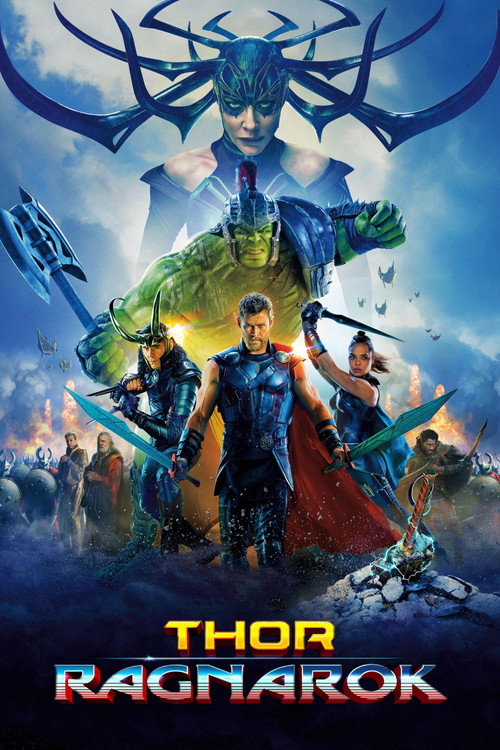
Cast: Chris Hemsworth, Mark Ruffalo, Tom Hiddleston, Cate Blanchett, Idris Elba

Action Comedy Adventure Science Fiction Colonialism, Imperial History, and Historical Amnesia Home as a Community, Not a Physical Place Identity Beyond External Symbols of Power Brotherhood, Trust, and Redemption
Budget: $180,000,000
Box Office: $855,301,806

Overview

Thor: Ragnarok (2017), directed by Taika Waititi, revitalizes the Marvel Cinematic Universe's God of Thunder by plunging him into an uninhibited, space-faring adventure. Stripped of his legendary hammer Mjolnir, exiled to the far reaches of the galaxy, and imprisoned on the colorful landfill planet of Sakaar, Thor finds himself racing against time to prevent the destruction of his home realm, Asgard.

The plot centers on an existential threat to Asgard: the arrival of Hela, the ruthless Goddess of Death, who escapes centuries of imprisonment following a monumental shift in the royal bloodline. To survive and retake his kingdom, Thor is forced into a brutal gladiatorial contest by Sakaar's eccentric ruler, the Grandmaster. There, he unexpectedly crosses paths with his former Avengers ally, the Incredible Hulk, as well as a disillusioned former Asgardian warrior, Valkyrie.

Together with his untrustworthy adopted brother Loki and a ragtag coalition of alien gladiators, Thor must forge an unlikely alliance known as the "Revengers". The film blends high-stakes mythic warfare with irreverent humor and retro-futuristic visuals, taking the character on a transformative journey across worlds to discover what true leadership and heroism require.
Core Meaning

The primary message of Thor: Ragnarok revolves around the deconstruction of empire, heritage, and identity. Director Taika Waititi infuses the film with a subtle yet potent critique of colonialism and historical amnesia. Asgard's golden grandeur is exposed as a facade built upon brutal conquest and forgotten atrocities. The film asserts that true identity and community are not defined by grand physical structures or gilded titles, but by the safety, unity, and moral integrity of the people themselves. Furthermore, it emphasizes personal reinvention—showing that an individual's worth comes from within rather than from external symbols of power or status.

Thematic DNA

Colonialism, Imperial History, and Historical Amnesia 30%
Home as a Community, Not a Physical Place 25%
Identity Beyond External Symbols of Power 25%
Brotherhood, Trust, and Redemption 20%

Colonialism, Imperial History, and Historical Amnesia

Revealed through Hela’s unveiling of Asgard’s hidden history. Odin whitewashed Asgard’s violent past, painting over ceiling murals depicting conquest to present a peaceful paradise. Hela serves as the physical embodiment of the empire's buried sins returning to claim their due.

Home as a Community, Not a Physical Place

Explored through the central dilemma of Asgard’s destiny. Thor comes to realize that saving Asgard does not mean preserving its land mass or golden palaces, but evacuating its citizens to preserve their culture and lineage.

Identity Beyond External Symbols of Power

Demonstrated through Thor’s personal arc after the destruction of Mjolnir. Thor relies on his hammer as the source of his strength; losing it forces him to realize that the power of lightning resides within him, not in the weapon.

Brotherhood, Trust, and Redemption

Unpacked through the evolving dynamic between Thor and Loki. Their endless cycle of betrayal shifts into mutual understanding when Thor accepts Loki's treacherous nature, ultimately prompting Loki to voluntarily stand beside his brother when it matters most.

Character Analysis

Thor Odinson

Chris Hemsworth

Archetype: The Hero / Maturing King Key Trait: Relentless optimism coupled with newfound comedic self-awareness

Motivation

To prevent Ragnarok and save his realm from destruction.

Character Arc

Transitions from an arrogant warrior who relies on his weapon into a wiser leader who recognizes his internal power and the true value of his people.

Loki Odinson

Tom Hiddleston

Archetype: The Trickster / Antihero Key Trait: Cunning chameleon-like adaptability and unpredictable loyalty

Motivation

Self-preservation, prestige, and earning Thor's respect.

Character Arc

Shifts from a self-serving opportunistic trickster toward someone who genuinely values his family bond and chooses solidarity over abandonment.

All 5 characters and cast

Symbols & Motifs

Mjolnir (Thor's Hammer)

Meaning:

Symbolizes reliance on external validation, crutches of power, and childhood dependency.

Context:

Its shattering by Hela forces Thor into maturity and true self-actualization.

Asgard's Golden Murals

Meaning:

Symbolize official state propaganda vs. historical truth.

Context:

Hela smashes the sanitized painted ceiling to reveal the violent original fresco beneath.

Thor's Hair Cut

Meaning:

Symbolizes the shedding of old ego, past identity, and royal privilege.

Context:

Marks his transition into an underdog gladiator on Sakaar.

Sakaar (The Planet of Trash)

Meaning:

A visual motif for institutionalized systemic oppression, consumerist distraction, and the literal dumping ground of forgotten beings discarded by imperial power.

Context:

Used as the setting where marginalized individuals and discarded champions are trapped in gladiatorial combat for public entertainment.

Lightning / Thunder

Meaning:

Symbolizes divine intrinsic potential, unbridled inner strength, and Thor claiming his rightful birthright.

Context:

Used when Thor realizes he is the God of Thunder rather than the "God of Hammers".

Memorable Quotes

He's a friend from work!
— Thor

Context

Yelled joyfully to the Grandmaster in the gladiator arena upon seeing Hulk enter the arena floor.

Meaning

Captures the film's irreverent comedy tone and subverts superhero dramatic tropes. Suggested by a Make-A-Wish child visiting set.

Asgard is not a place. It's a people.
— Odin

Context

Odin speaks to Thor in a spiritual vision on Norway's cliffs/fields as Thor struggles against Hela.

Meaning

Enunciates the core moral and philosophical message of the entire film.

All 5 quotes

Philosophical Questions

Can a nation built on historical atrocity ever achieve true moral legitimacy?

Explored through Asgard’s secret founding history. The film suggests that true peace cannot exist alongside systemic cover-ups; the physical foundation of such an empire must be allowed to burn down to build something ethically sound.

Is identity tied to heritage, physical possessions, or internal character?

Revealed through Thor losing Mjolnir and his sight. His worth as a warrior and king exists independently of physical artifacts or imperial monuments.

When is destruction a necessary act of creation or salvation?

Examined through the paradox of Ragnarok—Thor must deliberately unleash the apocalyptic monster Surtur to destroy his homeland in order to save his citizens.

Alternative Interpretations

The film offers several distinct interpretations:

Full ending explanation

Cultural Impact

Coming after Thor: The Dark World (2013), Marvel Studios allowed Taika Waititi complete creative freedom to reinvent Thor's tone, infusing the film with a distinct Antipodean / Pasifika comedic sensibility. Thor: Ragnarok set a precedent for blockbuster franchises trusting auteur comedy directors to inject distinct personality, bright synth aesthetics, and heavy improvisation into corporate franchise cinema. Critically acclaimed with a 93% approval rating on Rotten Tomatoes, it transformed Thor into one of the MCU’s most beloved comedic leads, cementing Taika Waititi as a household Hollywood director and popularizing 1980s synthwave cosmic aesthetics across superhero media.

Audience Reception

Thor: Ragnarok received widespread acclaim from audiences and critics alike, being widely regarded as one of the top-tier films in the Marvel Cinematic Universe for successfully rescuing the Thor sub-franchise through bold artistic reinvention.

Praised Aspects:

  • Irreverent comedic pacing and natural chemistry among Hemsworth, Hiddleston, Ruffalo, and Thompson.
  • Vibrant, retro-futuristic visuals inspired by comic legend Jack Kirby.
  • Taika Waititi’s voice performance as Korg and Mark Mothersbaugh's electronic score.
  • Cate Blanchett’s campy, menacing portrayal of Hela.

Main Points of Criticism:

  • Occasional "bathos"—defusing serious, tragic emotional beats too quickly with a joke.
  • Unceremonious and rapid offscreen/onscreen deaths of longstanding side characters, such as the Warriors Three (Volstagg, Fandral, Hogun).
  • Tone shift felt jarring for fans of traditional, somber Norse fantasy mythology.

Interesting Facts

  • Director Taika Waititi estimated that roughly 80% of the film's dialogue was improvised or ad-libbed on set by the cast.
  • The iconic line "He's a friend from work!" was suggested to Chris Hemsworth during filming by a Make-A-Wish child visiting the set.
  • Waititi used Led Zeppelin’s "Immigrant Song" in his initial pitch sizzle reel to Marvel executives, and Marvel later spent a high seven-figure sum to secure the rights.
  • Taika Waititi provided both motion-capture and voice performances for Korg, Surtur (motion capture), and one of the heads of the three-headed alien gladiator Haju.
  • The Shake Weight used by Skurge (Karl Urban) to demonstrate his "stuff" actually belonged to Taika Waititi, who brought it from his personal collection.
  • Filmed in Queensland, Australia, production began with a ceremonial welcome dance by local Aboriginal tribes, and all spaceships on Sakaar were named after Australian Holden cars.
  • The production utilized all 9 soundstages at Village Roadshow Studios on Australia's Gold Coast, constructing massive backlot sets for Asgard and Sakaar that were each the size of a football field.

Easter Eggs

Asgardian Theater Cameos

The theatrical play in Asgard recapping Thor: The Dark World features high-profile celebrity cameos: Matt Damon plays Loki, Luke Hemsworth plays Thor, and Sam Neill plays Odin.

Stan Lee Barber Cameo

Stan Lee cameos as a Sakaaran barber with terrifying spinning blade attachments who cuts Thor’s long hair.

Grandmaster’s Palace Sculptures

The exterior of the Grandmaster's gladiatorial tower features sculpted faces of past champions, referencing Marvel Comics characters Beta Ray Bill, Man-Thing, Ares, Bi-Beast, and the Night-Prowler.

Point Break Quinjet Password

Thor attempts to access the Avengers Quinjet using passwords like "Thor," "God of Thunder," and "Strongest Avenger," but the working access code is "Point Break"—Tony Stark's nickname for him in The Avengers (2012) based on Patrick Swayze's look.

Fake Infinity Gauntlet

Hela visits Odin's vault, knocks over the right-handed Infinity Gauntlet seen in the original Thor (2011), and declares it "Fake!", resolving a long-standing continuity question in the MCU.

Pure Imagination Song

The ride scene introducing Thor to Sakaar uses an orchestral arrangement of "Pure Imagination" from Willy Wonka & the Chocolate Factory (1971).

Frequently Asked Questions

Explore More About This Movie

Dive deeper into specific aspects of the movie with our detailed analysis pages

Comments (0)

Leave a comment

No comments yet. Be the first to share your thoughts!

Similar Movies