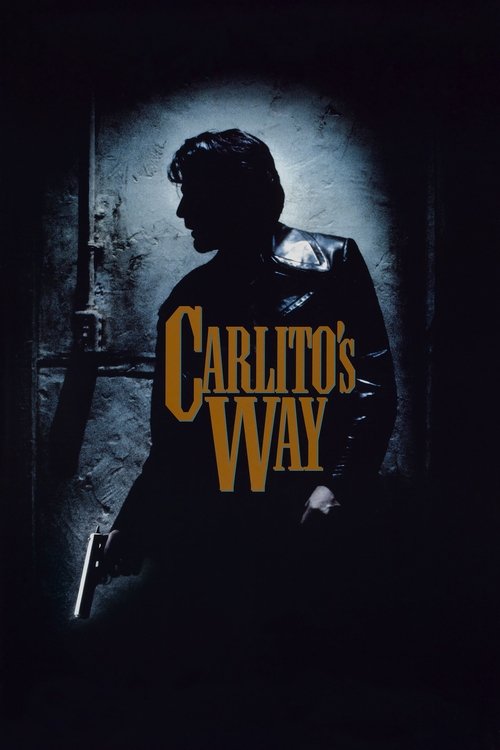
Carlito's Way
A tragic, noir-infused crime saga depicting a reformed convict's desperate, poignant struggle to escape his past, painted against the gritty, neon-soaked backdrop of 1970s New York.
Carlito's Way
Carlito's Way

"He's got a good future if he can live past next week."

10 November 1993 United States of America 144 min ⭐ 7.8 (3,332)
Director: Brian De Palma
Cast: Al Pacino, Sean Penn, Penelope Ann Miller, John Leguizamo, Ingrid Rogers
Drama Crime Thriller
The Inescapability of the Past Loyalty and Betrayal Redemption and the Dream of Paradise The Old Guard vs. The New Generation
Budget: $30,000,000
Box Office: $63,848,322

Carlito's Way - Ending Explained

⚠️ Spoiler Analysis

The entire narrative of "Carlito's Way" is framed by its tragic conclusion, which is revealed in a black-and-white slow-motion sequence at the very beginning of the film: Carlito is shot on a train platform. The film is an extended flashback leading up to this fatal moment, making the story a study in inevitability. The central twist is not what happens, but how and why it happens.

Carlito's downfall is a direct result of two fateful decisions. The first is his unwavering loyalty to his lawyer, Dave Kleinfeld. Kleinfeld, consumed by cocaine and paranoia, steals a million dollars from his mob boss client, Tony Taglialucci, and then murders him during a botched prison escape that Carlito helps facilitate out of a sense of obligation. This act puts Carlito in the crosshairs of the vengeful Taglialucci family, forcing him to flee for his life.

The second, and more ironic, twist is the identity of his killer. After surviving a spectacular shootout with the mob in Grand Central Station, Carlito finally reaches the train platform where Gail is waiting. It is here that he is ambushed and fatally shot, not by the Italian mafia, but by Benny Blanco "from the Bronx," the up-and-coming gangster Carlito had humiliated but spared earlier in the film. The final reveal is the betrayal of his bodyguard and friend, Pachanga, who sold out Carlito's location to Benny. Benny then kills Pachanga as well. Carlito's act of mercy towards Benny, a deviation from the ruthless code of his past, becomes the ultimate cause of his death. He dies watching Gail board the train with his money, his dream of paradise realized for her and their unborn child, but not for him. His death is a poignant confirmation that in his world, a single act of compassion can be more fatal than a lifetime of violence.

Alternative Interpretations

While the film is largely interpreted as a straightforward tragedy about the inability to escape one's past, some alternative readings offer different nuances. One interpretation views Carlito not merely as a victim of fate, but as an active participant in his own downfall. His decisions—to accompany his cousin on a drug deal, to get involved with Kleinfeld's escape plan, and most crucially, to let Benny Blanco live—are seen as choices born of his own ingrained nature and ego, not just external pressures. From this perspective, his tragedy is less about the world not letting him go and more about him being unable to let go of the man he used to be.

Another reading, leaning into De Palma's characteristic themes, suggests a homoerotic subtext in the relationship between Carlito and Kleinfeld. Critics have noted that Carlito's most intimate and binding relationship in the film is with his lawyer, stating lines like, "If you was a broad I'd marry you." In this light, his relationship with Gail is seen as more of an idealized, almost illusory, concept of a straight life, while his loyalty and ultimate downfall are inextricably linked to the intense, complex, and ultimately destructive bond with Kleinfeld.