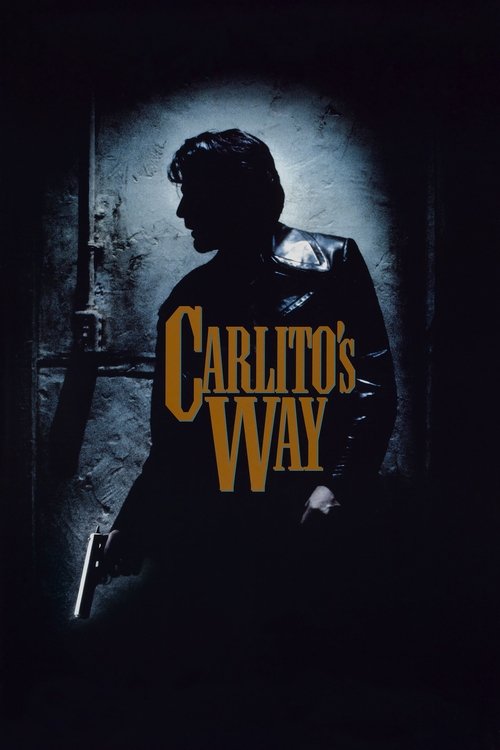
Carlito's Way
A tragic, noir-infused crime saga depicting a reformed convict's desperate, poignant struggle to escape his past, painted against the gritty, neon-soaked backdrop of 1970s New York.
Carlito's Way

Carlito's Way

"He's got a good future if he can live past next week."

10 November 1993 United States of America 144 min ⭐ 7.8 (3,332)
Director: Brian De Palma
Cast: Al Pacino, Sean Penn, Penelope Ann Miller, John Leguizamo, Ingrid Rogers
Drama Crime Thriller
The Inescapability of the Past Loyalty and Betrayal Redemption and the Dream of Paradise The Old Guard vs. The New Generation
Budget: $30,000,000
Box Office: $63,848,322

Overview

"Carlito's Way" follows the story of Carlito Brigante, a legendary Puerto Rican drug lord from Harlem, who is released from prison after serving only five years of a thirty-year sentence thanks to a legal technicality exploited by his corrupt, cocaine-addicted lawyer, Dave Kleinfeld. Upon his release, Carlito is determined to go straight, save enough money to retire to the Caribbean, and rekindle his relationship with his former love, Gail. He takes over a nightclub, intending to stay clean and accumulate the $75,000 he needs for his escape to paradise.

Despite his best intentions, Carlito finds that his past is not so easily shed. His reputation and old connections constantly pull him back toward the criminal underworld he is desperate to leave behind. His loyalty to his increasingly erratic and self-destructive lawyer, Kleinfeld, and his adherence to a personal code of honor drag him into dangerous situations. Encounters with a new generation of ruthless gangsters, like the ambitious Benny "Benny Blanco" from the Bronx, further complicate his efforts to remain on the straight and narrow. The streets, it seems, are always watching, and the promise of a peaceful future remains just out of reach.

Core Meaning

At its core, "Carlito's Way" is a fatalistic tragedy about the impossibility of escaping one's past and the destructive nature of a misguided code of honor in a world devoid of it. The film posits that once a person is defined by a certain life, especially a criminal one, the path to redemption is fraught with insurmountable obstacles. Carlito's journey is a testament to the idea that external forces—old loyalties, the expectations of others, and the magnetic pull of a former life—can overpower an individual's genuine desire for change. Director Brian De Palma explores the profound and melancholic theme that striving for a dream can be a race against a bullet you can't outrun, where the very principles that define you, such as loyalty, become the instruments of your downfall. The film serves as a poignant commentary on the human condition, suggesting that destiny is often a self-fulfilling prophecy shaped by the world's perception of who you are, rather than who you aspire to be.

Thematic DNA

The Inescapability of the Past 35%
Loyalty and Betrayal 30%
Redemption and the Dream of Paradise 20%
The Old Guard vs. The New Generation 15%

The Inescapability of the Past

This is the central theme of the film. Carlito is genuinely determined to reform and leave his criminal life behind, but he is constantly pulled back in by his old associates, his reputation, and his own ingrained instincts. The narrative structure, which opens with Carlito's impending death, reinforces the idea that his fate was sealed from the moment he was released. Despite his efforts, the "street" and its unwritten rules never let him go.

Loyalty and Betrayal

Carlito operates under a strict, albeit outdated, code of honor, particularly his loyalty to his friend and lawyer, Dave Kleinfeld. This loyalty proves to be his undoing, as Kleinfeld's corruption and recklessness drag Carlito into a deadly conflict with the mob. The film contrasts Carlito's unwavering loyalty with the pervasive treachery of the criminal underworld, ultimately culminating in his betrayal by his trusted bodyguard, Pachanga. This highlights the fragility of trust in a world governed by self-preservation.

Redemption and the Dream of Paradise

Carlito's ultimate goal is not wealth or power, but redemption and a peaceful life with Gail in a Caribbean paradise. This dream of escape is a powerful motivator for him and symbolizes his hope for a second chance. The recurring visual motif of the "Escape to Paradise" travel poster serves as a constant reminder of this aspiration. However, the film tragically suggests that for a man like Carlito, such redemption is an unattainable fantasy.

The Old Guard vs. The New Generation

The film portrays a shift in the criminal underworld, contrasting Carlito's old-school principles with the ruthless, unpredictable nature of the younger generation of gangsters, embodied by Benny Blanco "from the Bronx". Benny lacks the code of honor that Carlito, to his detriment, still follows. This generational clash highlights the changing dynamics of the streets and underscores how Carlito's adherence to an obsolete code makes him vulnerable in a more chaotic and dishonorable world.

Character Analysis

Carlito Brigante

Al Pacino

Archetype: The Tragic Antihero
Key Trait: Loyal

Motivation

His primary motivation is to save enough money ($75,000) to escape New York and start a new, legitimate life in the Caribbean with his love, Gail. He seeks peace, redemption, and a future free from the violence and betrayal that defined his past.

Character Arc

Carlito's arc is one of attempted redemption that ends in tragedy. He begins as a newly freed, hopeful man determined to abandon his criminal past. He tries to live by a code of honor in a dishonorable world, but his loyalty and inability to fully sever old ties continually drag him back into violence. He evolves from a confident ex-con to a man desperately running from a fate he knows is closing in. His journey is circular; he ends up dying because of the very world he tried to escape, a victim of his own past and principles.

David Kleinfeld

Sean Penn

Archetype: The Corrupt Ally / The Foil
Key Trait: Corrupt

Motivation

Kleinfeld is motivated by greed, ego, and a growing addiction to cocaine and the gangster lifestyle. He feels he is owed respect and power, and he is willing to betray anyone, including his clients and his best friend, Carlito, to get what he wants and save himself.

Character Arc

Kleinfeld's arc is a descent into corruption and self-destruction. Once a lawyer who feared his clients, he becomes a cocaine-addled, wannabe gangster who has lost his moral compass. His journey is a mirror-image of Carlito's; as Carlito tries to get out of the criminal life, Kleinfeld, the supposed 'straight' man, dives deeper into it. His paranoia and greed lead him to betray a mob boss, which directly triggers the film's tragic climax and seals Carlito's fate.

Gail

Penelope Ann Miller

Archetype: The Beacon of Hope
Key Trait: Hopeful

Motivation

Her motivation is to build a stable, loving life with a reformed Carlito, away from the stripping and the crime that surrounds them. She loves him and believes in his capacity for change, wanting only the peaceful future he has promised her.

Character Arc

Gail represents the possibility of a different, better life for Carlito. Initially hesitant to let him back into her life, she eventually embraces their rekindled romance and becomes pregnant with his child. Her arc is one of hope and enduring love in the face of Carlito's dangerous world. She is his connection to a legitimate, peaceful existence and, in the end, she becomes the vessel for his legacy, escaping with their unborn child.

Benny Blanco 'from the Bronx'

John Leguizamo

Archetype: The Nemesis / The New Breed
Key Trait: Ambitious

Motivation

Benny is motivated by ego, ambition, and a thirst for respect and power in the criminal underworld. He wants to be seen as a major player and is deeply insulted by Carlito's dismissiveness, leading to a deadly obsession with getting even.

Character Arc

Benny Blanco is an ambitious, young gangster who wants to make a name for himself. He sees Carlito as a legend he wants to supplant. His arc is short but pivotal. After being publicly humiliated by Carlito, who refuses to kill him out of a sense of changed morality, Benny's desire for revenge festers. He ultimately represents the new, ruthless generation that has no respect for the old codes, and he becomes the instrument of Carlito's tragic fate.

Symbols & Motifs

The 'Escape to Paradise' Poster

Meaning:

The poster symbolizes Carlito's dream of redemption, peace, and a new life with Gail, far away from the crime-ridden streets of New York. It represents an idealized, almost mythical, destination that is perpetually out of reach.

Context:

The poster is first seen from Carlito's point of view as he lies dying on a stretcher at the beginning of the film. In his final moments, he hallucinates the image on the billboard coming to life, with Gail dancing on the beach, signifying that while he will not make it, his dream of her and their child escaping to a better life might be realized.

Grand Central Station

Meaning:

Grand Central Station represents a crossroads and a point of no return. It is the gateway to Carlito's potential future and freedom, but it also becomes the arena for his final, fatal confrontation with his past. It is both a symbol of escape and an inescapable nexus of fate.

Context:

The climactic chase and shootout sequence takes place throughout the subways and culminates in Grand Central Station. Carlito must navigate this complex, public space to reach the train that will take him and Gail away forever. It is on the platform, just moments from freedom, that his past finally catches up to him in the form of Benny Blanco.

Escalators

Meaning:

Escalators in the film, particularly during the Grand Central chase, symbolize Carlito's struggle to ascend from his criminal past. He is physically trying to move up and away from his pursuers, which mirrors his larger metaphysical struggle to rise above his history and escape his fate.

Context:

The most iconic use of this symbol is during the climactic shootout in Grand Central. Carlito uses an escalator to gain an advantage over his Italian mob pursuers in a tense, brilliantly choreographed action sequence. This visual motif powerfully represents his uphill battle for a new life.

Memorable Quotes

Favor gonna kill you faster than a bullet.

— Carlito Brigante

Context:

Carlito says this to his lawyer, Dave Kleinfeld, early in the film when Kleinfeld offers to cut him in on a nightclub deal. Carlito initially refuses, recognizing that accepting such a 'favor' will only enmesh him further in his old world.

Meaning:

This line encapsulates the film's central theme of how obligations and loyalties in the criminal world are deadly traps. Carlito understands that favors create debts that can only be repaid with dangerous actions, pulling him back into the life he wants to escape.

Sorry, boys, all the stitches in the world can't sew me together again. Lay down... lay down.

— Carlito Brigante

Context:

This quote is part of the narration as Carlito lies dying on the train platform after being shot by Benny Blanco. He speaks these words to the paramedics trying to save him, acknowledging the finality of his end.

Meaning:

These are Carlito's final thoughts, delivered via voice-over. They convey a sense of tragic acceptance of his fate. He recognizes that his wounds are fatal and that his long struggle is over. It's a moment of profound, weary resignation.

You ain't a lawyer no more, Dave. You a gangster now. You're on the other side. Whole new ball game. You can't learn about it in school, and you can't have a late start.

— Carlito Brigante

Context:

Carlito says this to Kleinfeld after Kleinfeld has committed a murder and is spiraling out of control. It marks a turning point where Carlito realizes his lawyer has become a liability and is no longer just dabbling in crime but is consumed by it.

Meaning:

Carlito explains to Kleinfeld that he has crossed a line from which there is no return. He is pointing out the naivety and recklessness of Kleinfeld's immersion into the criminal world, a world with rules that Kleinfeld does not truly understand.

The street is watchin'. She is watchin' all the time.

— Carlito Brigante

Context:

Carlito reflects on this after he humiliates Benny Blanco but lets him live. He knows that this act of mercy will be interpreted as weakness on the street, putting him in a more dangerous position.

Meaning:

This line personifies the ever-present, judgmental nature of the criminal underworld. Carlito feels the constant pressure of his reputation and knows that any perceived weakness will be seen and exploited. It speaks to the theme that his past is inescapable because it is constantly being monitored and enforced by his environment.

Philosophical Questions

Can a person truly escape their past and inherent nature?

The film relentlessly explores this question through Carlito's struggle. He has a genuine desire to change and intellectually understands what he needs to do to achieve his dream of paradise. However, every time he is tested, his old instincts and his code of honor pull him back. The film seems to argue, fatalistically, that one's identity, once forged by a life of crime and violence, becomes a permanent brand. It suggests that while the desire for redemption is a powerful human impulse, the patterns of behavior and the social webs of one's past are nearly impossible to break.

Is a personal code of honor a virtue or a fatal flaw in a corrupt world?

Carlito's unwavering loyalty to his friends, particularly Dave Kleinfeld, is presented as both a noble trait and the direct cause of his demise. He operates by a code that the world around him no longer respects. The film questions the value of such principles when they lead to ruin. Is it better to be dishonorable and survive, or to maintain one's integrity and perish? "Carlito's Way" presents this as the central tragedy of its hero: his best quality is also his most fatal flaw.

Alternative Interpretations

While the film is largely interpreted as a straightforward tragedy about the inability to escape one's past, some alternative readings offer different nuances. One interpretation views Carlito not merely as a victim of fate, but as an active participant in his own downfall. His decisions—to accompany his cousin on a drug deal, to get involved with Kleinfeld's escape plan, and most crucially, to let Benny Blanco live—are seen as choices born of his own ingrained nature and ego, not just external pressures. From this perspective, his tragedy is less about the world not letting him go and more about him being unable to let go of the man he used to be.

Another reading, leaning into De Palma's characteristic themes, suggests a homoerotic subtext in the relationship between Carlito and Kleinfeld. Critics have noted that Carlito's most intimate and binding relationship in the film is with his lawyer, stating lines like, "If you was a broad I'd marry you." In this light, his relationship with Gail is seen as more of an idealized, almost illusory, concept of a straight life, while his loyalty and ultimate downfall are inextricably linked to the intense, complex, and ultimately destructive bond with Kleinfeld.

Cultural Impact

Released in 1993, "Carlito's Way" initially received a lukewarm reception from critics and audiences, with many feeling it was director Brian De Palma and star Al Pacino retreading the familiar ground of their previous hit, "Scarface". However, in the years since its release, the film's reputation has grown immensely, and it is now widely regarded as a cult classic and one of the finest crime dramas of the 1990s. Critics like Roger Ebert championed the film, praising it as one of De Palma's best works, highlighting its masterful suspense sequences and virtuoso performances, particularly by Sean Penn, who earned a Golden Globe nomination.

The film's influence can be seen in its more contemplative and tragic take on the gangster genre, which contrasts with the glorification of the criminal lifestyle often seen in other films. It presents its protagonist as a self-aware, remorseful figure seeking redemption, a departure that has been praised for its depth and humanity. The film's aesthetic, particularly its stylish depiction of 1970s New York and its intricate, suspenseful set-pieces like the Grand Central shootout, have been lauded as masterful examples of De Palma's cinematic prowess, recalling the work of Alfred Hitchcock and influencing countless subsequent thrillers. "Carlito's Way" has secured its place in pop culture as a more melancholic and soulful gangster epic, valued for its powerful performances, emotional core, and tragic exploration of fate and redemption.

Audience Reception

Upon its initial release, audience reception for "Carlito's Way" was somewhat divided, and its box office performance was modest. Many viewers and critics initially dismissed it as a lesser version of "Scarface," feeling it was too familiar territory for De Palma and Pacino. However, over time, the perception has shifted dramatically, and the film has cultivated a strong cult following. Audiences now frequently praise Al Pacino's performance as one of his most nuanced and sympathetic, a departure from the more bombastic gangster roles he is known for. Sean Penn's transformative and scenery-chewing role as Dave Kleinfeld is almost universally acclaimed as a highlight of the film. The film's suspenseful action sequences, particularly the pool hall shootout and the climactic chase through Grand Central Station, are often cited as masterclasses in tension. While some viewers still find the pacing slow in parts or the romance angle underdeveloped, the consensus among its admirers is that "Carlito's Way" is an underrated masterpiece, appreciated for its tragic depth, stylish direction, and emotional weight.

Interesting Facts

  • The film is based on two novels by New York State Supreme Court Judge Edwin Torres, "Carlito's Way" and "After Hours". The movie primarily adapts the plot of "After Hours" but used the title of the first book to avoid confusion with Martin Scorsese's 1985 film of the same name.
  • Al Pacino first became aware of the character Carlito Brigante in 1973, long before the film was made, when he met author Edwin Torres at a gym while training for the movie "Serpico".
  • Director Brian De Palma was initially hesitant to direct the film, fearing it would be too similar to his previous collaboration with Pacino, "Scarface" (1983). He changed his mind after realizing Carlito's character, a man trying to escape the criminal life, was the antithesis of the power-hungry Tony Montana.
  • The character of Carlito Brigante was a composite of several real-life people Judge Edwin Torres knew from his upbringing in East Harlem.
  • Sean Penn was so committed to his role as the coked-out lawyer Dave Kleinfeld that during one scene, he demanded to do 15 more takes after already completing 10, much to the frustration of the crew.
  • The original climactic sequence was planned to be filmed at the World Trade Center, but the 1993 bombing forced the production to frantically relocate the finale to Grand Central Station just days before shooting.
  • The film's framing device, where the entire story is a flashback from the moment Carlito is shot, was director Brian De Palma's idea. In David Koepp's original script, the voice-over took place in a hospital.

Easter Eggs

There is a secret connection to "Scarface" (1983).

While not a direct sequel, "Carlito's Way" is often seen as a thematic companion piece to "Scarface." Some fans have pointed out that the nightclub in this film shares stylistic similarities with the Babylon Club from "Scarface," creating a subtle visual link between Pacino and De Palma's two iconic gangster films. Furthermore, the film consciously acts as a more mature, introspective counterpoint to the earlier film's explosive excess.

⚠️ Spoiler Analysis

Click to reveal detailed analysis with spoilers

Frequently Asked Questions

Explore More About This Movie

Dive deeper into specific aspects of the movie with our detailed analysis pages

Comments (0)

Leave a comment

No comments yet. Be the first to share your thoughts!