Cat on a Hot Tin Roof
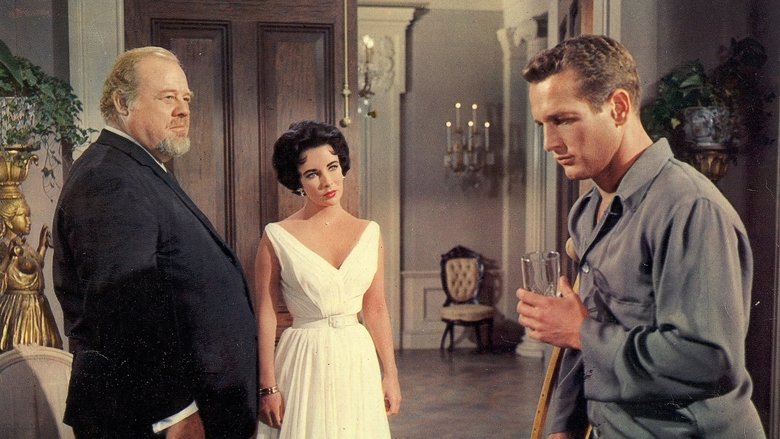
A sweltering Southern melodrama dripping with resentment, unfulfilled desires, and agonizing family secrets. Brick's broken crutch and Maggie's desperate, feline pacing perfectly encapsulate the claustrophobic agony of a loveless marriage teetering on the scorching edge of mendacity.
Cat on a Hot Tin Roof

"Just one pillow on her bed... and just one desire in her heart."

29 August 1958 United States of America 108 min ⭐ 7.6 (820)
Director: Richard Brooks
Cast: Paul Newman, Elizabeth Taylor, Burl Ives, Judith Anderson, Jack Carson
Drama
Mendacity and Truth Unfulfilled Desire and Repression Family Dysfunction and Greed Atrophied Masculinity and Patriarchal Pressure
Budget: $3,000,000
Box Office: $17,570,324

Cat on a Hot Tin Roof - Ending Explained

⚠️ Spoiler Analysis

The central mystery of the film—why Brick hates Maggie and why Skipper killed himself—is slowly unraveled in the third act. It is revealed that Skipper, feeling inadequate when Brick was away, tried to prove himself by making a pass at Maggie. Maggie coldly rejected him and forced Skipper to confront the truth: that he was desperately, unrequitedly in love with Brick. Distraught, Skipper called Brick, who hung up on him in a panic, leading to Skipper's suicide. Brick's anger at Maggie is actually a projection of his own intense guilt for abandoning his friend.

In the film's climax, the ultimate "mendacity" is shattered when Big Daddy learns he does not have a spastic colon, but terminal cancer. Unlike the play, the film features a deeply sentimental reconciliation in the basement where Big Daddy and Brick bond over their mutual failures. Upstairs, to stop Gooper from taking the estate, Maggie announces a bold lie: she is pregnant with Brick's child. While in the play Brick remains indifferent to this lie, the film provides a Hollywood twist: Brick admires Maggie's "desperate truth," fiercely defends her against his brother's skepticism, and leads her upstairs to their bed to consummate their marriage, ensuring the lie will soon become a reality.

Alternative Interpretations

Because the Hays Code forced the filmmakers to sanitize the original play's explicit themes, Brick's motivations and the true nature of his relationship with his deceased friend Skipper are left highly ambiguous, leading to two distinct interpretations.

The Queer Subtext Interpretation: Many viewers and critics, aware of Williams' original intent, read Brick as a closeted homosexual or bisexual man. In this reading, Brick's profound grief, his disgusted rejection of Maggie, and his reliance on alcohol stem from his inability to openly mourn the man he truly loved, due to the homophobia of 1950s Southern society. Maggie's jealousy of Skipper is seen as a battle against her husband's true sexual identity.

The Crisis of Masculinity Interpretation: The narrative pushed by the film's revised screenplay suggests that Brick's issue is not repressed homosexuality, but rather an agonizing immaturity and a failure to step into adulthood. In this view, Brick is suffering from "atrophied masculinity." He clings to his past glory as a college football star and blames Maggie for Skipper's death to avoid taking responsibility for his own failure to support his friend. His arc is about finally growing up, discarding his crutch, and claiming his rightful place as the patriarch's heir.