
Skip to content
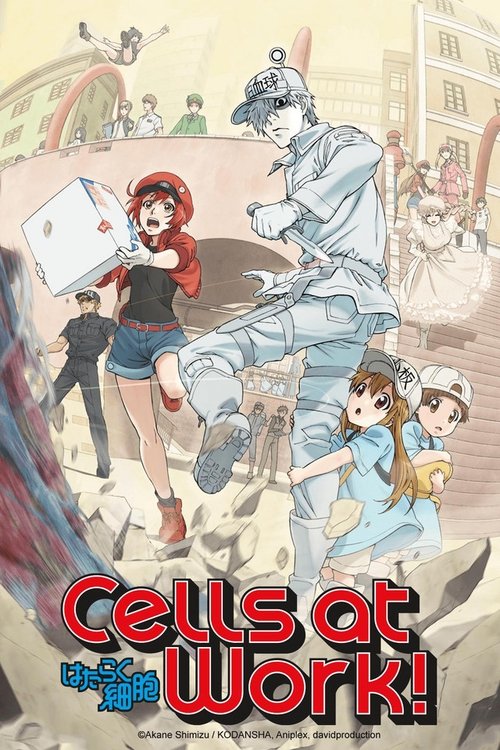
Cells at Work!
A vibrant, high-stakes biological metropolis pulsing with relentless dedication, where microscopic defenders wage theatrical, blood-splashed battles and fragile couriers navigate treacherous labyrinths to keep a fragile universe alive.
Cells at Work!
Cells at Work!

はたらく細胞

08 July 2018 — 28 February 2021 Japan 2 season 21 episode Ended 8.1 (314)

Cast: Kana Hanazawa, Tomoaki Maeno, Mamiko Noto, Kentaro Kumagai, Daisuke Ono

Animation Action & Adventure Comedy Collective Duty and Interdependence 'Self' vs. 'Non-Self' and the Tragic Ethics of Immunity Resilience, Growth, and Overcoming Inadequacy The Invisible Price of Bodily Maintenance Symbiosis and Ecological Balance

Cells at Work! — Ending Explained

⚠️ Spoiler Analysis

The overarching narrative progression reaches dramatic peaks during two major crises:

  • The Cancer Cell Reversal (Season 1, Ep 7 & Season 2, Eps 7–8): When Cancer Cell is first confronted, he reveals his tragic backstory of cellular mutation—how newly divided cells with minor transcription errors are hunted down by immune police. In the Season 2 finale, he weaponizes Regulatory T Cells (whose job is to prevent autoimmunity) to defend him, nearly destroying the body until Memory T Cell's perforin cannon punch strips his disguise and allows U-1146 to strike the finishing blow.
  • The Normal Cell's Secret Odyssey (Season 2): A seemingly background 'Normal Cell' rescues four adorable Lactic Acid Bacteria and embarks on a clandestine quest through the intestines, ultimately saving the entire host by delivering the bacteria to the colon just in time to neutralize toxic gases that were supercharging Cancer Cell.
  • The Finale Message: Defeating cancer is not simply a matter of brute immune force, but of overall metabolic and microbial health. Cancer Cell falls once more, warning U-1146 that as long as the host lives and divides, cancer will inevitably return.

Alternative Interpretations

The series can be viewed through several distinct analytical lenses:

  • The Collectivist Allegory: Many critics interpret the series as an allegory for Japanese corporate and civic society (hōrensō culture), where every worker is a cog in a massive engine, selflessly sacrificing personal desires for the collective stability of the whole.
  • The Existential Tragedy (Cancer as the Outcast): Literary and anime scholars analyze the Cancer Cell arc through an existentialist lens. Cancer is not an alien enemy from the outside, but a victim of replication failure who is punished simply for being born, raising questions regarding genetic determinism and systemic ostracization.
  • The Body as an Environmental Ecosystem: Season 2 invites an ecological reading where the body is viewed as a biome requiring diverse microflora balance rather than sterile militarism.

Explore More About This Movie

Dive deeper into specific aspects of the movie with our detailed analysis pages

Similar Movies