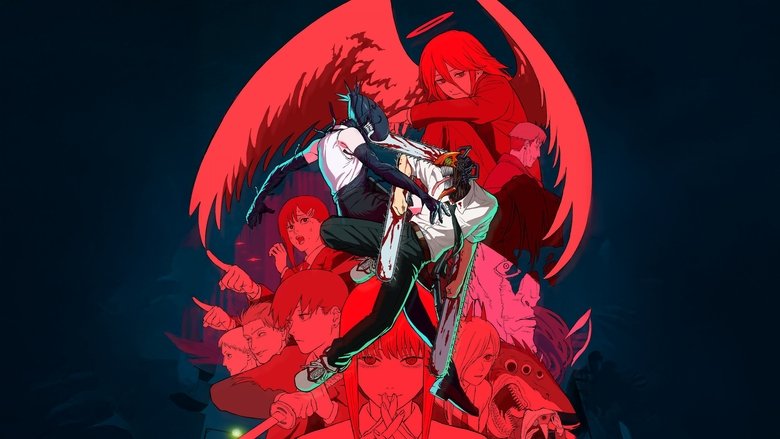
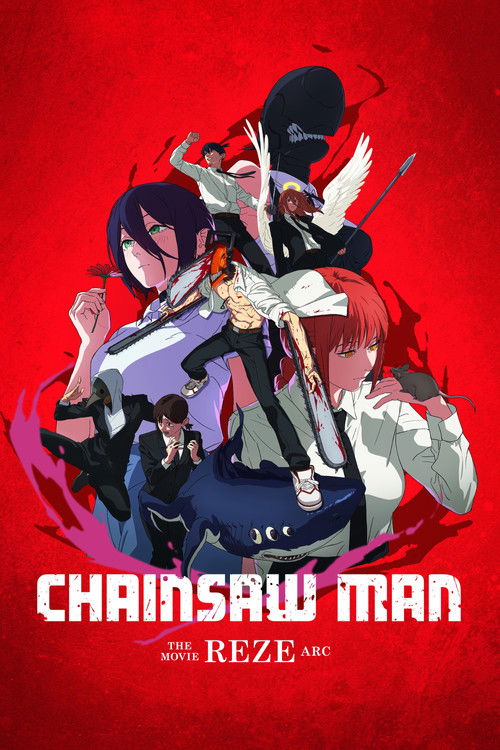
Chainsaw Man - The Movie: Reze Arc
A visceral dark fantasy romance where neon-lit rain and explosive carnage collide. It is a cinematic explosion of first love and terminal betrayal, mirroring a flickering firework against a leaden, blood-soaked sky.
Chainsaw Man - The Movie: Reze Arc

Chainsaw Man - The Movie: Reze Arc

劇場版 チェンソーマン レゼ篇

19 September 2025 Japan 100 min ⭐ 8.3 (447)
Director: Tatsuya Yoshihara
Cast: Kikunosuke Toya, Reina Ueda, Tomori Kusunoki, Shogo Sakata, Maaya Uchida
Animation Fantasy Action Romance
The Town Mouse vs. The Country Mouse Capitalism vs. Communism Allegory Lost Childhood and Stunted Maturity The Duality of Identity
Budget: $4,100,000
Box Office: $10,000,000

Overview

Following the brutal conflicts of Public Safety's early days, Denji finds himself in a rare moment of peace, though he remains haunted by a hollow sense of longing. His world is upended when he meets Reze, a charming and enigmatic girl working at a local café. Their burgeoning romance, filled with midnight swims and shared secrets, offers Denji a glimpse of the normal life he has always craved, away from the gore of devil hunting.

However, the tranquility is a fragile mask. As shadow organizations and international assassins close in on Denji's heart, the film transitions from a tender coming-of-age story into a high-octane thriller. Denji is forced to navigate a labyrinth of manipulation where the line between genuine affection and lethal intent is blurred by the smoke of a thousand detonations.


Core Meaning

The film explores the paradox of desire and the cost of human connection in a world defined by exploitation. Director Tatsuya Yoshihara uses the relationship between Denji and Reze to illustrate how systems of power—represented by both the Soviet handlers and the Public Safety Bureau—weaponize the most basic human needs for intimacy. Ultimately, the film suggests that while love is a dangerous vulnerability, the choice to pursue it, even in the face of certain destruction, is what defines the human spirit.

Thematic DNA

The Town Mouse vs. The Country Mouse 35%
Capitalism vs. Communism Allegory 25%
Lost Childhood and Stunted Maturity 20%
The Duality of Identity 20%

The Town Mouse vs. The Country Mouse

This classic fable serves as the film's philosophical spine. It contrasts a life of dangerous luxury (the city) with one of safe poverty (the country). The characters grapple with whether it is better to live as a 'city mouse' in constant peril or a 'country mouse' in boring security, eventually realizing that for them, no safe haven truly exists.

Capitalism vs. Communism Allegory

The film frames the conflict between Makima (representing state-sanctioned capitalist control) and Reze (a product of a Soviet 'human weapon' program) as a clash of ideologies. Both sides treat the individual as a resource to be harvested, rendering the worker's life expendable in the pursuit of greater power.

Lost Childhood and Stunted Maturity

Through the school break-in sequence, the film highlights the tragedy of characters who were never allowed to be children. Denji and Reze’s shared lack of education and early exposure to violence create a bond of mutual trauma, where their 'first love' is simultaneously an attempt to reclaim a stolen past.

The Duality of Identity

The narrative constantly shifts between the 'café girl' and the 'Bomb Devil,' or the 'boy' and the 'Chainsaw.' It questions whether a person can ever truly shed their assigned role or if they are permanently defined by the 'devil' within them.

Character Analysis

Denji

Kikunosuke Toya

Archetype: Antihero / Innocent
Key Trait: Endearing idiocy

Motivation

To find a sense of normalcy and to be loved for who he is, rather than for the devil inside him.

Character Arc

Transitions from a boy seeking simple physical gratification to someone grappling with the profound pain of romantic loss and the realization that his 'heart' is a burden.

Reze

Reina Ueda

Archetype: Femme Fatale / Victim
Key Trait: Calculated playfulness

Motivation

Initially duty-bound by her training, her motivation shifts toward a desperate search for individual freedom and genuine affection.

Character Arc

Revealed as a Soviet assassin who starts a mission to kill Denji but ends up genuinely connecting with him, leading to her attempt to defect from her handlers.

Makima

Tomori Kusunoki

Archetype: The Puppeteer
Key Trait: Stifling calmness

Motivation

To maintain absolute order and ensure Denji remains under her influence for her own inscrutable goals.

Character Arc

Remains a chillingly static force of nature, asserting her dominance over Denji's life and ruthlessly eliminating any threats to her control.

Symbols & Motifs

The Single Flower

Meaning:

Represents sincerity and the fragile self.

Context:

Denji gives Reze a flower; she later keeps it in a vase. The act of swallowing or spitting out flowers throughout the film symbolizes the internal struggle to express or hide one's true feelings.

The Phone Booth

Meaning:

A symbol of isolated intimacy and shared sanctuary.

Context:

The rain-slicked phone booth provides the setting for Denji and Reze's first meeting, serving as a cramped, private world separate from the chaos outside.

Fireworks

Meaning:

A metaphor for fleeting youth and violent beauty.

Context:

The climax occurs during a fireworks festival, where the explosions in the sky mirror the detonations of the Bomb Devil, highlighting the thin line between celebration and catastrophe.

The Train

Meaning:

Symbolizes missed opportunities and the path not taken.

Context:

The recurring motif of the train represents Reze's chance to escape her fate, which she ultimately abandons in a tragic attempt to return to Denji.

Memorable Quotes

Which would you rather be, Denji? A town mouse or a country mouse?

— Reze

Context:

Asked during a quiet moment between the two, setting the stage for their eventual divergent fates.

Meaning:

The central philosophical question of the film regarding the choice between a dangerous life of excitement or a safe life of boredom.

Do I have a heart?

— Denji

Context:

Denji asks this to Makima during their movie date, seeking validation that he is still 'human' enough to feel.

Meaning:

A literal and metaphorical question about his humanity after merging with Pochita.

I've been watching you.

— Reze

Context:

Spoken during the reveal of Reze's true mission as an assassin.

Meaning:

A phrase that shifts from romantic interest to a chilling admission of surveillance.

Philosophical Questions

Is security more valuable than freedom?

The film explores this through the 'Mouse' fable, showing that even 'security' is an illusion when one is a pawn in a larger game.

Can a heart exist without a soul?

Denji’s constant questioning of his 'heart' challenges the viewer to define humanity not by biology, but by the capacity to suffer and hope.

Alternative Interpretations

Beyond the literal plot, many critics have interpreted the film as a psychoanalytical study of the 'Id' and 'Superego', where Denji represents raw desire and Makima represents the crushing weight of social expectation. Another popular reading is the ideological allegory, where Reze represents the 'failed revolution' of the proletariat (The Country Mouse) who tries to find a place in the city but is ultimately crushed by the 'predator' of modern state capitalism.

Cultural Impact

Released in September 2025, Reze Arc became a cultural phenomenon, further solidifying the 'Chainsaw Man' franchise's reputation for subversive storytelling. Critics praised the film for moving away from the naturalistic 'live-action' style of the first season toward a more 'manga-faithful' aesthetic, which sparked widespread debate in the animation community about adaptation styles. The film's commercial success confirmed that R-rated, psychologically complex anime could dominate the global box office alongside more traditional shonen fare. It has been hailed as a masterpiece of the 'action-romance' subgenre, influencing how subsequent anime films approach the balance of gore and emotional depth.

Audience Reception

Audiences overwhelmingly praised the film, as reflected by its A CinemaScore and 99% Verified Audience Score on Rotten Tomatoes. The primary points of praise were the fluid, 'playfully chaotic' animation and the tragic chemistry between Denji and Reze. Some minor criticism was directed at the 'stunted psychology' of the protagonist, with some viewers finding Denji's continued naivety frustrating, though most fans argued this was a faithful adaptation of his character's established trauma.

Interesting Facts

  • Tatsuya Yoshihara took over as director for the film, replacing Ryu Nakayama who directed the first season of the TV anime.
  • The character designs were intentionally modified to be more 'Fujimoto-accurate,' featuring thicker line art and less realistic shading than Season 1.
  • As of late 2025, the film grossed over $175 million worldwide, making it one of the most successful anime films of the year.
  • The 'pool scene' was reportedly censored or cut in several international theatrical markets due to its suggestive nature.
  • Kensuke Ushio used glitch-inflected electronics and solo piano to create a soundtrack that balances industrial violence with intimate romance.

Easter Eggs

No Country for Old Men Homage

A specific combat sequence where a character uses a two-legged grapple to choke an opponent is a direct visual reference to Anton Chigurh’s killing style in the Coen Brothers' film.

Shimazaki Toson's 'First Love' Reference

The imagery of the apple and the flower in the ending sequence is a literary nod to the famous Japanese poem about the purity and pain of a first romance.

The Joro Spider and Monarch Butterfly

In the pool scene, these insects appear as metaphors: the spider representing the seductive but deadly predator, and the butterfly symbolizing the fragile, poisonous beauty of Reze's life.

⚠️ Spoiler Analysis

Click to reveal detailed analysis with spoilers

Frequently Asked Questions

Explore More About This Movie

Dive deeper into specific aspects of the movie with our detailed analysis pages

Comments (0)

Leave a comment

No comments yet. Be the first to share your thoughts!