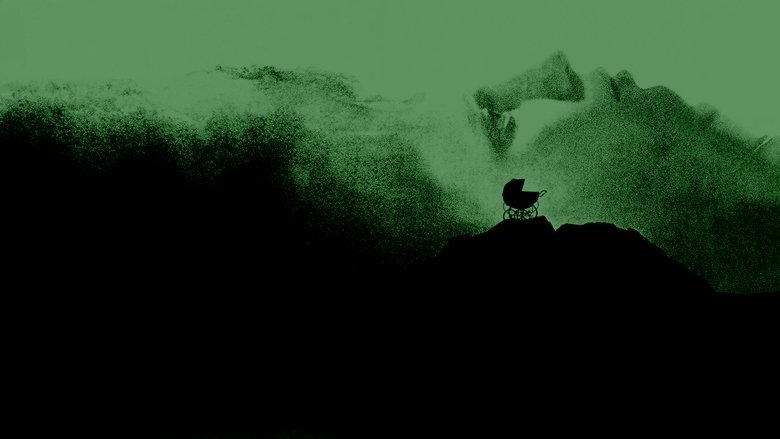
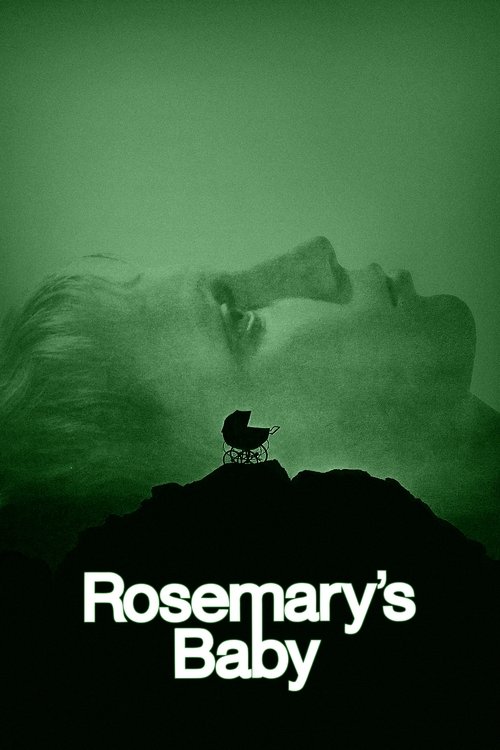
Rosemary's Baby
"Pray for Rosemary's Baby."
Overview
Rosemary's Baby is a 1968 American psychological horror film written and directed by Roman Polanski, based on Ira Levin's 1967 novel. The film stars Mia Farrow as Rosemary Woodhouse, a bright but somewhat naive young woman who moves into a prestigious New York City apartment building, the Bramford, with her husband Guy (John Cassavetes), a struggling actor.
Their new life takes a dark turn after they are befriended by their eccentric, elderly neighbors, Minnie (Ruth Gordon) and Roman Castevet (Sidney Blackmer). After Guy's career suddenly takes off, he and Rosemary decide to have a child. Following a bizarre and terrifying dream on the night of conception, Rosemary becomes pregnant but suffers from a strange and debilitating illness. As her paranoia grows, she begins to suspect that her neighbors are part of a satanic cult and have sinister intentions for her unborn baby.
Rosemary finds herself increasingly isolated, as Guy and the seemingly benevolent Dr. Sapirstein (Ralph Bellamy), recommended by the Castevets, dismiss her fears as prenatal hysteria. The film masterfully builds a sense of claustrophobia and dread, leaving the audience to question whether Rosemary's suspicions are the product of a disturbed mind or a horrifying reality.
Core Meaning
Roman Polanski's Rosemary's Baby serves as a chilling exploration of the loss of individual autonomy, particularly for women in a patriarchal society. The film's central horror is not just the satanic plot but the systematic gaslighting and control exerted over Rosemary's body and mind by those she trusts most: her husband, her neighbors, and her doctor. Polanski aimed to create a realistic horror that blurs the line between the supernatural and the psychological, making the audience question Rosemary's sanity alongside her.
The film delves into the dark side of ambition, as Guy's willingness to sacrifice his wife for professional success becomes a central betrayal. It also critiques the erosion of traditional faith and the rise of secular anxieties in the 1960s, using the occult as a metaphor for the hidden evils lurking beneath the surface of modern, sophisticated urban life. Ultimately, the film's core meaning lies in its terrifying depiction of vulnerability and the violation of trust, suggesting that the most monstrous evil can wear a friendly and familiar face.
Thematic DNA
The Horror of Patriarchal Control and Gaslighting
One of the most prominent themes is the systemic oppression of women. Rosemary's autonomy is steadily stripped away by the male figures in her life. Her husband, Guy, makes a deal with the coven, effectively selling her body for his career advancement. Her doctor, Abe Sapirstein, dismisses her severe pain and concerns, controlling every aspect of her pregnancy. This constant dismissal of her reality is a classic example of gaslighting, forcing Rosemary to doubt her own sanity. The film is a powerful metaphor for how male-dominated institutions—marriage, medicine, and society—can conspire to control women's bodies and reproductive rights.
Paranoia vs. Reality
The film masterfully keeps the audience in a state of ambiguity, questioning whether Rosemary's fears are justified or the result of prenatal hysteria. Polanski uses subjective camera work and a slow-burn narrative to immerse the viewer in Rosemary's growing sense of dread. Every strange occurrence and suspicious character can be interpreted in two ways. The horror is amplified when her worst fears are confirmed, suggesting that sometimes the most outlandish paranoia can be a terrifying reality.
The Subversion of Motherhood and Domesticity
Rosemary's Baby twists the idealized image of pregnancy and motherhood into a horrifying experience of bodily invasion and entrapment. The domestic space, typically seen as a sanctuary, becomes a claustrophobic prison where evil lurks next door and even within her own home. Rosemary's maternal instincts are ultimately weaponized against her in the film's chilling conclusion, where she accepts her role as the mother to the Antichrist, blurring the lines between love and horror.
Religion, the Occult, and Moral Decay
The film juxtaposes traditional Catholicism with modern Satanism. Rosemary's Catholic background informs her fears and guilt, making her a vulnerable target for the sophisticated, urbane coven. The Castevets and their followers represent a modern, almost corporate form of evil, hidden behind affluence and social respectability. The film explores a society where traditional faith is waning, as symbolized by the TIME magazine cover asking "Is God Dead?", creating a vacuum for darker beliefs to take hold. Roman's final proclamation, "God is dead! Satan lives!," marks the triumph of this new, insidious evil.
Character Analysis
Rosemary Woodhouse
Mia Farrow
Motivation
Initially, Rosemary's primary motivation is to create a happy home and be a loving mother. As the plot unfolds, her motivation shifts to self-preservation and, most importantly, the protection of her unborn baby from what she perceives as a grave threat. Ultimately, her deepest motivation is her powerful maternal instinct, which tragically overrides her horror and fear in the final scene.
Character Arc
Rosemary begins the film as a naive, optimistic, and somewhat submissive housewife, eager to please her husband and start a family. As she is systematically isolated and gaslit, her initial trust erodes into consuming paranoia and terror. Her journey is one of a horrifying awakening, where she is forced to confront the betrayal of everyone she depends on. Despite her efforts to fight back, her arc culminates in a chilling acceptance of her fate, as her maternal instincts compel her to care for her demonic child, showcasing a transformation from passive victim to the mother of the Antichrist.
Guy Woodhouse
John Cassavetes
Motivation
Guy's overriding motivation is his desperate desire for a successful acting career. The Castevets exploit this weakness, promising him stardom in exchange for his cooperation in their plan for Rosemary. His ambition completely eclipses his love and responsibility for his wife.
Character Arc
Guy starts as a charming, if self-absorbed, struggling actor. His arc is a descent into moral corruption. Driven by ambition and vanity, he makes a pact with the coven, sacrificing his wife's body and soul for fame and success. He transforms from a loving husband into a manipulative co-conspirator, actively participating in Rosemary's gaslighting and abuse. His betrayal is the film's central human evil, showcasing a man who willingly sells out everything meaningful for personal gain.
Minnie Castevet
Ruth Gordon
Motivation
Minnie is motivated by her devout satanic faith and the coven's goal of bringing the Antichrist into the world. She masterminds much of the plot, meticulously grooming Rosemary to be the vessel for Satan's son. Her actions are driven by a desire to see her dark religion triumph and to usher in a new age of Satan's rule.
Character Arc
Minnie's character does not have a traditional arc; rather, her true nature is gradually revealed. She is introduced as a nosy, gaudy, but seemingly harmless neighbor. This facade slowly cracks to reveal a clever, manipulative, and high-ranking member of the satanic coven. She is the primary agent of Rosemary's daily torment, controlling her diet and isolating her under the guise of neighborly concern. Her character remains a committed and triumphant villain throughout.
Roman Castevet
Sidney Blackmer
Motivation
Roman's motivation is to fulfill his father's legacy and bring about the birth of Satan's son, thereby initiating a new era. He seeks to overthrow traditional religion, famously proclaiming "God is dead! Satan lives!" He is driven by power and a fanatical devotion to his satanic cause, seeing the birth of Adrian as the ultimate victory.
Character Arc
Similar to Minnie, Roman's arc is one of revelation. He initially appears as a sophisticated, well-traveled, and avuncular figure who takes an interest in Guy's career. It is eventually revealed that he is Steven Marcato, the son of a famous Satanist, and the leader of the Bramford coven. He is the charismatic and powerful orchestrator of the entire conspiracy, the mouthpiece for the coven's beliefs. He remains the confident, patriarchal leader of evil from beginning to end.
Symbols & Motifs
Tannis Root Charm
The pungent-smelling pendant given to Rosemary by Minnie symbolizes secrecy, deception, and the insidious influence of the coven. Presented as a good luck charm for pregnancy, it actually contains "Devil's Pepper," a substance used in satanic rituals. It represents the coven's control over Rosemary and the evil that is disguised as neighborly kindness.
Minnie gives the charm to Rosemary after the previous recipient, Terry, dies by suicide. Rosemary wears it throughout her pregnancy, initially as a quirky gesture and later out of a sense of obligation and fear. Its foul smell is a constant, physical reminder of the unseen evil surrounding her.
The Bramford Apartment Building
The Bramford, with its Gothic architecture and dark history of witchcraft and murder, symbolizes a modern-day haunted house where evil resides behind a facade of prestige. It represents the hidden corruption within seemingly respectable society. Its labyrinthine corridors and the secret passage in Rosemary's closet symbolize the violation of her private and bodily space.
The film opens with Rosemary and Guy moving into the Bramford, ignoring warnings about its past. The building itself becomes a character, its oppressive atmosphere contributing to Rosemary's isolation and paranoia. The Dakota, a real New York apartment building with its own share of history, was used for the exterior shots.
Rosemary's Haircut
Rosemary's decision to get a short, boyish Vidal Sassoon haircut represents a brief attempt to reclaim autonomy over her own body. At a time when everyone else is making decisions for her, this act of changing her appearance is one of the few choices she makes for herself. It marks a turning point where her passive acceptance begins to shift towards suspicion and resistance.
Midway through her harrowing pregnancy, Rosemary surprises Guy with the dramatic new haircut. His negative reaction—"It's awful"—underscores his desire to control her and his disapproval of her asserting her independence. The shorter hair also accentuates her increasingly gaunt and frail appearance, visually representing her declining health.
Colors (Yellow, Blue, and Red)
Polanski uses a deliberate color palette to convey the film's underlying tensions. Yellow is associated with Rosemary's initial innocence and wholesomeness. Blue, often worn by the male characters, can be seen to represent the patriarchal forces controlling her. Red is used sparingly but powerfully to signify danger, blood, and the presence of the satanic evil.
Rosemary frequently wears yellow in the beginning of the film. The night of the satanic ritual, she wears a striking red pantsuit. As the film progresses and her hope fades, she is often seen in blue and white, colors that ironically evoke the Virgin Mary, creating a satanic allegory of the immaculate conception.
Memorable Quotes
This is no dream! This is really happening!
— Rosemary Woodhouse
Context:
Rosemary, drugged by Minnie's chocolate mousse, experiences a surreal and terrifying vision of being raped by a demonic creature aboard a yacht, surrounded by the nude members of the coven, including her husband. In a moment of lucidity and terror, she screams these words.
Meaning:
This is arguably the film's most famous line. It marks the horrifying moment of realization for Rosemary during the rape sequence, where the dream-like state shatters and she understands that she is being violated by a demonic entity. It encapsulates the film's central theme of the boundary between paranoia and reality completely collapsing.
He has his father's eyes.
— Roman Castevet
Context:
In the film's climax, Rosemary discovers the coven gathered around her baby's black bassinet. Horrified by the infant's inhuman eyes, she confronts them. Roman delivers this line, confirming her worst fears are real.
Meaning:
This chillingly ironic line confirms the baby's demonic parentage. After Rosemary cries, "What have you done to its eyes?", Roman's calm, almost proud, response reveals that the baby's father is not Guy, but Satan. It's a moment of dark, understated humor that underscores the complete and horrifying triumph of the coven.
God is dead! Satan lives!
— Roman Castevet
Context:
Spoken during the final scene in the Castevets' apartment, after the baby's true nature has been revealed to Rosemary. It is a celebratory chant by Roman and the coven, signifying that their dark prophecy has been fulfilled.
Meaning:
This quote is the coven's triumphant declaration of victory. It references a famous 1966 TIME magazine cover that asked, "Is God Dead?", a question that reflected the era's anxieties about the decline of traditional religion. In the film, Roman provides a terrifying answer, heralding the dawn of a new, satanic age with the birth of the Antichrist.
Pain, be gone, I will have no more of thee!
— Rosemary Woodhouse
Context:
While suffering from intense, unexplained abdominal pains during the first trimester, Rosemary recites this line in an attempt to will the pain away, showcasing her desperation before she fully succumbs to the belief that something is terribly wrong.
Meaning:
This quote, which Rosemary chants half-jokingly early in her pregnancy, is deeply ironic. It represents her initial naive optimism and her desperate wish to control the excruciating and mysterious pain she is experiencing. It highlights her powerlessness, as the pain is an essential part of the satanic pregnancy she is being forced to endure.
Philosophical Questions
What is the true nature of evil?
The film challenges the traditional depiction of evil as monstrous and overt. Instead, it presents evil as something banal, sophisticated, and deeply ingrained in modern society. The members of the coven are not cloaked figures in a castle but friendly, albeit eccentric, elderly neighbors living in a prestigious New York apartment building. This raises the question of whether the greatest evil is that which is unrecognizable, hidden behind a mask of politeness and social grace. It explores how everyday human failings like greed, ambition, and selfishness can become gateways for profound evil to take root.
Can maternal love exist for a monstrous child?
The film's climax forces both Rosemary and the audience to confront this disturbing question. After discovering her baby is the Antichrist, her initial reaction is horror and rejection. However, upon hearing the baby cry, her maternal instincts take over, and she begins to care for him. This explores the powerful, primal nature of a mother's bond with her child, suggesting it can transcend even the most horrifying circumstances. It leaves the audience to ponder whether this love is a form of tragic acceptance and complicity or a testament to an unconditional bond that exists beyond good and evil.
At what point does ambition become a corrupting force?
Guy Woodhouse's character serves as a case study for this question. His desire for a successful acting career is initially relatable. However, the film meticulously charts his moral decay as this ambition leads him to make a Faustian bargain, betraying his wife in the most intimate and horrific way possible. The film asks where the line is between healthy ambition and a destructive hunger for success that eclipses all morality, loyalty, and love.
Alternative Interpretations
While the film's ending confirms the satanic conspiracy as reality, a popular alternative interpretation suggests that the entire supernatural plot is a product of Rosemary's psychological breakdown. This reading posits that Rosemary suffers from prenatal psychosis, and the events of the film are her paranoid delusions brought on by an unwanted pregnancy, a manipulative husband, and nosy, overbearing neighbors. The dream sequences and ambiguous events could be seen as manifestations of her deteriorating mental state.
Another interpretation views the ending not as a defeat, but as a complex commentary on maternal instinct. In this view, Rosemary's decision to mother the baby, despite its origins, is the ultimate triumph of her innate nature as a mother. It raises the philosophical question of nurture versus nature: could a mother's love redeem the son of Satan, or is she now complicit in nurturing evil? The ending is deliberately ambiguous, leaving Rosemary's ultimate motivations and the child's future open to the viewer's interpretation.
Cultural Impact
Released in 1968, Rosemary's Baby arrived during a period of significant social and cultural upheaval in the United States. The film tapped into the anxieties of the era, including the questioning of traditional authority, the sexual revolution, and a growing fascination with the occult. It marked a turning point for the horror genre, shifting its focus from external monsters to psychological terror and evil hidden within mundane, everyday life. Along with Night of the Living Dead and Psycho, it is considered one of the films that defined modern horror.
The film's exploration of themes like gaslighting, women's bodily autonomy, and the paranoia of urban living resonated deeply with audiences and critics, earning immense critical acclaim and box office success. Its sophisticated, slow-burn approach to horror has influenced countless filmmakers and films, including The Exorcist, The Omen, and more recent works like Hereditary and Get Out, which also use supernatural horror as a metaphor for social and psychological fears. The film's legacy is also tragically intertwined with director Roman Polanski's life; a year after its release, his pregnant wife, Sharon Tate, was murdered by the Manson Family cult, an event that eerily mirrored the film's themes of cult activity and violated pregnancy.
Audience Reception
Rosemary's Baby was a major critical and commercial success upon its release in 1968. Critics praised Roman Polanski's masterful direction, particularly his ability to build slow-burning suspense and psychological dread without resorting to explicit gore. Mia Farrow's performance as the fragile, paranoid Rosemary was widely lauded as outstanding. Audiences were captivated by the film's realistic treatment of a supernatural subject, which made the horror feel plausible and deeply unsettling.
The film was praised for its intelligent script, strong character development, and haunting atmosphere. However, its dark themes, particularly the satanic rape and the bleak ending, were controversial and shocking to many viewers at the time. Some found the film's pacing to be slow, though many now see this as a key element of its effectiveness. Overall, it is regarded as a landmark of the horror genre, with audiences and critics alike recognizing it as a sophisticated and terrifying masterpiece that has stood the test of time.
Interesting Facts
- Director Roman Polanski wanted a normal, 'All-American' actress for Rosemary and initially considered Tuesday Weld and his then-fiancée Sharon Tate for the role.
- Mia Farrow, a vegetarian at the time, actually ate raw liver for a scene, though the novel specifies it was a chicken's heart.
- For the scene where Rosemary walks into a busy New York City street, Polanski had Mia Farrow walk into real, oncoming traffic, assuring her that 'nobody will hit a pregnant woman.' Polanski himself operated the handheld camera because the crew was unwilling to do it.
- Frank Sinatra, Farrow's husband at the time, served her with divorce papers on the set of the film because the shooting schedule conflicted with a movie he wanted her to be in.
- The eerie lullaby over the opening credits was composed by Krzysztof Komeda and sung by Mia Farrow herself.
- William Castle, a famous B-movie horror director, bought the rights to the novel hoping to direct. Paramount Pictures only agreed to the film if Castle served only as a producer; he has a brief cameo as the man waiting outside the phone booth Rosemary is using.
- The voice of Donald Baumgart, the actor Guy replaces, who calls Rosemary on the phone, belongs to an uncredited Tony Curtis.
- Author Ira Levin was so impressed with the movie's faithfulness to his novel that he called it 'the single most faithful adaptation of a novel ever to come out of Hollywood.'
Easter Eggs
During a conversation in the laundry room, Rosemary tells the character Terry that she looks like the actress Victoria Vetri. Terry replies, 'Everyone says that, but I don't see the resemblance.'
This is a subtle, meta inside joke. The character of Terry Gionoffrio is, in fact, played by actress Angela Dorian, who was also known by the name Victoria Vetri.
The baby's due date is in June of 1966.
This date can be written as 6/66, a deliberate reference to the number 666, the 'Number of the Beast' in Christian eschatology, foreshadowing the baby's demonic identity.
In the scene where Rosemary frantically calls Dr. Hill from a payphone, if you watch the numbers she dials on the rotary phone, they are 4-3-7-7.
When viewed upside down, these numbers crudely spell out the word 'HELL,' with the 4 as a lowercase 'h,' the 3 as an 'E,' and the two 7s as 'L's. This is a subtle visual clue reinforcing the satanic plot.
⚠️ Spoiler Analysis
Click to reveal detailed analysis with spoilers
Frequently Asked Questions
Explore More About This Movie
Dive deeper into specific aspects of the movie with our detailed analysis pages
Comments (0)
No comments yet. Be the first to share your thoughts!