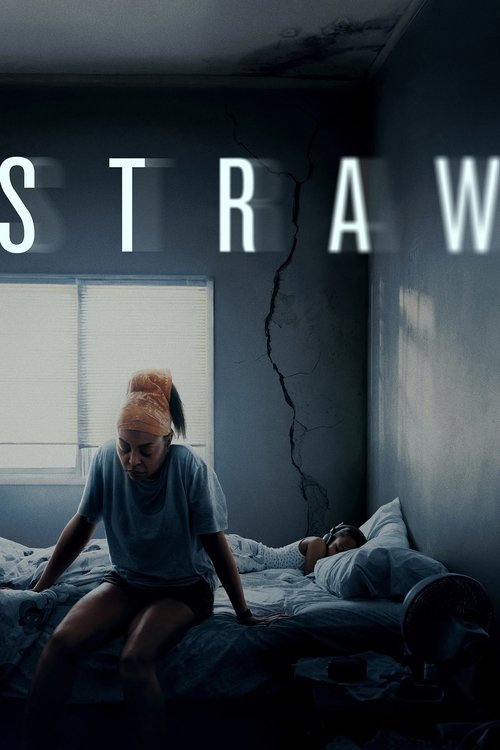
STRAW
A haunting psychological drama where a mother's spiraling desperation paints a stark, visceral portrait of a soul fractured by an indifferent world.
STRAW

STRAW

"This is her last."

05 June 2025 United States of America 105 min ⭐ 7.8 (859)
Director: Tyler Perry
Cast: Taraji P. Henson, Sherri Shepherd, Teyana Taylor, Sinbad, Rockmond Dunbar
Drama Crime Thriller
Systemic Failure and Social Indifference Mental Health and Grief-Induced Psychosis The 'Strong Black Woman' Trope Sisterhood and Empathy as a Lifeline

Overview

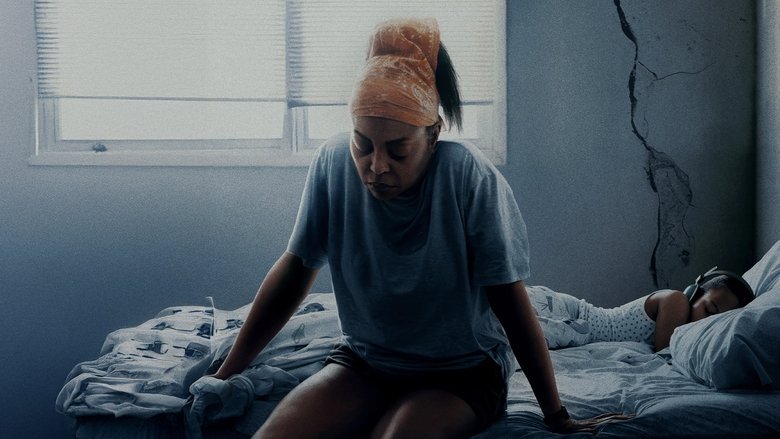
"STRAW" is a psychological crime drama that chronicles one catastrophic day in the life of Janiyah Wiltkinson (Taraji P. Henson), a hardworking single mother struggling to care for her chronically ill daughter, Aria. Pushed to her breaking point by a relentless series of misfortunes—including losing her job, facing eviction, and being unjustly targeted by law enforcement—Janiyah's grip on reality begins to fray.

Her frantic attempt to simply cash her final paycheck spirals into a tense, city-wide crisis when she inadvertently becomes the prime suspect in a bank robbery and hostage situation. As Detective Kay Raymond (Teyana Taylor) and the police force close in, Janiyah finds herself trapped, her survival depending on the compassion of strangers like bank teller Nicole Parker (Sherri Shepherd), in a world that has shown her none.


Core Meaning

The core meaning of "STRAW" is a raw and unflinching examination of the breaking points of the human psyche, particularly within the context of the Black maternal experience. Director Tyler Perry aims to give a "voice to the voiceless" by illustrating how systemic failures, social indifference, and crushing personal burdens can push an individual beyond their limits. The film serves as a powerful commentary on mental health, desperation, and the societal tendency to ignore suffering until it erupts into crisis. It questions who we offer empathy to and exposes the harsh reality that for many, being truly "seen" by society only happens in the midst of tragedy.

Thematic DNA

Systemic Failure and Social Indifference 35%
Mental Health and Grief-Induced Psychosis 30%
The 'Strong Black Woman' Trope 20%
Sisterhood and Empathy as a Lifeline 15%

Systemic Failure and Social Indifference

The film relentlessly portrays a society that fails Janiyah at every turn. From her unsympathetic boss (Glynn Turman) and a predatory landlord to aggressive police officers, every institution she encounters contributes to her collapse. Her harrowing day is a microcosm of the systemic barriers and lack of a social safety net that leave vulnerable individuals isolated and desperate. The film argues that her final, drastic actions are not an isolated event but the cumulative result of a society that was indifferent to her existence.

Mental Health and Grief-Induced Psychosis

"STRAW" delves deeply into the theme of mental health, specifically how trauma and unbearable grief can shatter one's perception of reality. The film's central twist reveals that Janiyah's actions are driven by a profound psychological break stemming from an unseen tragedy. It challenges the audience to look beyond her actions and see the profound pain and mental anguish underneath, making a powerful statement about how society misunderstands and stigmatizes mental illness, particularly in the Black community.

The 'Strong Black Woman' Trope

The film critiques the damaging stereotype of the "strong Black woman" who is expected to endure infinite hardship without breaking. Janiyah embodies this trope until she can no longer bear the weight of her suffering. Her public unraveling is a protest against this expectation, revealing the immense vulnerability and need for support that the trope denies. The film highlights the importance of allowing Black women to be vulnerable without judgment.

Sisterhood and Empathy as a Lifeline

In a world of hostility, the film presents empathy—specifically from other Black women—as a potential lifeline. Characters like bank teller Nicole (Sherri Shepherd) and Detective Raymond (Teyana Taylor) are the only ones who attempt to truly understand and humanize Janiyah. Their compassion stands in stark contrast to the aggressive, male-dominated police response. This theme suggests that in the face of systemic failure, sisterhood and a shared understanding of struggle can be a powerful, life-saving force.

Character Analysis

Janiyah Wiltkinson

Taraji P. Henson

Archetype: Antihero / Tragic Figure
Key Trait: Desperate

Motivation

Her primary motivation is the care and survival of her sick daughter, Aria. Every action, from working her job to attempting to cash her check for lunch money, is driven by maternal desperation. After the film's twist, it's revealed her motivation is a tragic, grief-stricken attempt to continue protecting a memory.

Character Arc

Janiyah begins as a sympathetic, hardworking mother trying to do right by her daughter against impossible odds. Throughout one day, the relentless pressure from society pushes her from a state of quiet desperation to a complete psychological break. Her arc is a tragic descent into chaos, where she loses everything, including her grip on reality, forcing the world that ignored her to finally pay attention.

Nicole Parker

Sherri Shepherd

Archetype: The Ally / Good Samaritan
Key Trait: Empathetic

Motivation

Motivated by empathy and a fundamental sense of decency, Nicole feels compelled to help the clearly distressed Janiyah. As a fellow Black woman and mother, she understands the societal pressures Janiyah faces and is driven to offer the support and grace that no one else will.

Character Arc

Nicole is a bank teller who is thrust into the hostage situation. Initially just another person in Janiyah's path, she quickly becomes Janiyah's most crucial ally. Her arc is one of rising to the occasion with immense compassion, choosing to see the humanity in Janiyah and actively working to de-escalate the situation, becoming a bridge between Janiyah and the police.

Detective Kay Raymond

Teyana Taylor

Archetype: The Empathic Authority
Key Trait: Compassionate

Motivation

As a Black woman, she sees the person behind the alleged crime. Her motivation is to resolve the crisis without further tragedy, driven by an instinct that there is more to the story than a simple bank robbery. She aims to give Janiyah the chance to be heard that society has denied her.

Character Arc

Detective Raymond represents a more compassionate form of law enforcement. From the start, she resists the aggressive, brute-force tactics of her male colleagues, including Chief Wilson. Her arc is about fighting to maintain a humane approach within a rigid and often violent system, prioritizing understanding Janiyah's state of mind over immediate neutralization.

Benny

Sinbad

Archetype: The Witness / Angel
Key Trait: Observant

Motivation

Benny is motivated by a simple, reciprocal kindness. He observes Janiyah's daily struggles and her small acts of generosity, and his character serves to show the audience the 'real' Janiyah before the trauma of the day consumes her.

Character Arc

Benny is Janiyah's neighbor in a wheelchair to whom she shows kindness even in her own poverty. He serves as a witness to her gentle nature before her world collapses. His presence at the beginning of the film establishes Janiyah's inherent goodness. Taraji P. Henson has described the character as a symbolic "angel" in Janiyah's life, someone who truly saw her.

Symbols & Motifs

The Last Straw

Meaning:

The title itself is the central metaphor, referencing the idiom "the straw that broke the camel's back." It symbolizes the final, seemingly minor event that triggers a catastrophic collapse after an accumulation of unbearable weight.

Context:

The entire film is a sequence of straws being piled onto Janiyah's back: her daughter's illness, the landlord's threat, the WIC transaction, being fired, the traffic incident, and the eviction. The final confrontation at the bank is the "last straw" that shatters her already fragile state, making the title a direct descriptor of her psychological journey.

Rain

Meaning:

The sudden, heavy rainstorm that begins halfway through the film symbolizes Janiyah's overwhelming sorrow, the cleansing of her public facade, and the washing away of her last vestiges of hope and control.

Context:

As Janiyah is evicted, all of her family's belongings are thrown out onto the street just as a downpour begins. This moment visually represents her hitting rock bottom. The storm mirrors her internal turmoil and the public, unstoppable nature of her breakdown.

Memorable Quotes

Something inside of me broke.

— Janiyah Wiltkinson

Context:

This quote is featured prominently in the trailer, likely spoken during the bank standoff as Janiyah tries to explain her state of mind to the hostages or the police.

Meaning:

This line encapsulates the core theme of the film. It's Janiyah's acknowledgment of her own psychological fracture, explaining that her actions are not born of malice but from an unbearable amount of pressure causing an internal collapse.

You can't help me. Nobody ever helped me.

— Janiyah Wiltkinson

Context:

In the midst of the bank standoff, as negotiators likely try to reason with her, Janiyah rejects their offers of help, reflecting her deep-seated belief that she is utterly alone in her struggle.

Meaning:

This quote expresses the profound sense of isolation and hopelessness that fuels Janiyah's desperation. It's a cry of despair from someone who has been consistently failed by every person and system that should have offered support.

Philosophical Questions

At what point does a victim of circumstance become a perpetrator?

The film places Janiyah in a morally gray area. While she is clearly a victim of systemic and personal failures, her actions in the bank endanger others. "STRAW" forces the audience to question the lines of culpability. It explores whether extreme desperation and a shattered mental state can mitigate responsibility for one's actions, asking not just if what she did was wrong, but why she did it.

Is empathy a sufficient response to systemic failure?

While the film champions the empathy shown by characters like Nicole and Detective Raymond, it also raises the question of whether individual kindness is enough. Their actions help Janiyah in the immediate crisis, but the film's larger narrative demonstrates that the systems of economic, social, and legal injustice that broke her remain intact. It asks whether personal compassion can truly solve problems that are deeply embedded in the structure of society.

What does it mean to be 'seen' in society?

A central theme is Janiyah's invisibility. She is overlooked by everyone until she becomes a threat. The film philosophically explores the painful idea that in modern society, for some, visibility is only granted through crisis or violence. It questions the nature of a society that only pays attention to suffering when it becomes disruptive or dangerous.

Alternative Interpretations

The film's ending, which features a shocking twist followed by a sequence of flashing 'what-if' scenarios, has been a major point of discussion. One interpretation is that the final, more hopeful outcome where Janiyah is calmed down and led out safely is the 'real' ending, suggesting that empathy (from Nicole and Detective Raymond) ultimately triumphed.

However, an alternative reading, favored by some critics, views this conclusion as a 'cop-out' that softens the film's brutal social critique. These viewers argue that the vision of the police storming the bank and killing her is a more realistic, albeit devastating, conclusion that aligns with the film's depiction of systemic violence. This interpretation suggests the 'happy' ending might be a comforting fantasy, either for the audience or for Janiyah herself, undercutting the grim reality the rest of the film so powerfully builds.

Cultural Impact

"STRAW" generated significant cultural conversation upon its release, largely due to its record-breaking viewership on Netflix, which starkly contrasted with its lukewarm critical reviews. This disparity highlighted the ongoing conversation about the gap between film critics and mainstream audience tastes, particularly for Tyler Perry's work. The film was praised by many viewers for its powerful and emotional performances, especially from Taraji P. Henson and Sherri Shepherd.

The movie made a notable impact by tackling difficult themes of mental health, systemic failure, and the 'strong Black woman' trope with a directness that resonated deeply with many. It spurred discussions online about the invisible struggles of Black mothers and the importance of community and empathy. Furthermore, the casting of Sinbad in his return to the screen was widely celebrated as a poignant and heartwarming story of perseverance within the industry.

Audience Reception

Audience reception for "STRAW" was overwhelmingly strong in terms of viewership, making it a record-breaking hit for Netflix in 2025. Viewers widely praised the powerhouse performances of the lead actresses, with Taraji P. Henson's portrayal of Janiyah's descent receiving particular acclaim for its emotional depth and intensity. Many in the audience connected deeply with the film's themes of struggle, desperation, and the pressures faced by single mothers.

However, points of criticism from viewers often aligned with those of professional critics, focusing on what some called 'poorly written dialogue' and 'nonsensical plot points'. The film's major twist was polarizing; some found it emotionally devastating and effective, while others felt it was an unnecessary addition. Despite these critiques, the overall verdict from the streaming audience was highly positive, as evidenced by its sustained position at #1 on the platform.

Interesting Facts

  • The film marks the return to acting for comedian Sinbad, his first major role nearly five years after suffering a debilitating stroke in 2020.
  • Despite a mixed critical reception (sitting at 50% on Rotten Tomatoes), "STRAW" became a massive streaming success, pulling off the biggest single-week viewership of any Netflix movie in 2025 shortly after its release.
  • This is the third collaboration between director Tyler Perry and star Taraji P. Henson, following "I Can Do Bad All By Myself" (2009) and "Acrimony" (2018).
  • According to some reports, the film was produced in Georgia over an incredibly short period, possibly as few as four days, which some critics cited when discussing the film's visual style.

⚠️ Spoiler Analysis

Click to reveal detailed analysis with spoilers

Frequently Asked Questions

Explore More About This Movie

Dive deeper into specific aspects of the movie with our detailed analysis pages

Comments (0)

Leave a comment

No comments yet. Be the first to share your thoughts!