
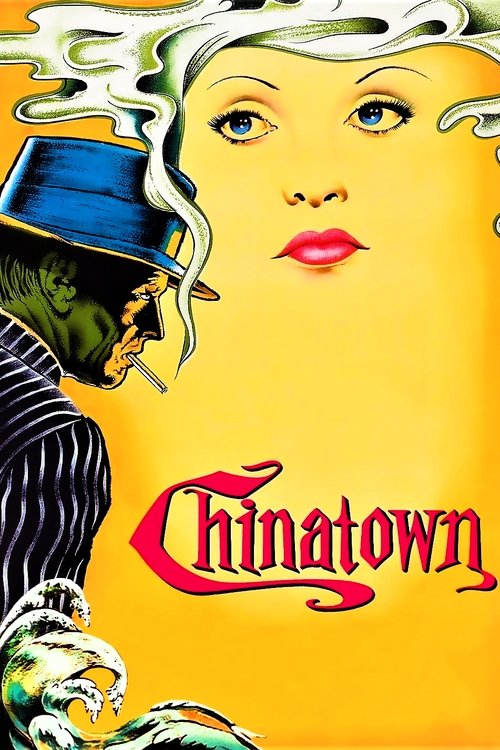
"You get tough. You get tender. You get close to each other. Maybe you even get close to the truth."
Director: Roman Polanski
Cast: Jack Nicholson, Faye Dunaway, John Huston, Perry Lopez, John Hillerman
Chinatown — Movie Quotes
Memorable Quotes
Forget it, Jake. It's Chinatown.
Context
Spoken by Gittes's associate, Walsh, in the final scene. After Evelyn has been shot and killed by the police, and Noah Cross has taken Katherine, a distraught Gittes can only stare in horror. Walsh and another associate lead him away from the scene, delivering this line to urge him to let go of a situation that is beyond his control.
Meaning
This is the film's iconic closing line, encapsulating its central theme of futility and inescapable corruption. It signifies that there are places and situations so morally ambiguous and corrupt that the normal rules of justice do not apply. It's a call for Gittes to accept his powerlessness and the tragic outcome, just as he had to in his past. The line transforms "Chinatown" from a physical place into a metaphor for a world where evil triumphs and the best one can do is walk away.
She's my sister AND my daughter!
Context
During a heated confrontation, Gittes accuses Evelyn of hiding her husband's killer and demands to know the truth about the young woman, Katherine. Believing Katherine is Evelyn's sister and Hollis's mistress, Gittes slaps Evelyn repeatedly to force a confession. Under duress, she screams this line, finally revealing the horrifying truth about her relationship with her father and daughter.
Meaning
This shocking revelation is the emotional climax of the film, exposing the terrible secret at the heart of the mystery. The line reveals the true depth of Noah Cross's depravity and re-contextualizes all of Evelyn's actions as desperate attempts to protect the child born of incest. The brutal, staccato delivery, punctuated by Gittes's slaps, makes it one of the most memorable and horrifying confessions in cinema history.
You see, Mr. Gittes, most people never have to face the fact that at the right time and the right place, they're capable of anything.
Context
Gittes confronts Cross at the Albacore Club, accusing him of murder and the water conspiracy. Cross, unperturbed, calmly explains his worldview over lunch, effectively admitting to his capacity for evil without showing any remorse. He uses this line to dismiss Gittes's moral framework and assert his own sense of power.
Meaning
This line serves as Noah Cross's chilling philosophy and a self-justification for his monstrous actions. It is his assertion that morality is circumstantial and that anyone, given the right opportunity and incentive, would transgress societal norms. It's a glimpse into the mind of a sociopath who believes himself to be above conventional morality, and it functions as a dark, cynical commentary on human nature.
Politicians, ugly buildings, and whores all get respectable if they last long enough.
Context
During his lunch with Gittes at the Albacore Club, Cross responds to Gittes's observation that he is a "respectable" man. Cross offers this aphorism as an explanation for his public standing, implying that his status has been bought with time and money, not earned through virtue.
Meaning
This quote cynically expresses Noah Cross's belief that time and endurance erase all sins. He sees respectability not as a matter of character or morality, but as a simple function of longevity and power. It reflects the film's theme that the corrupt and powerful can literally get away with murder and, in time, be celebrated as city fathers, their crimes forgotten or legitimized by history.
Explore More About This Movie
Dive deeper into specific aspects of the movie with our detailed analysis pages