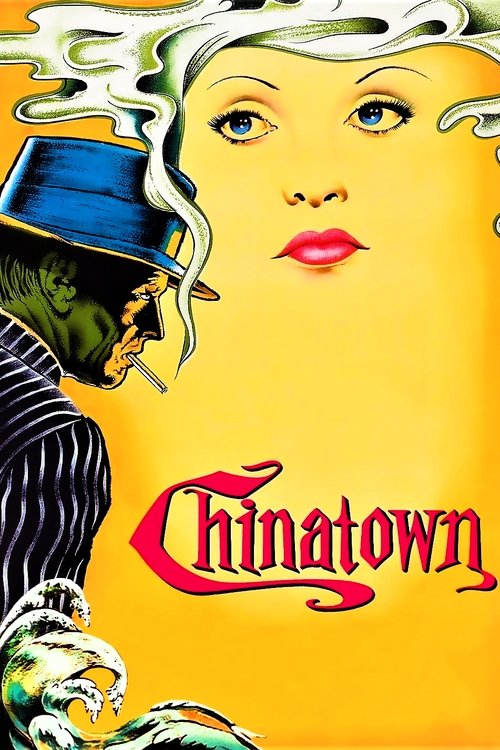
Chinatown
"You get tough. You get tender. You get close to each other. Maybe you even get close to the truth."
Overview
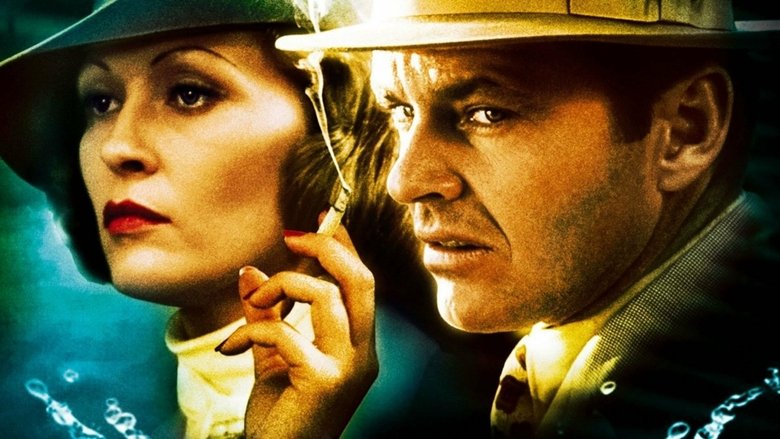
Set in 1937 Los Angeles, "Chinatown" follows J.J. "Jake" Gittes (Jack Nicholson), a suave private investigator specializing in marital infidelity cases. His seemingly routine career takes a dark turn when he is hired by a woman claiming to be Evelyn Mulwray to spy on her husband, Hollis Mulwray (Darrell Zwerling), the chief engineer for the city's water department. Gittes's investigation uncovers what appears to be an extramarital affair, but the case quickly spirals into a complex web of deceit and murder after the real Evelyn Mulwray (Faye Dunaway) appears, threatening to sue him.
As Gittes delves deeper, he unearths a far-reaching conspiracy involving the city's water supply, powerful business interests, and rampant corruption that reaches the highest levels of society. He finds himself entangled with Evelyn and her menacing father, Noah Cross (John Huston), a wealthy and influential figure with dark secrets of his own. The investigation forces Gittes to confront not only the city's hidden corruption but also his own past as a police officer in the enigmatic and morally ambiguous district of Chinatown.
Core Meaning
At its heart, "Chinatown" is a cynical exploration of the pervasiveness of corruption and the powerlessness of the individual in the face of systemic evil. Director Roman Polanski and writer Robert Towne present a world where wealth and influence allow the powerful to operate above the law, manipulating vital resources like water for personal gain. The film suggests that even the most determined efforts to uncover the truth and achieve justice are ultimately futile. The title itself becomes a metaphor for a state of moral confusion and helplessness, a place where good intentions lead to tragic outcomes, and the only sensible advice is to "do as little as possible." Ultimately, the film posits that the past is inescapable and that some secrets are so monstrous they corrupt everything they touch, leaving no room for heroism or redemption.
Thematic DNA
Corruption and Power
The central theme is the corrupting influence of power, embodied by Noah Cross. The film meticulously unveils a conspiracy where Los Angeles' water supply is manipulated by a cabal of wealthy individuals for their own enrichment. This corruption isn't just financial; it extends to the police, politicians, and the very fabric of the city, suggesting that those in power are unaccountable. Cross's chilling line, "You see, Mr. Gittes, most people never have to face the fact that at the right time and the right place, they're capable of anything," encapsulates the theme of absolute power corrupting absolutely. The narrative, inspired by the real California Water Wars, illustrates how public good is subverted for private greed.
Deceit and Hidden Truths
"Chinatown" is built on layers of deception. Nearly every character is hiding something, and the plot unfolds through Gittes's attempts to peel back these layers. From the initial impersonation of Evelyn Mulwray to the shocking revelation of Katherine's parentage, the film constantly plays with the audience's and Gittes's perceptions of the truth. Evelyn's enigmatic and often contradictory behavior is a primary source of this theme. The film suggests that the truth is often buried beneath personal trauma and monstrous secrets, and uncovering it can lead to devastating consequences.
The Futility of Good Intentions
A deep-seated pessimism runs through the film, culminating in its tragic ending. Gittes, a cynical but ultimately moral character, tries to do the right thing—to solve the murder and protect Evelyn and Katherine. However, his every action inadvertently leads to a worse outcome. This reflects his past experience as a cop in Chinatown, where he tried to help someone and ended up causing them harm. The film's infamous final line, "Forget it, Jake. It's Chinatown," serves as the ultimate expression of this theme: some systems are so corrupt and some evils so profound that they cannot be fought, and any attempt to intervene is doomed to fail.
The Past's Grip on the Present
The past is an inescapable force in "Chinatown." Gittes is haunted by his time in the titular district, a past that has shaped his cynical worldview. Evelyn is tragically defined by the incestuous abuse she suffered at the hands of her father, a secret that dictates her every move. The entire conspiracy is rooted in the history of Los Angeles's development and the greed of its founders. The film argues that personal and historical traumas are not easily overcome and continue to exert a powerful, often destructive, influence on the present.
Character Analysis
J.J. 'Jake' Gittes
Jack Nicholson
Motivation
Initially, his motivation is professional: solving a case for a client. This quickly shifts to a personal quest for the truth after he realizes he's been set up and Hollis Mulwray is murdered. His motivation becomes increasingly complex as he develops feelings for Evelyn and a desire to protect her, driven by a need to atone for a past failure in Chinatown. Ultimately, he is motivated by a stubborn, if futile, sense of justice.
Character Arc
Jake Gittes begins as a cynical but successful private eye, profiting from the dirty secrets of others. He is slick, confident, and seemingly in control. As the Mulwray case unfolds, his professional detachment crumbles. He is drawn into a conspiracy far deeper and darker than he could have imagined, forcing him to confront true evil. His journey is one of disillusionment; his attempts to impose order and achieve justice not only fail but lead to tragedy. He ends the film a broken man, stripped of his confidence and forced to accept his own powerlessness in a corrupt world.
Evelyn Cross Mulwray
Faye Dunaway
Motivation
Evelyn's sole motivation is the protection of her daughter, Katherine, from her monstrous father, Noah Cross. Every lie she tells and every action she takes is driven by the desperate need to keep Katherine safe and to escape her father's corrupting influence. This singular, powerful motivation drives her to her tragic end.
Character Arc
Evelyn is initially presented as a classic femme fatale: mysterious, wealthy, and potentially deceitful. Her character arc is a tragic revelation of the truth behind this facade. She is not a perpetrator of deceit, but a victim of a horrific, lifelong trauma—incestuous abuse by her father. Her secretive and erratic behavior is revealed to be a desperate attempt to protect her daughter/sister, Katherine. She evolves from a suspect in Gittes's eyes to the film's ultimate tragic figure, a woman destroyed by the very evil she has spent her life trying to escape.
Noah Cross
John Huston
Motivation
Cross is motivated by an insatiable hunger for power and control, which he equates with owning "the future." His desire for wealth through the water scheme is secondary to his obsession with controlling the destiny of Los Angeles. His motivation also extends to a perverse and possessive desire to control his family, specifically to reclaim his daughter/granddaughter, Katherine, whom he sees as the continuation of his legacy.
Character Arc
Noah Cross has no redemptive arc; he is the embodiment of absolute corruption and pure evil from beginning to end. He presents a veneer of folksy charm and respectability, which only makes his underlying monstrosity more chilling. As the film progresses, the depths of his depravity are revealed—not only is he the mastermind behind the water conspiracy and a murderer, but he is also an unrepentant rapist who abused his own daughter. He remains in power at the end, having gotten everything he wants, representing the triumph of evil over good.
Hollis Mulwray
Darrell Zwerling
Motivation
Hollis is motivated by his professional ethics and a sense of public duty. He is determined to prevent the construction of a dangerous dam and to expose the illegal dumping of the city's water. He is also motivated by a desire to protect Evelyn and Katherine from Noah Cross, having discovered the true nature of his father-in-law's plans.
Character Arc
Hollis Mulwray is a largely unseen but pivotal character whose integrity sets the plot in motion. He is a principled engineer who discovers the corrupt water scheme and opposes a new dam he knows is unsafe, alluding to a past disaster he feels responsible for. His character does not have an arc in the traditional sense, as he is murdered early in the film. Instead, he functions as the moral compass whose death exposes the deep-seated corruption Gittes must investigate. His entire presence is defined by his honesty in a dishonest world.
Symbols & Motifs
Water
Water symbolizes life, power, and the future. In the drought-stricken setting of Los Angeles, control over water is tantamount to control over the city's growth and prosperity. Noah Cross's manipulation of this vital resource for profit highlights his god-like ambition and moral corruption. The dumping of fresh water into the ocean is a powerful image of this corruption—a wasteful, unnatural act that serves a greedy agenda.
The entire plot is driven by the conspiracy to control Los Angeles' water. The investigation leads Jake to reservoirs, dry riverbeds, and orange groves. Hollis Mulwray, who opposes the new dam, is found drowned in a reservoir, a bitter irony that underscores the symbol's significance.
The Flaw in the Iris / Broken Glasses
These symbols represent flawed perception and the inability to see the full truth. Evelyn has a visible flaw in her iris, which Gittes notices. This physical imperfection mirrors her fractured emotional state and the hidden truths she conceals. Similarly, the broken bifocals found in the pond are a crucial clue that ultimately points to Noah Cross, a man whose vision of the future is monstrously distorted. The recurring motif of lenses—cameras, binoculars, cracked glasses—emphasizes the theme of obscured or partial vision.
Gittes first observes the flaw in Evelyn's eye when they meet. He later finds the bifocals in the saltwater pond at the Mulwray residence. The glasses do not belong to Hollis, which becomes a key point in Gittes's investigation, eventually leading him to confront Cross.
Gittes's Bandaged Nose
The prominent bandage on Jake's nose for much of the film symbolizes his vulnerability and the painful consequences of being "nosy." It's a constant, visible reminder that his investigation has made him a target and that he is in over his head. The injury, inflicted by a thug played by Polanski himself, serves as a direct warning to stop digging into matters that powerful people want to keep hidden. It also represents a form of impotence, a mark of his failure to command the situation.
Early in his investigation, while snooping around a reservoir at night, Gittes is caught by thugs. One of them cuts his nostril, telling him, "You're a very nosy fellow, kitty cat." Gittes wears a conspicuous bandage for the majority of the film, a visual manifestation of the danger he is in.
Chinatown
Chinatown is not just a location but a powerful metaphor for the unknowable, the corrupt, and the futility of good intentions. It represents a world with its own set of rules where outsiders are powerless and attempts to impose order or justice are bound to fail, often with tragic consequences. It symbolizes a state of mind, a place of past trauma for Gittes, and the ultimate heart of darkness where evil triumphs.
Gittes reveals he used to be a cop in Chinatown and his past experience there was tragic. He tells Evelyn he was trying to "save" a woman, but ended up "hurting her." The film's climax is deliberately set in Chinatown, bringing Gittes's past and present failures full circle as his attempts to save Evelyn lead directly to her death. The final line, "Forget it, Jake. It's Chinatown," cements the location's symbolic meaning.
Memorable Quotes
Forget it, Jake. It's Chinatown.
— Lawrence Walsh
Context:
Spoken by Gittes's associate, Walsh, in the final scene. After Evelyn has been shot and killed by the police, and Noah Cross has taken Katherine, a distraught Gittes can only stare in horror. Walsh and another associate lead him away from the scene, delivering this line to urge him to let go of a situation that is beyond his control.
Meaning:
This is the film's iconic closing line, encapsulating its central theme of futility and inescapable corruption. It signifies that there are places and situations so morally ambiguous and corrupt that the normal rules of justice do not apply. It's a call for Gittes to accept his powerlessness and the tragic outcome, just as he had to in his past. The line transforms "Chinatown" from a physical place into a metaphor for a world where evil triumphs and the best one can do is walk away.
She's my sister AND my daughter!
— Evelyn Mulwray
Context:
During a heated confrontation, Gittes accuses Evelyn of hiding her husband's killer and demands to know the truth about the young woman, Katherine. Believing Katherine is Evelyn's sister and Hollis's mistress, Gittes slaps Evelyn repeatedly to force a confession. Under duress, she screams this line, finally revealing the horrifying truth about her relationship with her father and daughter.
Meaning:
This shocking revelation is the emotional climax of the film, exposing the terrible secret at the heart of the mystery. The line reveals the true depth of Noah Cross's depravity and re-contextualizes all of Evelyn's actions as desperate attempts to protect the child born of incest. The brutal, staccato delivery, punctuated by Gittes's slaps, makes it one of the most memorable and horrifying confessions in cinema history.
You see, Mr. Gittes, most people never have to face the fact that at the right time and the right place, they're capable of anything.
— Noah Cross
Context:
Gittes confronts Cross at the Albacore Club, accusing him of murder and the water conspiracy. Cross, unperturbed, calmly explains his worldview over lunch, effectively admitting to his capacity for evil without showing any remorse. He uses this line to dismiss Gittes's moral framework and assert his own sense of power.
Meaning:
This line serves as Noah Cross's chilling philosophy and a self-justification for his monstrous actions. It is his assertion that morality is circumstantial and that anyone, given the right opportunity and incentive, would transgress societal norms. It's a glimpse into the mind of a sociopath who believes himself to be above conventional morality, and it functions as a dark, cynical commentary on human nature.
Politicians, ugly buildings, and whores all get respectable if they last long enough.
— Noah Cross
Context:
During his lunch with Gittes at the Albacore Club, Cross responds to Gittes's observation that he is a "respectable" man. Cross offers this aphorism as an explanation for his public standing, implying that his status has been bought with time and money, not earned through virtue.
Meaning:
This quote cynically expresses Noah Cross's belief that time and endurance erase all sins. He sees respectability not as a matter of character or morality, but as a simple function of longevity and power. It reflects the film's theme that the corrupt and powerful can literally get away with murder and, in time, be celebrated as city fathers, their crimes forgotten or legitimized by history.
Philosophical Questions
Can an individual truly effect change in a systemically corrupt world?
The film explores this question through the character of Jake Gittes. Despite his skills as an investigator and his growing determination, every step he takes to expose the truth and protect the innocent results in disaster. The film's bleak conclusion, where the villain wins completely and the heroine is killed, provides a deeply pessimistic answer. It suggests that individual action is futile against entrenched, systemic corruption. The powerful, like Noah Cross, own the institutions meant to provide justice, rendering any single person's efforts meaningless. The final line, "Forget it, Jake. It's Chinatown," is the ultimate concession to this grim reality.
What is the nature of evil?
"Chinatown" presents a profound and disturbing portrait of evil through Noah Cross. He is not a one-dimensional villain but a charming, intelligent, and powerful man who commits heinous acts without remorse. The film explores evil not as a simple aberration but as a fundamental aspect of human potential. Cross's assertion that anyone is "capable of anything" given the right circumstances challenges the audience's moral certainty. The film suggests that the most terrifying evil is not chaotic but rational and calculating, born from an insatiable desire for power and control over the future.
Is it better to uncover a painful truth or to leave secrets buried?
Gittes's relentless pursuit of the truth drives the narrative, but the film constantly questions the virtue of this pursuit. Uncovering the conspiracy leads to multiple deaths, and forcing the truth from Evelyn about Katherine's parentage leads directly to the tragic climax. The film seems to argue that some truths are so monstrous that their revelation causes more destruction than their concealment. Gittes's failure lies in his inability to comprehend the depth of the depravity he is dealing with until it is too late. He operates under the detective's assumption that truth brings clarity and justice, but in the world of "Chinatown," it only brings pain and death.
Alternative Interpretations
While the film's primary interpretation centers on systemic corruption and inescapable fate, alternative readings have emerged. Some critics have viewed the film through a psychoanalytic lens, focusing on the Oedipal dynamics within the Cross family. In this view, the film is a dark exploration of patriarchal power and incestuous desire, with Noah Cross as the monstrous father figure who literally and figuratively seeks to possess his progeny and, by extension, "the future." Jake's investigation, then, becomes a journey into the dark heart of a deeply dysfunctional family, with the water conspiracy serving as a backdrop to the more profound personal horrors.
Another interpretation frames "Chinatown" as a critique of the American Dream and the myth of Manifest Destiny. The story of Los Angeles's growth, built on stolen water and deceit, becomes an allegory for the corrupt foundations of American expansion. Noah Cross represents the ruthless capitalist who will destroy lives and nature for profit, betraying the promise of the West for personal gain. Jake's failure is not just personal but symbolic of the inability of the common man to fight against the foundational greed of the powerful figures who built the country. The film deconstructs the romantic notion of the frontier, revealing a history written in exploitation and violence.
Cultural Impact
"Chinatown" is regarded as a landmark of American cinema and a cornerstone of the "New Hollywood" era of the 1970s. It revitalized the film noir genre, creating what is now known as neo-noir, by blending classic noir elements—a cynical detective, a femme fatale, a complex criminal plot—with modern sensibilities, color cinematography, and more explicit themes. Its release during the Watergate era resonated deeply with a public grappling with institutional corruption and governmental deceit, making its themes of conspiracy and the abuse of power particularly potent.
Robert Towne's screenplay is legendary in Hollywood, frequently cited as a 'perfect' script and studied in screenwriting courses worldwide for its flawless structure and character development. The film's pessimistic tone and devastating ending were a departure from classical Hollywood conventions and had a significant influence on subsequent crime and mystery films. The final line, "Forget it, Jake. It's Chinatown," has become an iconic piece of pop culture lexicon, synonymous with a situation that is hopelessly corrupt and beyond resolution. The film solidified Jack Nicholson's status as a major leading man and is often considered one of the greatest films ever made.
Audience Reception
"Chinatown" was met with widespread critical acclaim upon its release and continues to be revered by audiences and critics alike. It holds a 98% approval rating on Rotten Tomatoes, with the consensus praising its brilliant screenplay, steady direction, and powerful performances by Jack Nicholson and Faye Dunaway. Audiences lauded the film's intricate and intelligent plot, its atmospheric recreation of 1930s Los Angeles, and its gripping suspense. Many viewers found the complex narrative highly engaging, appreciating that it didn't pander to the audience.
The film's bleak and shocking ending was, and remains, a major point of discussion. While some viewers found it overly cynical and depressing, many praised its boldness and thematic resonance, arguing that a happier ending would have betrayed the film's core message about corruption and futility. The primary points of criticism from some viewers revolved around the complex plot being occasionally hard to follow and the deeply disturbing subject matter, particularly the theme of incest. Overall, the audience verdict is that "Chinatown" is a masterfully crafted, thought-provoking, and unforgettable piece of cinema, considered by many to be one of the greatest films ever made.
Interesting Facts
- The screenplay by Robert Towne is widely considered one of the greatest ever written and won the Academy Award for Best Original Screenplay.
- Director Roman Polanski insisted on the film's bleak, tragic ending, against the wishes of screenwriter Robert Towne, who had written a more hopeful conclusion where Evelyn survives and Noah Cross is killed.
- Roman Polanski has a memorable cameo as the hoodlum who cuts Jack Nicholson's nose. The special knife used was designed to be safe, but it was still a tense scene to film.
- The film's plot is loosely based on the real-life California Water Wars, a series of conflicts over water rights between Los Angeles and farmers in the Owens Valley in the early 20th century.
- Faye Dunaway and Roman Polanski famously clashed on set, with one notable incident involving Dunaway throwing a cup of urine in Polanski's face after he refused her a bathroom break.
- The character of Hollis Mulwray is based on the real historical figure William Mulholland, a key figure in the construction of the Los Angeles Aqueduct.
- Jack Nicholson discovered a real-life family secret that mirrored the film's plot twist during production. A 'Time' magazine researcher informed him that the woman he believed to be his sister was actually his mother.
- The entire film is shot from the perspective of Jake Gittes. He is in every scene, and the audience only knows what he knows. When he is knocked out, the screen fades to black.
- Jane Fonda was a strong contender for the role of Evelyn Mulwray, but Polanski insisted on Faye Dunaway.
- The sequel, "The Two Jakes," was released in 1990, with Jack Nicholson reprising his role and also directing. It was not as critically or commercially successful.
⚠️ Spoiler Analysis
Click to reveal detailed analysis with spoilers
Frequently Asked Questions
Explore More About This Movie
Dive deeper into specific aspects of the movie with our detailed analysis pages
Comments (0)
No comments yet. Be the first to share your thoughts!