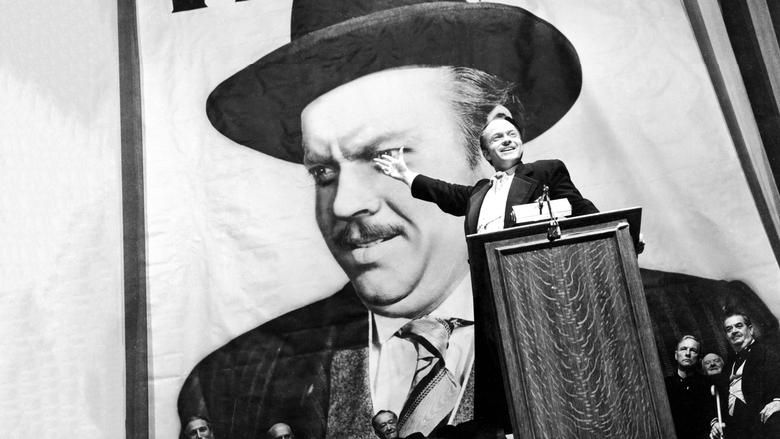
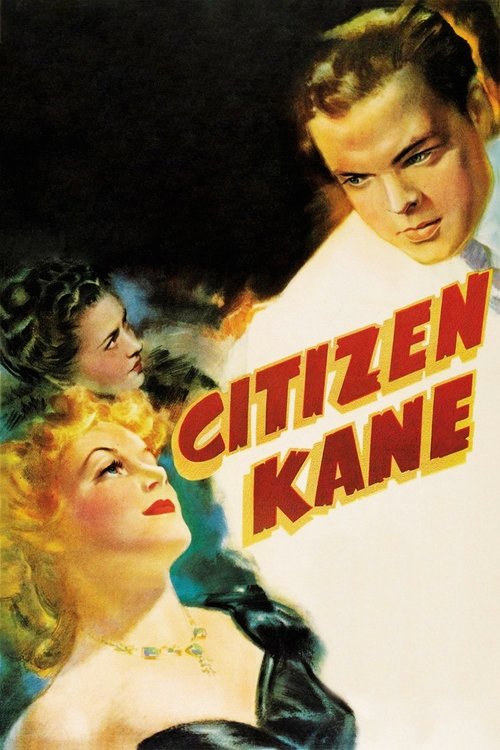
"Some called him a hero...others called him a heel."
Citizen Kane - Ending Explained
⚠️ Spoiler Analysis
The central mystery of "Citizen Kane" is the meaning of his dying word, "Rosebud." Reporter Jerry Thompson interviews Kane's closest associates, but none can provide the answer. In the film's final moments, the narrative's central question is answered, but only for the audience. As workers are burning Kane's possessions in the furnace of his Xanadu estate, the camera focuses on an old, forgotten object being tossed into the flames: a simple wooden sled from his childhood. Painted on the sled is a rosebud and the word "Rosebud."
This revelation re-contextualizes the entire film. "Rosebud" was not a person, a secret love, or a grand mystery, but a symbol of the one thing Kane's immense wealth could never buy back: his lost childhood innocence. The sled is from the last day he spent with his mother in their humble Colorado home before he was sent away to be raised by the banker Thatcher, a moment that defined his lifelong emotional trauma and his inability to find happiness. His entire life, from his quest for power to his compulsive collecting of objects, can be seen as a futile attempt to fill the void left by this initial, profound loss. The tragedy is complete as the sled—the physical embodiment of his only happy memory—is consumed by fire, its significance forever unknown to the world that tried so desperately to understand him. Thompson's final line, "I don't think any word can explain a man's life," becomes deeply ironic, as the audience now holds the very key he was searching for, understanding that it symbolizes everything the public figure of 'Citizen Kane' was not.
Alternative Interpretations
While the dominant interpretation of "Citizen Kane" centers on the tragic loss of innocence and the emptiness of wealth, other readings offer different perspectives. One alternative view is that the film is a powerful political allegory. Kane's rise and fall can be seen as a critique of pre-New Deal American capitalism and the immense, unchecked power wielded by media barons to manipulate public opinion and politics. In this light, Kane's failure represents the decline of an old order of autocratic individualism.
Another interpretation focuses on the film's exploration of memory and identity through a Nietzschean lens of perspectivism. This view suggests that the film's primary message is not about Kane himself, but about the impossibility of ever truly knowing another person. The conflicting testimonies of the interviewees demonstrate that there is no single, objective truth, only a series of subjective perspectives. The reporter's failure to find a definitive answer is the point; Kane's true identity remains an enigma because all identity is fundamentally enigmatic and constructed through the eyes of others.
A psychoanalytic reading of the film posits that Kane's entire life is driven by a narcissistic personality disorder stemming from the childhood trauma of being abandoned by his mother. His relentless pursuit of power, control, and public adoration is not just a quest for love, but a pathological need to reaffirm his own importance and compensate for deep-seated feelings of worthlessness. His relationships fail because he is incapable of empathy, seeing others only as extensions of himself.