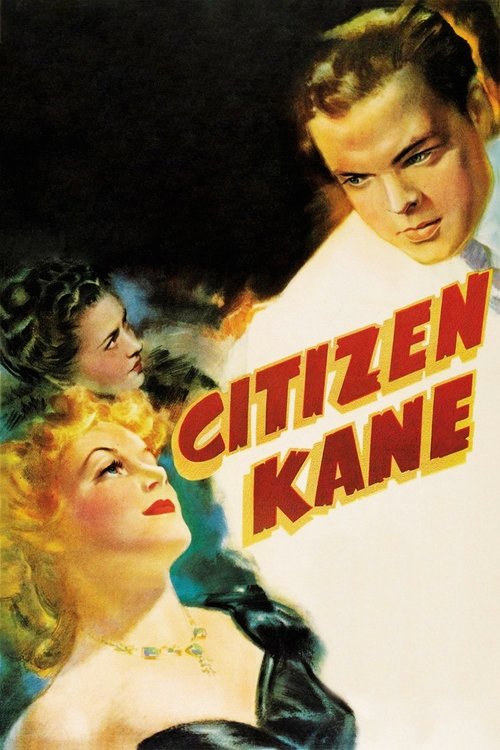
Citizen Kane
A spiraling, shadowy mystery into the cavernous heart of a man who gained the world, this drama is an elegy for lost innocence, echoing in the vast, empty halls of material success.
Citizen Kane

Citizen Kane

"Some called him a hero...others called him a heel."

17 April 1941 United States of America 119 min ⭐ 8.0 (5,771)
Director: Orson Welles
Cast: Orson Welles, Joseph Cotten, Dorothy Comingore, Ray Collins, George Coulouris
Drama Mystery
The Inadequacy of Material Wealth The Elusive Nature of Truth and Memory The Corruption of Power and Innocence Love and Loneliness
Budget: $839,727
Box Office: $23,218,000

Overview

"Citizen Kane" opens with the death of its titular character, Charles Foster Kane, an immensely wealthy and influential newspaper publisher. In his final moments, within his sprawling, Xanadu estate, he utters a single, enigmatic word: "Rosebud." This sparks a nationwide fascination, prompting a newsreel producer to assign reporter Jerry Thompson the task of uncovering the meaning behind Kane's last word, believing it will unlock the secret to his complex life.

Thompson's investigation forms the film's narrative framework. He interviews Kane's former friends, colleagues, and wives, each recounting their memories through a series of flashbacks. These fragmented and often contradictory accounts paint a mosaic of a man who was idealistic yet corrupt, charismatic yet tyrannical, and deeply loved yet profoundly lonely. The reporter delves into the archives of Kane's estranged guardian, the banker Walter Thatcher, and speaks with his loyal business manager Mr. Bernstein, his former best friend Jedediah Leland, and his second wife, Susan Alexander Kane.

Through these multiple perspectives, the film pieces together the epic story of Kane's rise from a boy torn from his humble Colorado home to a titan of the media world who builds an empire, only to see it crumble alongside his personal relationships. Thompson's quest for "Rosebud" becomes a journey into the heart of the American dream, questioning whether any single word or memory can truly define the sum of a human life.
Core Meaning

The core meaning of "Citizen Kane" is a profound exploration of the elusiveness of truth and the ultimate emptiness of the American dream when pursued without genuine human connection. Director Orson Welles suggests that a person's life is a complex puzzle, impossible to fully comprehend, especially through the fragmented and biased lens of memory. The reporter's quest to define Kane by his last word, "Rosebud," is ultimately futile; no single word can encapsulate the totality of a life filled with contradictions.

The film posits that immense wealth and power, the very cornerstones of Kane's ambition, lead not to happiness but to profound isolation and spiritual bankruptcy. Kane acquires everything he could possibly want—money, possessions, influence—yet dies alone, grasping for a memory of lost childhood and innocence. Welles delivers a cautionary tale about the corrupting nature of absolute power and the tragedy of a man who could win the adoration of the masses but never truly connect with or love another individual.

Thematic DNA

The Inadequacy of Material Wealth 35%
The Elusive Nature of Truth and Memory 30%
The Corruption of Power and Innocence 25%
Love and Loneliness 10%

The Inadequacy of Material Wealth

Charles Foster Kane acquires a fortune that allows him to buy anything he desires, from newspapers to priceless art. However, the film consistently demonstrates that his wealth cannot buy him happiness, love, or loyalty. His opulent estate, Xanadu, is more of a prison than a home, a vast, empty mausoleum filled with possessions that bring him no joy. His attempts to control people through money—turning his second wife, Susan, into an opera star or buying the loyalty of his staff—ultimately fail and drive them away. The film's central message is that the pursuit of material wealth at the expense of genuine human relationships leads to a hollow and lonely existence.

The Elusive Nature of Truth and Memory

The film's narrative structure, built on a series of flashbacks from different perspectives, highlights the subjectivity of truth. Each character interviewed by the reporter, Jerry Thompson, provides a different, often conflicting, version of Kane. Thatcher sees him as a rebellious spendthrift, Bernstein as a charismatic leader, Leland as a fallen idealist, and Susan as a domineering tyrant. This non-linear storytelling suggests that an objective "truth" about a person is unattainable; we are all composites of the different ways people see us. The final revelation of "Rosebud" is unknown to the characters, signifying that the most crucial piece of a person's life might be forever lost to the past.

The Corruption of Power and Innocence

"Citizen Kane" is a powerful allegory for how absolute power corrupts. As a young man, Kane is an idealist, championing the rights of the underprivileged through his newspaper. However, as his media empire grows, his idealism curdles into a hunger for control. He begins to manipulate public opinion, attempting to manufacture a war and control political outcomes. This lust for power extends to his personal life, where he tries to dominate everyone around him. His journey is a tragic fall from a state of innocence, symbolized by his childhood sled "Rosebud," to a state of cynical, isolated megalomania.

Love and Loneliness

At its heart, the film is about a man who desperately wants to be loved but is incapable of giving love in return. His mantra, "love on my terms," reveals his narcissistic approach to relationships. He equates love with possession and control, which inevitably drives away both of his wives and his closest friend, Jedediah Leland. Kane's immense wealth creates a barrier, isolating him from genuine human connection. Despite being surrounded by people and possessions, he is profoundly lonely, a state powerfully visualized in the vast, empty spaces of his Xanadu estate.

Character Analysis

Charles Foster Kane

Orson Welles

Archetype: Antihero / Tragic Hero
Key Trait: Megalomania

Motivation

Kane's primary motivation is a desperate, lifelong quest for the love and validation he lost as a child when his mother sent him away. This manifests as a need to be loved by the masses, which drives his newspaper empire and political ambitions. He believes that if he can control what people think, he can make them love him. However, his methods are rooted in domination rather than genuine affection.

Character Arc

Kane begins as a young, energetic idealist who champions the common person. As he amasses enormous wealth and power, his idealism corrupts into a tyrannical desire for control over both the public and his personal relationships. His journey is a classic rise-and-fall arc, where his ambition and inability to love lead to alienation from his friends and wives. He ultimately dies a lonely, isolated man in his vast, empty mansion, having gained the world but lost his soul.

Jedediah Leland

Joseph Cotten

Archetype: The Conscience / The Disillusioned Friend
Key Trait: Principled

Motivation

Leland is motivated by a genuine belief in journalistic integrity and the principles upon which the Inquirer was founded. He wants to hold Kane accountable to his own declared ideals. His motivation is to preserve the truth, even if it means confronting and losing his best friend.

Character Arc

Jedediah starts as Kane's closest friend and most ardent supporter, drawn to Kane's initial idealism and charm. He serves as the moral compass of the newspaper. Over time, he becomes increasingly disillusioned as he watches Kane betray their shared principles in his pursuit of power. Their friendship fractures completely when Kane fires him for writing a negative review of Susan's opera debut, and Leland ends his life cynical and estranged from the man he once admired.

Susan Alexander Kane

Dorothy Comingore

Archetype: The Trapped Trophy
Key Trait: Long-suffering

Motivation

Initially, Susan is motivated by a simple desire for a quiet life and affection. As Kane's wife, her primary motivation becomes survival and, eventually, escape. She longs to be free from his control and the public humiliation of her forced opera career, which pushes her to a suicide attempt and ultimately to abandoning him.

Character Arc

When Kane meets Susan, she is a sweet but untalented singer. He is initially drawn to her simplicity. After becoming his mistress and then his second wife, her life is completely dominated by his ambition. He forces her into a humiliating and failed opera career, not for her sake, but for his own ego. The pressure and control crush her spirit, transforming her into a bitter, resentful alcoholic. Her arc culminates in her finally finding the strength to leave him, choosing her own freedom over his suffocating wealth.

Mr. Bernstein

Everett Sloane

Archetype: The Loyal Follower
Key Trait: Loyal

Motivation

Bernstein's motivation is simple and unwavering: loyalty to Charles Foster Kane. He is content to serve the man who gave him his start and built an empire. Even in his old age, he defends Kane's legacy and seems genuinely fond of the man, despite his flaws.

Character Arc

Mr. Bernstein is Kane's fiercely loyal business manager from the very beginning. His character does not have a significant arc; he remains devoted to Kane throughout his life, even long after Kane's death. He embodies unwavering, almost blind loyalty, choosing to remember the charismatic and powerful Kane of his youth rather than the monstrous figure he became. His perspective is colored by nostalgia and a deep-seated admiration for his boss.

Symbols & Motifs

Rosebud (The Sled)

Meaning:

"Rosebud" is the film's central and most famous symbol. It represents the lost innocence, simplicity, and maternal love of Kane's childhood. It is a tangible link to the last moment in his life when he was truly happy and secure, before being sent away from his mother to be raised in a world of wealth and ambition. For Kane, it symbolizes a paradise lost that all his money and power could never reclaim.

Context:

The word "Rosebud" is Kane's dying utterance. The reporter's quest to understand its meaning drives the entire plot. In the film's final moments, the audience sees workers burning Kane's old possessions, and the camera reveals the name "Rosebud" painted on the sled he was playing with on the day he was taken from his home. The sled is tossed into a furnace, its meaning lost forever to the world.

Snow Globe

Meaning:

The snow globe symbolizes Kane's attempt to recapture and preserve the purity of his past. It contains a simple, peaceful winter scene, echoing the moment he was separated from his family in the snows of Colorado. It represents his desire to freeze a moment of happiness and innocence before the complexities and corruptions of his adult life took hold. His dropping and shattering it at the moment of death signifies the final, irreversible loss of that innocence.

Context:

Kane is holding the snow globe when he dies, and it smashes on the floor. Susan Alexander mentions that he bought it on the day they first met, but it becomes clear it holds a deeper meaning. Later, after Susan leaves him, Kane violently destroys her room but stops when he finds the snow globe, clutching it as he whispers "Rosebud."

Xanadu

Meaning:

Xanadu, Kane's gargantuan and unfinished estate, symbolizes the ultimate emptiness of material wealth and the isolation it brings. It is a monument to his ego, filled with countless statues and artifacts, yet it is a cold, lifeless, and prison-like space. It represents his attempt to build a world he can control, yet he ends up a prisoner within its vast, lonely halls, reflecting the failure of his life's ambitions.

Context:

The film opens and closes at Xanadu. The opening shots establish it as a mysterious, gothic, and decaying place. We see Kane living out his final years there in solitude, wandering its cavernous rooms. The newsreel at the beginning details its immense scale and cost, calling it the "costliest monument a man has built to himself."

Jigsaw Puzzles

Meaning:

The jigsaw puzzles symbolize the fragmented and ultimately unknowable nature of Kane's life. Just as Susan mindlessly pieces together puzzles out of boredom and isolation, the reporter Thompson tries to piece together the puzzle of Kane's life from the memories of others. The film suggests that, like a jigsaw puzzle with a missing piece, a complete understanding of a person is impossible to achieve after they are gone.

Context:

Susan Alexander is shown sitting in the vast, empty halls of Xanadu, repeatedly assembling large jigsaw puzzles. This visual motif underscores her loneliness and the stagnant nature of her life with Kane. At the end of the film, Thompson uses the metaphor of a jigsaw puzzle to describe his failed investigation into the meaning of "Rosebud."

Memorable Quotes

Rosebud...

— Charles Foster Kane

Context:

Spoken by Kane on his deathbed at the very beginning of the film, just as he drops a snow globe which shatters on the floor. The rest of the film is a journalistic investigation into the meaning of this single word.

Meaning:

This is Kane's dying word and the film's central mystery. Its significance lies not in what it is, but in what it represents: Kane's final thought is of his lost childhood innocence and the simple happiness he knew before wealth and power complicated his life. It reveals that despite his immense success, his life was ultimately a tragedy of unfulfilled longing for a simple past.

If I hadn't been very rich, I might have been a really great man.

— Charles Foster Kane

Context:

Kane says this to his business manager, Mr. Bernstein, in a moment of quiet reflection. It follows a discussion with Thatcher where Kane has been forced to relinquish control of his newspaper empire due to financial mismanagement.

Meaning:

This quote is a moment of tragic self-awareness for Kane. He recognizes that his immense wealth, the very thing that gave him power, was also his greatest curse. It insulated him from humanity, corrupted his ideals, and ultimately prevented him from achieving true greatness, which he equates with character and integrity, not just power.

It's no trick to make a lot of money... if all you want is to make a lot of money.

— Mr. Bernstein

Context:

Bernstein says this to the reporter, Jerry Thompson, during their interview as he reflects on his years working for Kane. It serves as a commentary on Kane's immense financial success versus his personal failures.

Meaning:

Mr. Bernstein offers this piece of wisdom, suggesting that the pursuit of wealth for its own sake is a hollow and relatively simple endeavor. The quote implies that a life dedicated only to accumulation lacks depth and meaning, subtly critiquing Kane's own life path. It highlights the film's theme that true success is not measured in dollars but in values and relationships.

You provide the prose poems; I'll provide the war.

— Charles Foster Kane

Context:

This is a line from a telegram Kane sends to his correspondent in Cuba. The correspondent had cabled that there was no war, and Kane's reply shows he is prepared to create one to boost his paper's circulation and influence.

Meaning:

This infamous line reveals the depth of Kane's hubris and his belief in the absolute power of his media empire. It demonstrates his willingness to manipulate public opinion and even instigate international conflict for the sake of selling newspapers. It's a stark illustration of yellow journalism and the dangerous ethics of a media mogul who sees news not as a truth to be reported, but as a product to be sold and a tool to wield power.

I don't think any word can explain a man's life.

— Jerry Thompson

Context:

Thompson says this to his fellow reporters in the closing scenes at Xanadu, admitting his failure to uncover the meaning of "Rosebud." He concludes that it will remain a "missing piece in a jigsaw puzzle." Ironically, the audience has just been shown the answer, reinforcing the gap between public perception and private truth.

Meaning:

This line, spoken by the reporter at the end of his investigation, encapsulates the film's central theme. Thompson concludes that his search for a simple answer in "Rosebud" was misguided. A human life is too complex, contradictory, and mysterious to be summed up by a single word or a simple explanation. It is the film's final philosophical statement on the unknowable nature of human identity.

Philosophical Questions

Can a person's life be truly understood by others?

The entire structure of "Citizen Kane" is built around this question. The reporter Jerry Thompson embarks on a quest to understand Kane through a single word, "Rosebud." He gathers stories, facts, and memories from those who knew Kane best, but each provides only a partial, subjective, and often contradictory view. The film concludes that a human life is a labyrinth of complexities that cannot be neatly summarized or defined. Thompson himself admits defeat, concluding that "Rosebud" is just a "missing piece in a jigsaw puzzle" and that no single word can explain a man's life. The film suggests that the core of an individual's identity may be ultimately unknowable to anyone but themselves, and perhaps even to them.

What is the relationship between wealth, power, and happiness?

"Citizen Kane" serves as a powerful cautionary tale about the pursuit of the American Dream. Kane achieves unparalleled wealth and power, yet he is profoundly unhappy and dies alone. The film systematically dismantles the idea that money can buy happiness. Kane's fortune isolates him, corrupts his youthful ideals, and becomes a tool with which he tries, and fails, to control others and buy their love. His sprawling, treasure-filled mansion, Xanadu, is depicted as a lonely prison. The film argues that true fulfillment comes not from material possessions or public influence, but from genuine human connection and love, something Kane could never achieve.

How does the media shape truth and reality?

As a media mogul, Kane wields immense power to shape public perception. The film critiques the nature of journalism, particularly the sensationalism of "yellow journalism." Kane openly admits he controls what people think, boasting that if the headline is big enough, it makes the news big enough. His willingness to "provide the war" to sell papers shows a dangerous disregard for objective truth. The film explores how media can be a tool for personal ambition and manipulation, blurring the lines between news and propaganda. Ultimately, even Kane's own life story becomes a media narrative, presented in the opening newsreel, which is shown to be a superficial and incomplete version of the man.

Alternative Interpretations

While the dominant interpretation of "Citizen Kane" centers on the tragic loss of innocence and the emptiness of wealth, other readings offer different perspectives. One alternative view is that the film is a powerful political allegory. Kane's rise and fall can be seen as a critique of pre-New Deal American capitalism and the immense, unchecked power wielded by media barons to manipulate public opinion and politics. In this light, Kane's failure represents the decline of an old order of autocratic individualism.

Another interpretation focuses on the film's exploration of memory and identity through a Nietzschean lens of perspectivism. This view suggests that the film's primary message is not about Kane himself, but about the impossibility of ever truly knowing another person. The conflicting testimonies of the interviewees demonstrate that there is no single, objective truth, only a series of subjective perspectives. The reporter's failure to find a definitive answer is the point; Kane's true identity remains an enigma because all identity is fundamentally enigmatic and constructed through the eyes of others.

A psychoanalytic reading of the film posits that Kane's entire life is driven by a narcissistic personality disorder stemming from the childhood trauma of being abandoned by his mother. His relentless pursuit of power, control, and public adoration is not just a quest for love, but a pathological need to reaffirm his own importance and compensate for deep-seated feelings of worthlessness. His relationships fail because he is incapable of empathy, seeing others only as extensions of himself.

Cultural Impact

"Citizen Kane" is widely regarded as one of the most influential films ever made, fundamentally changing the language of cinema. When it was released in 1941, its narrative and technical innovations were revolutionary. The film's non-linear structure, telling its story through a series of flashbacks from multiple perspectives, broke from the conventional, linear storytelling of the time. This complex narrative forces the audience to become active participants, piecing together the protagonist's life.

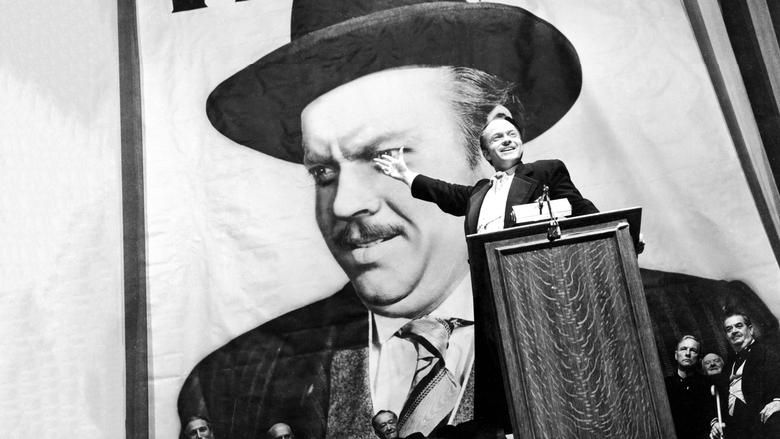
Cinematographer Gregg Toland's pioneering use of "deep focus" photography was a technical marvel. This technique, where the foreground, middle-ground, and background are all in sharp focus simultaneously, allowed for more complex compositions and a greater sense of realism, influencing generations of filmmakers. Combined with dramatic, low-angle shots that made characters seem powerful and imposing, and expressionistic chiaroscuro lighting, the film created a visual style that was years ahead of its time.

Upon its release, the film was a critical success but a commercial failure, largely due to the efforts of newspaper magnate William Randolph Hearst, who recognized the film as a thinly veiled and unflattering portrait of his own life. Hearst banned any advertising, reviews, or mention of the film in his papers, significantly limiting its reach. However, the film's reputation grew immensely over time, especially after its re-release in Europe after WWII and on American television in the 1950s. French critic André Bazin was instrumental in championing the film as a work of art, solidifying its place in cinematic history. Today, "Citizen Kane" is a staple of film schools and consistently ranks at or near the top of "greatest film of all time" lists, and its influence can be seen in the work of countless directors like Martin Scorsese and Steven Spielberg.

Audience Reception

Upon its 1941 release, "Citizen Kane" was met with a divided reception, heavily influenced by the controversy surrounding its subject. Critics overwhelmingly praised the film for its artistic and technical innovations. Many recognized Orson Welles's directorial vision and the film's groundbreaking cinematography, narrative structure, and sound design as revolutionary. It was nominated for nine Academy Awards, winning for Best Original Screenplay. However, every time one of its nominations was announced at the ceremony, the film was booed, indicating a more polarized view within the industry.

The general audience's reaction was lukewarm, and the film was a box-office failure. This was largely due to the smear campaign led by newspaper magnate William Randolph Hearst, who correctly saw the character of Charles Foster Kane as a caricature of himself. Hearst banned all mention of the film in his widely circulated newspapers, severely limiting its advertising and public exposure. It wasn't until its re-release in the 1950s that "Citizen Kane" found a wider audience and its reputation began to grow exponentially, eventually leading to its status as arguably the greatest film ever made.

Interesting Facts

  • The character of Charles Foster Kane was largely based on the powerful newspaper publisher William Randolph Hearst, who was so incensed by the film that he banned any mention of it in his vast network of newspapers.
  • Orson Welles was only 25 years old when he co-wrote, directed, produced, and starred in the film.
  • To achieve the look of an elderly Kane, Welles relied on groundbreaking latex makeup designed by Maurice Seiderman, which has since become standard in the industry.
  • During the scene where Kane angrily destroys Susan's bedroom, a frustrated Welles genuinely cut his hands, and the blood seen is real. The take was completed in one go.
  • To prepare for directing his first feature, Orson Welles reportedly watched John Ford's film "Stagecoach" (1939) about 40 times, using it as a practical model for filmmaking techniques.
  • Famed composer Bernard Herrmann, known for his later work with Alfred Hitchcock, wrote his very first film score for "Citizen Kane."
  • Welles suffered two injuries during filming: he chipped his anklebone in a fall down a staircase and had to direct from a wheelchair for two weeks.
  • In the background of the beach picnic scene, the large birds flying are actually pterodactyls from stock footage originally created for the film "Son of Kong" (1933).
  • The film was a box office flop upon its initial release, partly due to the campaign against it by William Randolph Hearst. It only gained its legendary status after being re-released in the 1950s.

Easter Eggs

During the newsreel segment at the beginning of the film, William Randolph Hearst, the real-life inspiration for Kane, is explicitly mentioned by name.

This was a bold and direct reference that wasn't lost on the audience or Hearst himself. The head of the newsreel company, Rawlston, asks his staff how Kane is different from other powerful figures, saying, "But how is he different from Ford? Or Hearst, for that matter?" This directly links the fictional Kane to his real-world counterpart within the film's own universe, making the parallels undeniable.

⚠️ Spoiler Analysis

Click to reveal detailed analysis with spoilers

Frequently Asked Questions

Explore More About This Movie

Dive deeper into specific aspects of the movie with our detailed analysis pages

Comments (0)

Leave a comment

No comments yet. Be the first to share your thoughts!