Skip to content
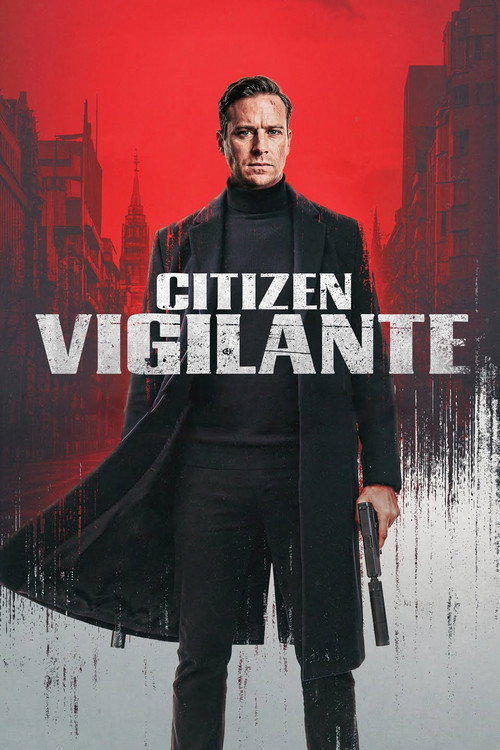
Citizen Vigilante
A bleak, ultra-violent descent into vigilantism. Through a suffocating atmosphere of xenophobia and cold detachment, a wealthy expatriate acts as a self-appointed cleanser of society, mirroring the very brutality he seeks to exterminate.
Citizen Vigilante

Citizen Vigilante

"An action film inspired by real events."

19 June 2026 Germany 89 min 6.5 (236)

Director: Uwe Boll

Cast: Armie Hammer, Costas Mandylor, Désirée Giorgetti, Steffen Mennekes, Neb Chupin

Crime Action Thriller Vigilantism vs. The Rule of Law Xenophobia and Right-Wing Populism Sociopathy and Obsessive Control Viral Fame and Media Manipulation

Overview

In Citizen Vigilante, Michael Sanders is a wealthy American businessman living in a nondescript European city, managing a vast real estate empire inherited from his father. Enraged by what he perceives as a catastrophic breakdown of law and order, Sanders transforms into a ruthless underground vigilante. He targets street criminals, rapists, and corrupt officials whom he believes the justice system has failed to punish.

As his brutal acts of retribution are broadcast across the internet, Sanders gains massive viral notoriety. A divided public begins to champion him as an unlikely hero standing up to a broken system. However, his escalating violence catches the attention of elite law enforcement.

Interpol Chief Henry launches a relentless international manhunt to capture Sanders. The narrative pits a man who believes he is correcting societal rot through murder against a dedicated officer desperate to uphold the rule of law before the vigilante's ideology sparks a full-blown societal collapse.
Core Meaning

Director Uwe Boll explicitly attempts to highlight perceived institutional failures and the breakdown of European security, attributing these issues to mass migration and corrupt legal systems. The film is heavily framed as an unapologetic critique of the "woke left" and modern justice.

However, beneath its controversial agitprop surface, the film's core meaning inadvertently (or perhaps intentionally) explores the terrifying reality of sociopathy masked as righteousness. By portraying the protagonist as a wealthy, emotionally deadened landlord who views human lives with the same cold, transactional detachment as fixing a property, the film ultimately questions the morality of a society that would elevate a mass murderer to the status of a viral hero.

Thematic DNA

Vigilantism vs. The Rule of Law 30%
Xenophobia and Right-Wing Populism 35%
Sociopathy and Obsessive Control 20%
Viral Fame and Media Manipulation 15%

Vigilantism vs. The Rule of Law

This is the central narrative conflict, embodied by the cat-and-mouse game between Sanders and Interpol Chief Henry. Sanders represents raw, retributive violence, while Henry stands for procedural justice and the necessity of institutions, regardless of their flaws.

Xenophobia and Right-Wing Populism

The film deliberately leans into extreme anti-immigrant rhetoric, portraying nearly all of its criminals as migrants. It heavily relies on the theme of cultural displacement, echoing real-world nationalist talking points to justify the protagonist's actions.

Sociopathy and Obsessive Control

Sanders' character reveals a deep psychological disturbance. His background as a landlord perfectly aligns with his need to enforce strict, arbitrary rules on society. He lacks genuine empathy for victims, driven instead by an obsession with structural order.

Viral Fame and Media Manipulation

Through the use of mock newsreels and internet talking heads, the film explores how quickly extreme violence can be commodified and celebrated in the digital age, turning a killer into a martyr.

Character Analysis

Michael Sanders

Armie Hammer

Archetype: Antihero / Sociopath Key Trait: Emotionally Detached

Motivation

He is driven by an obsessive, xenophobic desire to enforce a strict, violent order upon a society he views as decaying and chaotic.

Character Arc

Sanders transitions from a wealthy, isolated expatriate businessman into a prolific serial killer masquerading as a vigilante. By the end of the film, he actively embraces his role as a public martyr to ignite a wider insurrection.

Interpol Chief Henry

Costas Mandylor

Archetype: Lawful Pursuer Key Trait: Principled

Motivation

To stop a dangerous killer from inspiring copycats and to uphold the foundational rule of law.

Character Arc

Henry serves as the moral and institutional counterweight to Sanders. He spends the film desperately trying to capture Sanders alive to prove that the legal system can still function.

Symbols & Motifs

The Mold on the Ceiling

Meaning:

It symbolizes Sanders' obsessive, sociopathic need for aesthetic and systemic perfection. It shows that his crusade isn't born of empathy, but of a clinical disgust for anything that "stains" his rigid worldview.

Context:

In a bizarre, prolonged scene, Sanders hires a prostitute but stops midway to obsessively complain about the mold on the ceiling, completely ignoring the human interaction in favor of a structural flaw.

Real Estate / Landlord Status

Meaning:

Symbolizes the commodification of justice and society. Sanders treats the city like an unruly property he owns, and its citizens as bad tenants who must be "evicted" through violence.

Context:

Established early in the film as Sanders' primary source of wealth and background, heavily dictating his strict, transactional interactions with everyone around him.

The Smartphone Screen

Meaning:

Represents ultimate emotional detachment and the viral nature of modern violence.

Context:

After committing a horrific mass murder in the climax, Sanders calmly sits and scrolls through the internet on his phone while waiting for authorities to arrive.

Memorable Quotes

All behavior can be traced back to instinct. When justice is denied, instincts turn to vengeance.
— Anonymous (Opening Text)

Context

Displayed as an epitaph on screen during the opening credits, immediately preceding a brutal attack on a mother.

Meaning

This faux-philosophical quote sets the moral baseline for the film, attempting to justify the protagonist's descent into extreme violence as a natural human reaction to institutional failure.

This isn't what the people voted for, this is a hostile takeover by the Islamic extremists, and blindsided woke left.
— Michael Sanders

Context

Delivered by Sanders during one of the film's direct-to-camera talking-head exposition dumps.

Meaning

This quote crystallizes the film's highly controversial, politically charged agenda, using direct right-wing internet terminology to frame the protagonist's murders as a political crusade.

Philosophical Questions

Does the failure of institutional justice justify individual vengeance?

The film forces the audience to confront the limits of the social contract. When the legal system allows violent criminals to escape punishment, Sanders argues that vigilantism is the only moral imperative left, while Chief Henry argues that abandoning the law leads to total societal collapse.

At what point does a vigilante become indistinguishable from the monsters they hunt?

As Sanders' campaign escalates from targeting immediate threats to executing entire families and bombing police forces, the film explores the corrupting nature of absolute, unchecked power wielded by a single individual.

Alternative Interpretations

While the director and parts of the audience view Citizen Vigilante as a straightforward, albeit extreme, critique of lax immigration policies and failing justice systems, many film analysts have adopted a vastly different reading of the text.

Some view the film as an unintentional character study of a wealthy, sociopathic narcissist. In this interpretation, Sanders does not actually care about the victims of the crimes he avenges. This is evidenced by his strict, clinical demeanor and the bizarre "mold scene," where he completely ignores human interaction to obsess over an aesthetic structural flaw in a building. From this perspective, Sanders is using right-wing political rhetoric merely as a convenient excuse to indulge his psychopathic urge to kill and control, treating human beings with the same cold detachment as properties in his real estate portfolio.

Cultural Impact

Citizen Vigilante became one of the most polarizing cultural flashpoints of 2026. Bypassing traditional Hollywood distribution, director Uwe Boll created a film that was universally panned by mainstream film critics as "fascist propaganda" and "racist agitprop." Critics condemned its erratic editing, poor dialogue, and blatantly xenophobic messaging.

However, the film achieved massive, unprecedented cult success online. After being denied a rating in Germany, the controversy attracted the attention of tech billionaire Elon Musk, who hosted the film for free on X. This act transformed the movie from a low-budget indie thriller into a rallying cry for right-wing and anti-immigration factions worldwide. It topped VOD charts on Apple TV and Amazon Prime Video upon its digital release.

Ultimately, the film's impact lies less in its cinematic quality and more in its weaponization of the modern culture war. It proved that a film heavily rejected by traditional critical institutions could leverage outrage, digital platforms, and political polarization to achieve massive financial and cultural visibility.

Audience Reception

Audience reception to Citizen Vigilante was deeply and aggressively fractured along political lines. Left-leaning and mainstream viewers overwhelmingly criticized the film, describing it as morally bankrupt, painfully amateurish, and heavily reliant on dangerous alt-right dog whistles.

Conversely, a large, vocal contingent of right-wing viewers praised the film for being "brave" and tackling taboo subjects that Hollywood refuses to touch. They lauded its unfiltered portrayal of vigilante justice and anti-establishment themes. Despite the wide chasm in ideological reception, both sides largely agreed that the film's actual cinematic execution—its camerawork, script, and acting—was fundamentally flawed and chaotic.

Interesting Facts

  • Armie Hammer was reportedly paid $250,000 for his role. After the film's release, insider sources claimed Hammer was 'in tears' upon seeing the final cut, calling it 'hateful' and 'disgusting', having allegedly only received a 50-page treatment prior to filming. Director Uwe Boll publicly denied these claims.
  • The film was initially denied an age classification rating twice by Germany's FSK due to its extreme violence and perceived promotion of vigilantism, effectively banning it from theaters and advertising in the country.
  • Following the German classification ban, billionaire Elon Musk heavily promoted the film, making it available to stream for free on the platform X (formerly Twitter) for 48 hours, which skyrocketed its viral popularity.
  • The film incorporates mock-documentary elements, with the protagonist frequently breaking the narrative to dump exposition directly to the camera.
  • Uwe Boll cited real-life criminal cases in Europe as his inspiration for the film's highly controversial premise.

Easter Eggs

The 'Anonymous' Opening Quote

The film opens with an edgy quote attributed simply to 'Anonymous.' This serves as a subtle nod to internet forum culture and hacker collectives, foreshadowing the film's heavy reliance on viral internet fame, social media algorithms, and populist digital rhetoric to elevate the protagonist's crimes.

⚠️ Spoiler Analysis

Click to reveal detailed analysis with spoilers

Frequently Asked Questions

Explore More About This Movie

Dive deeper into specific aspects of the movie with our detailed analysis pages

Comments (0)

Leave a comment

No comments yet. Be the first to share your thoughts!

Similar Movies