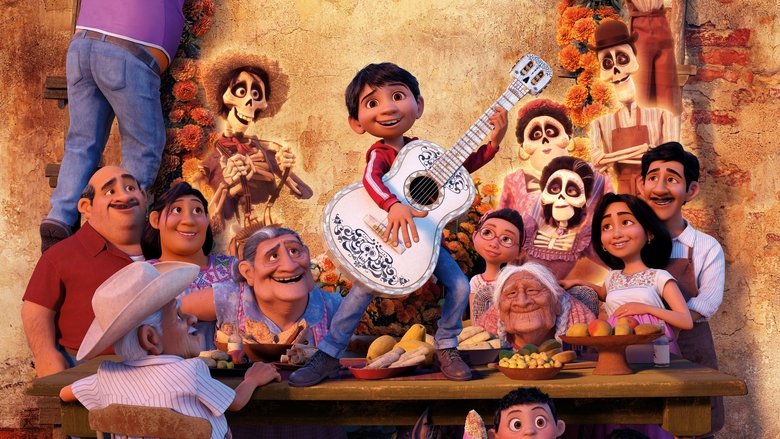

"The celebration of a lifetime."
Coco - Symbolism & Philosophy
Symbols & Motifs
Marigold Petals (Cempasúchil)
Marigolds symbolize the connection between the Land of the Living and the Land of the Dead. Their vibrant color and strong scent are believed to guide the spirits of the deceased back to their families' ofrendas on Día de Muertos.
The film visualizes this connection with a breathtaking bridge made entirely of glowing marigold petals that the spirits cross. Petals are also sprinkled on the ground to create a path for the spirits to follow.
The Ofrenda
The ofrenda, or offering altar, represents memory and familial connection. It is a sacred space where photos of deceased relatives are placed, along with their favorite foods and objects, to honor them and welcome their spirits back for one night. A person's photo must be on an ofrenda for their spirit to be able to cross over.
The Rivera family's ofrenda is central to the plot. Miguel's accidental disruption of the altar sets his journey in motion, and the central conflict revolves around getting Héctor's photo placed on it so he is not forgotten.
Héctor's Guitar
The white, skull-adorned guitar symbolizes both the forbidden passion for music within the Rivera family and the true, stolen legacy of Héctor. It represents the power of music to connect generations and reveal hidden truths.
Initially believed to belong to Ernesto de la Cruz, Miguel's theft of the guitar from his tomb is what transports him to the Land of the Dead. It is later revealed to be Héctor's, and Miguel uses it in the final scene to help Mamá Coco remember her father.
Alebrijes
Alebrijes are spirit guides in the Land of the Dead. Based on vibrant Mexican folk art sculptures of fantastical creatures, they symbolize the mystical and spiritual aspects of the afterlife.
Mamá Imelda's massive and powerful winged-cat alebrije, Pepita, helps the family track Miguel. Miguel's dog, Dante, transforms into a colorful, clumsy but loyal alebrije, revealing his spiritual nature.
Philosophical Questions
What is the nature of existence after death?
The film presents a unique philosophical take on the afterlife. Existence is not guaranteed; it is conditional upon the memories of the living. This raises questions about what it means to be "alive" or to "exist." "Coco" suggests that a person dies twice: once physically, and a second, final time when they are forgotten by everyone in the living world. This ties existence directly to legacy and social memory, proposing that we live on through the impact we have on others.
Does family duty outweigh personal ambition?
"Coco" deeply explores the conflict between Miguel's desire for a life of music and his family's traditions and expectations. The film initially presents these as mutually exclusive paths. It asks whether one's personal calling should be sacrificed for the sake of family harmony and tradition. The resolution suggests a synthesis is possible: that true fulfillment lies not in choosing one over the other, but in finding a way for one's passion to enrich the family, and for family to support one's passion.
What is the relationship between art, legacy, and morality?
The film contrasts two artists: Héctor, the genuine songwriter who created from the heart for his family, and Ernesto de la Cruz, who stole that art for fame and built a legacy on a lie. This raises questions about the integrity of art and whether a legacy built on deceit can be considered valid. The film argues that true legacy isn't about public adoration but about the authentic connections and love that inspired the art in the first place, which ultimately endures long after the false idol has fallen.
Core Meaning
The core meaning of "Coco" revolves around the profound importance of family, memory, and remembrance. It posits that our identities are deeply shaped by our ancestors and the stories we tell about them. The film beautifully illustrates the Mexican cultural belief that our loved ones who have passed away are not truly gone as long as they are remembered by the living. It is not just about following one's dreams, but about understanding that our passions and our family are intertwined, suggesting that true fulfillment comes from balancing personal ambition with familial love and heritage.