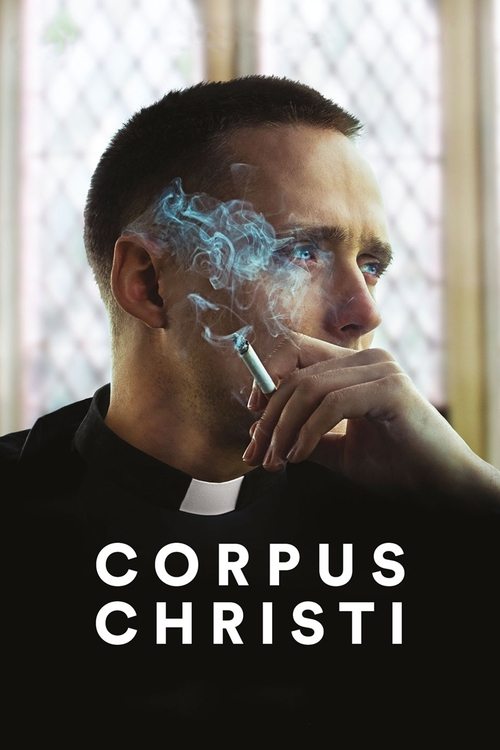
Corpus Christi
Boże Ciało
"Sinner. Preacher. A Mystery."
Overview
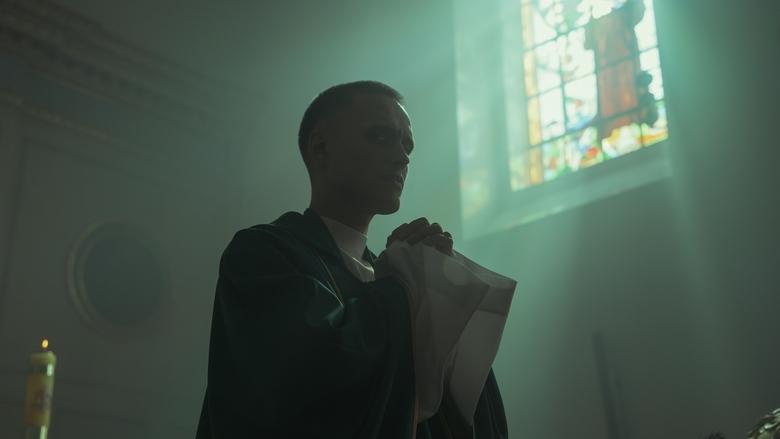
Twenty-year-old Daniel experiences a profound spiritual awakening while serving time in a violent youth detention center. Desperate to become a priest but permanently barred from the seminary due to his criminal record for manslaughter, he is paroled to work at a remote sawmill. Armed with a stolen clerical collar, he wanders into a small village church and impulsively assumes the identity of a visiting priest.
When the aging local vicar falls suddenly ill, Daniel accidentally finds himself leading the parish. He soon discovers that the deeply Catholic town is paralyzed by a collective trauma—a horrific car crash that killed six teenagers. As he uses unconventional, emotionally raw methods to guide the grieving community, Daniel uncovers the toxic hatred, scapegoating, and hypocrisy festering beneath their pious facade.
As Daniel brings genuine healing to the town by forcing them to confront their pain and forgive their enemies, his own dark past inevitably catches up with him. The film builds unbearable tension between his spiritual calling, his deceit, and the violent world he cannot fully escape, culminating in a gripping examination of faith, forgiveness, and the true meaning of redemption.
Core Meaning
The core meaning of Corpus Christi is an intense interrogation of institutional religion versus genuine spiritual connection. Director Jan Komasa suggests that true grace and healing often come from the most broken, flawed individuals rather than rigid, dogmatic institutions.
The film boldly posits that a lie can sometimes be the vessel for a profound truth. It strips away the performative piety of the churchgoing community to expose their inability to practice core Christian values—specifically forgiveness and love for one's enemies. Ultimately, the director argues that real spiritual transformation requires the courage to face pain directly, shed our masks, and abandon the scapegoats we use to justify our own hatred.
Thematic DNA
Forgiveness and Grace
The film contrasts the town's superficial piety with their deep-seated hatred for the accident's scapegoat. It demonstrates that true forgiveness is messy, painful, and requires letting go of localized anger, a lesson delivered by a young man who desperately needs forgiveness himself.
Deception vs. Authenticity
The story relies on the central paradox of a fake priest who delivers more genuine spiritual guidance than actual ordained ministers. Daniel's fraudulent identity strips away institutional formalities, allowing him to connect with the parishioners on a raw, human level.
Communual Trauma and Grief
Through the town's paralyzed state of mourning, the film explores how unresolved grief can poison a community, turning mourning into toxic resentment and division when people seek a target to blame rather than processing their loss.
Institutional Religion vs. Personal Faith
The film critiques the Catholic Church's rigid rules, which bar a genuinely changed man from the priesthood due to his past, valuing bureaucratic purity over heartfelt spirituality and the capacity to heal others.
Character Analysis
Daniel
Bartosz Bielenia
Motivation
He is driven by a desperate need for redemption, purpose, and a sense of spiritual belonging that society has violently denied him.
Character Arc
Daniel evolves from a violent juvie inmate to an imposter priest, and finally to a genuine, albeit doomed, spiritual leader who sacrifices his own safety and freedom to bring healing to a fractured community.
Marta
Eliza Rycembel
Motivation
She seeks the truth about her brother's death and genuine closure, rejecting the toxic scapegoating embraced by the rest of the village.
Character Arc
She moves from a stagnant, grieving teenager to someone who actively challenges her mother and the town's hypocrisy, ultimately leaving her home to find her own authentic path.
Lidia
Aleksandra Konieczna
Motivation
To protect the memory of her son by holding onto anger and directing her grief at the supposedly guilty driver and his widow.
Character Arc
She remains deeply entrenched in her bitterness as the town's sexton and a grieving mother for most of the film, but is finally forced into a painful moment of silent acceptance during the joint funeral.
Father Tomasz
Łukasz Simlat
Motivation
To uphold the laws of the Church and the state, acting as the voice of institutional reality despite his personal compassion for the inmates.
Character Arc
He serves as Daniel's inspiration in the youth detention center, but ultimately acts as the enforcer of reality when he arrives in the village to expose Daniel's fraud.
Pinczer
Tomasz Ziętek
Motivation
Survival, financial gain through blackmail, and a cynical desire to exploit Daniel's vulnerable position.
Character Arc
A fellow juvie inmate who accidentally discovers Daniel's secret in the village, threatening to shatter the fragile peace and spiritual work Daniel has built.
Symbols & Motifs
The Stolen Clerical Collar
It symbolizes unearned authority and the rigid barrier between the sacred and the profane. Ironically, it becomes a tool of deception that allows Daniel to fulfill his true, innate calling.
Daniel steals the collar from his juvie priest and wears it to a village church, instantly transforming how society views and respects him, despite his unchanged inner turmoil.
The Town Memorial Shrine
It represents the town's paralyzed state of mourning and their localized, convenient hatred. It is a monument to their refusal to forgive and move on.
The townspeople gather at this makeshift shrine constantly, but use it to exclude the widow of the driver they blame, turning a site of prayer into a site of exclusion.
Smoke and Smoking
It symbolizes the bridging of Daniel's gritty, worldly habits with his ethereal, spiritual aspirations, grounding the divine in a gritty, lower-class reality.
Daniel constantly smokes, even while wearing his sacred vestments or preparing for mass, visually clashing with the traditional image of a pure clergyman.
Scarred Flesh and Tattoos
Daniel's hidden tattoos represent his inescapable violent past and the raw, imperfect Body of Christ (the literal translation of the film's title). Revealing them is an act of ultimate vulnerability and truth.
In his final, wordless sermon, Daniel strips off his priestly robes to reveal his scarred, tattooed chest to the congregation before walking away.
Memorable Quotes
To forgive doesn't mean to forget. Forgiving means love. To love someone despite their guilt, no matter what the guilt is.
— Daniel
Context:
Daniel delivers this powerful statement during a sermon to a congregation that is actively harassing a grieving widow.
Meaning:
This encapsulates the film's core message. It challenges the town's superficial religious practices, demanding they do the hardest work of Christianity: loving their enemies.
God, we don't know why you did this.
— Daniel
Context:
Spoken while Daniel is consoling the families of the victims at the tragic crash site, breaking the elevated barrier between priest and parishioner.
Meaning:
A moment of profound theological honesty. Unlike traditional priests who offer platitudes about God's mysterious ways, Daniel admits divine incomprehensibility.
It doesn't matter where you come from, it matters where you're going.
— Father Tomasz
Context:
Father Tomasz says this to the inmates in the juvie center to encourage them to look beyond their criminal pasts.
Meaning:
A statement of hope and rehabilitation that Daniel deeply internalizes, even though society's rules prevent him from fully living it out.
Silence can be prayer too.
— Daniel
Context:
Daniel says this when he is confronted with the overwhelming, speechless grief of a mother who has lost her child.
Meaning:
Highlights Daniel's unconventional, deeply intuitive approach to spirituality, recognizing that pain often supersedes the ability to speak formal prayers.
Philosophical Questions
Can a lie be a vessel for spiritual truth?
Daniel's entire priesthood is built on fraud and deception. Yet, the emotional healing, comfort, and moral awakening he brings to the traumatized town are undeniably real. The film asks if the validity of the messenger matters if the message itself bears positive fruit.
Who holds the authority to administer grace?
The film challenges the institutional idea that only ordained, 'pure' individuals can channel the divine. It boldly portrays a convicted murderer acting as a more effective and empathetic conduit for God's love than the established, legally recognized church hierarchy.
Are there limits to human forgiveness?
The film tests the absolute boundaries of Christian teachings by asking whether a community can truly forgive the person they blame for their ultimate tragedy. Simultaneously, it asks whether society can ever forgive Daniel for his violent past, pointing out the hypocrisy in both arenas.
Alternative Interpretations
The film's visceral ending invites two primary interpretations. Literal Survival: In the final scene, Daniel survives a horrific fight with Bonus in the juvenile center and staggers into the courtyard. Many view this as a bleak, realistic return to his grim existence, showing that while he saved the town, the carceral system offers him no salvation. Spiritual Martyrdom: Conversely, others view it allegorically. The blood on Daniel's face represents the stigmata, framing him as a Christ-like martyr. Corpus Christi translates to Body of Christ, suggesting his battered physical body was a sacrifice that absorbed the town's sins.
Another debate surrounds Daniel's initial motivation. Some critics argue his impersonation was driven by a narcissistic need for attention and a fluid identity, while others believe he experienced a genuine, divine intervention that simply lacked institutional approval.
Cultural Impact
Corpus Christi arrived during a period of intense cultural reckoning within deeply Catholic Poland, following closely on the heels of Wojciech Smarzowski's controversial film Clergy (2018). While Clergy was a direct institutional critique of church corruption, Corpus Christi touched a deeper nerve by exploring grassroots faith and the hypocrisy of congregations themselves.
It was universally praised for tackling the 'bible belt of Europe' with nuance, empathy, and respect, rather than mockery. The film gained massive international recognition, culminating in an Oscar nomination, and sparked widespread discussions about the rigid rules of Catholic seminaries, the nature of true spiritual leadership, and how societies process collective grief and political polarization.
Audience Reception
Audiences and critics universally praised Bartosz Bielenia's electrifying, deeply physical performance, frequently highlighting his 'burning blue eyes' and magnetic screen presence that carried the film. Viewers appreciated the tight, suspenseful script that expertly balanced intense, dark drama with moments of surprisingly deadpan humor.
The film's nuanced take on faith—which was neither overly preachy nor cynically anti-religious—resonated deeply across different cultural backgrounds. However, the brutally bleak ending divided some audiences. While many critics found the final fight scene to be a masterful, cathartic gut-punch that stayed true to the film's gritty realism, some general viewers felt it was too horrific and jarring after the emotional healing that had just occurred in the village.
Interesting Facts
- The film was inspired by the true story of a 19-year-old named Patryk who successfully impersonated a priest for months in Poland, performing weddings and baptisms.
- Corpus Christi was nominated for Best International Feature Film at the 92nd Academy Awards in 2020.
- While filming in a remote village in the Carpathian foothills, the crew discovered that the town had its very own real-life history of a bogus priest who got away with it for two years.
- The film swept the Polish Film Awards in 2020, winning a record 11 awards out of 15 nominations.
- Director Jan Komasa drew parallels between the traumatized, divided village in the film and the deep political divisions in Poland following the 2010 Smolensk plane crash.
Easter Eggs
The Smartphone Confessional
Daniel secretly uses his smartphone inside the confessional booth to look up how to conduct the Sacrament of Penance. This serves as a subtle, humorous nod to the clash between ancient religious traditions and the digital reliance of modern youth.
Reference to Matthew 7:15-20
The film conceptually mirrors the biblical warning about false prophets who come in sheep's clothing but are inwardly ferocious wolves. However, Komasa subverts this by showing that this particular 'wolf' actually bears good fruit for the community, forcing the audience to re-evaluate the scripture.
Techno vs. Hymns
The score and sound design frequently contrast traditional religious hymns and folk melodies with aggressive techno music (Daniel's favorite). This auditory easter egg mirrors Daniel's dual existence as a devout believer and a gritty, hard-partying youth.
⚠️ Spoiler Analysis
Click to reveal detailed analysis with spoilers
Frequently Asked Questions
Explore More About This Movie
Dive deeper into specific aspects of the movie with our detailed analysis pages
Comments (0)
No comments yet. Be the first to share your thoughts!