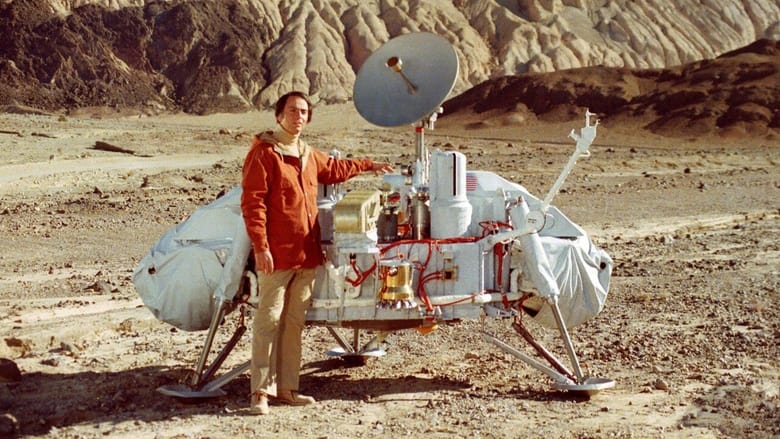
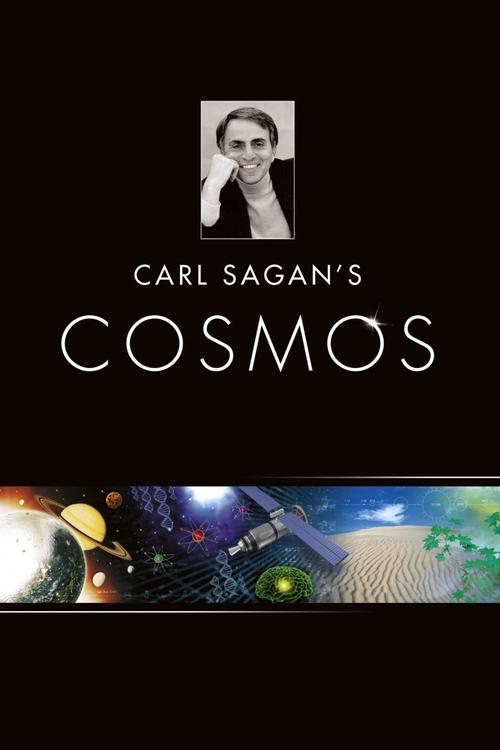
"If you wish to make an apple pie from scratch, you must first invent the universe."
Cosmos: A Personal Voyage - Symbolism & Philosophy
Symbols & Motifs
The Ship of the Imagination
The Ship of the Imagination symbolizes the power of the human mind, fueled by scientific inquiry and curiosity, to travel anywhere in space and time. It represents our ability to explore the universe without physical limitations, journeying through galaxies, witnessing the birth of stars, and diving into the heart of an atom, all through the vehicle of thought and science.
Used in every episode, the sleek, dandelion-seed-shaped craft is Carl Sagan's primary mode of transport. He pilots it from the shores of the cosmic ocean to the edge of the known universe, using it as a narrative device to traverse vast distances and complex ideas, making the abstract wonders of the cosmos visually accessible to the audience.
The Cosmic Calendar
This is a powerful conceptual tool used to symbolize the immense scale of cosmic time relative to human experience. By compressing the 13.8-billion-year history of the universe into a single calendar year, it vividly illustrates the brevity of human existence and the profound depth of cosmic history, fostering humility and perspective.
Introduced in the first episode, the Cosmic Calendar is a recurring motif. On this scale, the Big Bang occurs on January 1st, the first life appears in September, dinosaurs roam on Christmas Eve, and the entirety of recorded human history unfolds in the final few seconds of New Year's Eve. This visualization makes the vastness of time comprehensible.
The Library of Alexandria
The Library of Alexandria symbolizes the pinnacle of knowledge and the fragility of human wisdom. It represents a golden age of open inquiry, intellectual collaboration, and the collective accumulation of knowledge. Its destruction represents the catastrophic loss that occurs when dogma, ignorance, and fear triumph over reason and curiosity.
Sagan physically walks through a recreation of the great Library in Episode 1, "The Shores of the Cosmic Ocean," and references its loss in the final episode, "Who Speaks for Earth?" He uses it to honor the early scientific thinkers and to warn against the dangers of suppressing knowledge and critical thought, framing its destruction as a pivotal moment that set back human progress.
Philosophical Questions
What is humanity's place and responsibility in the universe?
The series consistently explores this question by first establishing our physical insignificance through the Cosmic Calendar and views of the "Pale Blue Dot." It then elevates our significance by positing that we are the universe's way of knowing itself. This duality leads to the conclusion that our responsibility is immense: we are the temporary custodians of consciousness on our world, obligated to cherish life, pursue knowledge, and survive our technological adolescence to continue the cosmic journey.
What is the most reliable path to knowledge?
"Cosmos" presents a clear answer: the scientific method, characterized by skepticism, imagination, and a willingness to be proven wrong. The series contrasts this approach with dogma, superstition, and pseudoscience throughout history. By chronicling the struggles and triumphs of figures like Eratosthenes and Kepler, Sagan argues that empirically testing ideas against reality, no matter how cherished the starting beliefs, is the only reliable way to uncover the truths of the cosmos.
Are we alone in the universe?
Sagan devotes significant time to this question, using tools like the Drake Equation to speculate on the probability of extraterrestrial intelligence. While refuting UFO sightings as lacking evidence, he champions the scientific Search for Extraterrestrial Intelligence (SETI). The series explores this not just as a scientific question, but a philosophical one. The potential existence of other civilizations forces us to consider our own identity and asks the ultimate question: when we make contact, "Who speaks for Earth?"
Core Meaning
The core meaning of "Cosmos: A Personal Voyage" is to instill in humanity a profound sense of connection to the universe and a responsibility for our own survival. Carl Sagan's central message is that we are not separate from the cosmos, but a way for it to know itself; we are made of "starstuff." The series champions the scientific method as the most reliable tool for understanding the universe, contrasting it with pseudoscience and dogma. It serves as a powerful call to action, urging viewers to appreciate the immense timescales of cosmic evolution and the preciousness of life on our "pale blue dot." Ultimately, Sagan argues that by embracing a cosmic perspective—understanding our origins and our place in the vastness of space—we can overcome our petty differences and work together to ensure a hopeful future for our species.