Cosmos: A Personal Voyage
"If you wish to make an apple pie from scratch, you must first invent the universe."
Overview
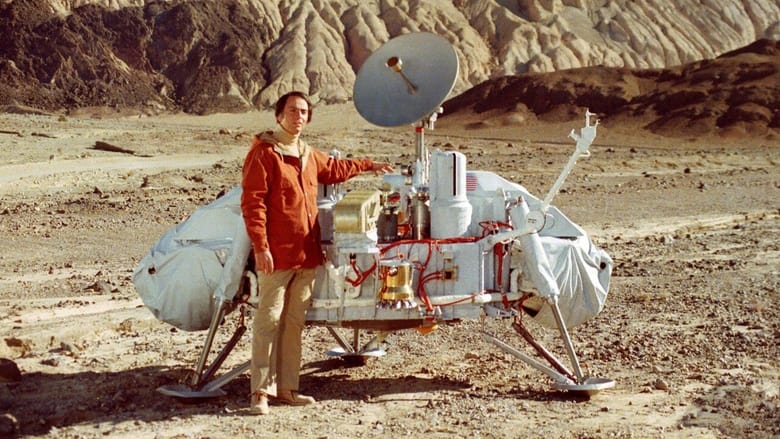
"Cosmos: A Personal Voyage" is a thirteen-part documentary series presented by astronomer Carl Sagan, who acts as a guide on an extraordinary journey through space and time. Using a speculative "Ship of the Imagination," Sagan travels from the grandest scales of the universe, across billions of light-years, down to the subatomic level, exploring the fundamental constituents of matter. The series is a comprehensive exploration of science, covering topics from the Big Bang and the evolution of galaxies to the origins of life on Earth and the development of human consciousness and culture.
Without a traditional narrative arc, the series instead builds a cumulative case for the scientific worldview, what Sagan calls "the cosmic perspective." Each episode tackles a different facet of our universe—from the life cycle of stars and the search for extraterrestrial intelligence to the history of scientific discovery and the danger of self-destruction by nuclear war. Sagan weaves together history, anthropology, philosophy, and science, visiting recreations of the Library of Alexandria and walking through the lives of great thinkers like Kepler and Huygens. The series' overarching message is a plea for humanity to embrace reason, cherish our fragile world, and continue our quest for knowledge among the stars.

Core Meaning
The core meaning of "Cosmos: A Personal Voyage" is to instill in humanity a profound sense of connection to the universe and a responsibility for our own survival. Carl Sagan's central message is that we are not separate from the cosmos, but a way for it to know itself; we are made of "starstuff." The series champions the scientific method as the most reliable tool for understanding the universe, contrasting it with pseudoscience and dogma. It serves as a powerful call to action, urging viewers to appreciate the immense timescales of cosmic evolution and the preciousness of life on our "pale blue dot." Ultimately, Sagan argues that by embracing a cosmic perspective—understanding our origins and our place in the vastness of space—we can overcome our petty differences and work together to ensure a hopeful future for our species.
Thematic DNA
The Cosmic Perspective
This is the central theme of the series. Sagan consistently encourages viewers to step outside of a human-centric worldview and appreciate the immense scale of space and time. Tools like the "Cosmic Calendar" are used to dramatically illustrate how fleeting human history is compared to the age of the universe, thereby humbling our sense of self-importance and highlighting the interconnectedness of all existence.
The Value of Scientific Inquiry
The series is a celebration of science as a way of thinking. Sagan traces the history of scientific discovery from the ancient Ionian Greeks to the Voyager missions, emphasizing that science is a self-correcting, curiosity-driven process of discovery, not just a body of knowledge. He champions skepticism, evidence-based reasoning, and the courage to question authority as essential for human progress.
Our Connection to the Universe
A recurring message is that humanity is not separate from the cosmos but an integral part of it. The famous phrase "we are made of starstuff" encapsulates this idea: the chemical elements that constitute our bodies were forged in the hearts of long-dead stars. This theme fosters a sense of belonging to the universe and a deeper appreciation for the processes of cosmic evolution that led to our existence.
Humanity's Peril and Potential
Aired during the Cold War, the series carries a strong undercurrent of urgency. Sagan frequently warns of the dangers of nuclear annihilation and environmental destruction, contrasting humanity's technological prowess with its lack of social and emotional maturity. He presents a clear choice: use our intelligence to destroy ourselves or to become a spacefaring civilization, urging us to be the "voice for Earth" in the cosmos.
Character Analysis
Carl Sagan
Himself
Motivation
Sagan's primary motivation is to demystify science and share the awe-inspiring "cosmic perspective" with the general public. He is driven by a profound belief that an understanding of the universe is not a luxury for a few experts but an essential birthright for all humanity. He seeks to ignite curiosity, promote rational thought, and warn humanity of the existential threats it faces, hoping to inspire a global consciousness that will safeguard our future.
Character Arc
Carl Sagan acts as the viewer's personal guide through the cosmos. His role is not one of a character with a traditional arc, but of a teacher and storyteller whose perspective deepens and expands throughout the series. He begins as an enthusiastic astronomer on the "shores of the cosmic ocean" and evolves into a philosopher-scientist, connecting the laws of physics to the human condition. His journey is the viewer's journey: one of expanding awareness, from understanding planetary mechanics to contemplating our ultimate responsibilities as a species. His final plea in the last episode, "Who Speaks for Earth?", represents the culmination of this intellectual and ethical voyage, transforming scientific knowledge into a moral imperative.
Symbols & Motifs
The Ship of the Imagination
The Ship of the Imagination symbolizes the power of the human mind, fueled by scientific inquiry and curiosity, to travel anywhere in space and time. It represents our ability to explore the universe without physical limitations, journeying through galaxies, witnessing the birth of stars, and diving into the heart of an atom, all through the vehicle of thought and science.
Used in every episode, the sleek, dandelion-seed-shaped craft is Carl Sagan's primary mode of transport. He pilots it from the shores of the cosmic ocean to the edge of the known universe, using it as a narrative device to traverse vast distances and complex ideas, making the abstract wonders of the cosmos visually accessible to the audience.
The Cosmic Calendar
This is a powerful conceptual tool used to symbolize the immense scale of cosmic time relative to human experience. By compressing the 13.8-billion-year history of the universe into a single calendar year, it vividly illustrates the brevity of human existence and the profound depth of cosmic history, fostering humility and perspective.
Introduced in the first episode, the Cosmic Calendar is a recurring motif. On this scale, the Big Bang occurs on January 1st, the first life appears in September, dinosaurs roam on Christmas Eve, and the entirety of recorded human history unfolds in the final few seconds of New Year's Eve. This visualization makes the vastness of time comprehensible.
The Library of Alexandria
The Library of Alexandria symbolizes the pinnacle of knowledge and the fragility of human wisdom. It represents a golden age of open inquiry, intellectual collaboration, and the collective accumulation of knowledge. Its destruction represents the catastrophic loss that occurs when dogma, ignorance, and fear triumph over reason and curiosity.
Sagan physically walks through a recreation of the great Library in Episode 1, "The Shores of the Cosmic Ocean," and references its loss in the final episode, "Who Speaks for Earth?" He uses it to honor the early scientific thinkers and to warn against the dangers of suppressing knowledge and critical thought, framing its destruction as a pivotal moment that set back human progress.
Memorable Quotes
The Cosmos is all that is or ever was or ever will be.
— Carl Sagan
Context:
This is the very first sentence of the series, spoken by Sagan in Episode 1, "The Shores of the Cosmic Ocean," as he stands on a cliff overlooking the sea.
Meaning:
This opening line establishes the series' immense scope and its quasi-spiritual reverence for the universe. It sets the tone for a journey that treats the material universe with the awe typically reserved for the divine, framing science as a profound way of contemplating existence.
We are made of star-stuff.
— Carl Sagan
Context:
Sagan uses this phrase and variations of it throughout the series, notably when discussing the life cycle of stars and the chemical basis of life, such as in Episode 9, "The Lives of the Stars." It is one of the central philosophical takeaways of the show.
Meaning:
This iconic quote elegantly summarizes the profound connection between human life and the cosmos. It explains that the chemical elements essential for life—the carbon, nitrogen, oxygen, and others—were forged in the interiors of stars that lived and died long ago. It is a declaration of our cosmic origin.
Exploration is in our nature. We began as wanderers, and we are wanderers still. We have lingered long enough on the shores of the cosmic ocean. We are ready at last to set sail for the stars.
— Carl Sagan
Context:
This statement appears in the book version and captures the spirit of the final episodes, particularly Episode 13, "Who Speaks for Earth?," which implores humanity to overcome its terrestrial conflicts and venture into the cosmos.
Meaning:
This quote serves as a powerful call to action, framing space exploration not as a mere technical challenge but as the continuation of a fundamental human impulse. It conveys a sense of optimism and destiny, urging humanity to embrace its future as a spacefaring species.
If you wish to make an apple pie from scratch, you must first invent the universe.
— Carl Sagan
Context:
This quote is from the companion book "Cosmos" and is famously associated with the series. It exemplifies Sagan's ability to connect mundane objects to grand cosmic principles, making complex ideas relatable.
Meaning:
This whimsical but profound statement illustrates the interconnectedness of everything. It shows that even a simple, everyday act is dependent on the entire history of cosmic evolution—the creation of elements in stars, the formation of planets, the evolution of life—all governed by the fundamental laws of physics.
Episode Highlights
The Shores of the Cosmic Ocean
This episode sets the stage for the entire series. Sagan introduces the "Ship of the Imagination," the immense scales of space and time, and the "Cosmic Calendar." The journey from the edge of the known universe to Earth, and the visit to the ancient Library of Alexandria, establishes the show's grand vision and core themes of exploration and the value of knowledge.
It is the foundational episode that provides the viewer with the essential tools and perspectives needed for the rest of the journey. The Cosmic Calendar, in particular, becomes a crucial reference point for understanding our place in time.
One Voice in the Cosmic Fugue
This episode focuses on the origin and evolution of life. Sagan discusses natural selection using the tale of the Heike crab, explains the function of DNA, and explores the common biochemistry of all life on Earth. It speculates on the possibility of life in the clouds of Jupiter, broadening the viewer's perspective on what life could be.
It powerfully establishes the scientific basis for evolution and our shared ancestry with all living things. It introduces the key idea that the laws of life on Earth may have parallels elsewhere in the cosmos.
The Harmony of Worlds
This episode delves into the history of astronomy, focusing on the transition from an Earth-centered to a Sun-centered view of the cosmos. It chronicles the life and work of Johannes Kepler, his discovery of the laws of planetary motion, and his mystical yet rigorously mathematical approach to understanding the heavens.
It showcases the scientific revolution in action, illustrating the struggle between mysticism and empirical evidence. Kepler's story is used as a powerful example of how painstaking observation and a willingness to abandon preconceived notions can lead to profound discoveries.
The Backbone of Night
Sagan traces the origins of scientific thought to the ancient Ionian Greeks. He contrasts their materialist, evidence-based approach with the more mystical and abstract philosophies of Plato and Aristotle. The episode argues that the Ionian spirit of free inquiry was a pivotal moment for humanity, one that was later suppressed for centuries.
This episode establishes a key historical argument of the series: that the scientific method is not a modern invention but an ancient impulse that had to be rediscovered. It champions a specific intellectual lineage that forms the basis of modern science.
Who Speaks for Earth?
The final episode is a powerful summation of the series' core message. Sagan reflects on the history of human contact with other cultures, the existential threat of nuclear war, and our responsibility to preserve life. He makes an impassioned plea for global unity and for humanity to embrace its future as explorers of the cosmos.
It is the series' ethical and philosophical climax. It moves beyond scientific explanation to direct advocacy for a better future, cementing the show's legacy as not just an educational program, but a humanist manifesto.
Philosophical Questions
What is humanity's place and responsibility in the universe?
The series consistently explores this question by first establishing our physical insignificance through the Cosmic Calendar and views of the "Pale Blue Dot." It then elevates our significance by positing that we are the universe's way of knowing itself. This duality leads to the conclusion that our responsibility is immense: we are the temporary custodians of consciousness on our world, obligated to cherish life, pursue knowledge, and survive our technological adolescence to continue the cosmic journey.
What is the most reliable path to knowledge?
"Cosmos" presents a clear answer: the scientific method, characterized by skepticism, imagination, and a willingness to be proven wrong. The series contrasts this approach with dogma, superstition, and pseudoscience throughout history. By chronicling the struggles and triumphs of figures like Eratosthenes and Kepler, Sagan argues that empirically testing ideas against reality, no matter how cherished the starting beliefs, is the only reliable way to uncover the truths of the cosmos.
Are we alone in the universe?
Sagan devotes significant time to this question, using tools like the Drake Equation to speculate on the probability of extraterrestrial intelligence. While refuting UFO sightings as lacking evidence, he champions the scientific Search for Extraterrestrial Intelligence (SETI). The series explores this not just as a scientific question, but a philosophical one. The potential existence of other civilizations forces us to consider our own identity and asks the ultimate question: when we make contact, "Who speaks for Earth?"
Alternative Interpretations
While overwhelmingly praised, "Cosmos" was not without its critics. Some interpretations viewed Sagan's unwavering faith in scientific materialism as a form of scientism, an ideology that dismisses other ways of knowing, particularly religion and spirituality. Although Sagan denied being an atheist, his clear skepticism towards traditional religious beliefs and his promotion of a scientifically-based worldview were seen by some as overly simplistic or hostile to faith. His narrative of history, particularly the celebration of the Ionian Greeks and the lamentation of the burning of the Library of Alexandria, has been critiqued by some historians as a somewhat romanticized "conflict thesis" between science and religion, which may oversimplify complex historical events. Furthermore, some critics at the time found Sagan's on-screen persona to be affected or his poetic language to be overwrought, though this was a minority view.
Cultural Impact
"Cosmos: A Personal Voyage" was a watershed moment for science programming on television. Premiering in 1980, at the height of the Cold War and a time of public skepticism towards science, the series reignited a sense of wonder about the universe for millions. It became the most widely watched PBS series in history at the time, seen by over 500 million people in more than 60 countries, making Carl Sagan arguably the most famous scientist in the United States. Its success demonstrated that there was a vast public appetite for deep, thoughtful scientific content presented with poeticism and high production values.
The show's influence on a generation of future scientists, educators, and science communicators is immense. Its humanistic and philosophical approach, which connected scientific discoveries to the human condition, set a new standard for science documentaries. The series' advocacy for skepticism, environmentalism, and nuclear disarmament also had a significant impact on public discourse. Its legacy continues directly through the sequel series, "Cosmos: A Spacetime Odyssey" (2014) and "Cosmos: Possible Worlds" (2020), produced by Sagan's widow Ann Druyan and hosted by his protégé Neil deGrasse Tyson, which introduced Sagan's vision to a new generation.
Audience Reception
The audience reception for "Cosmos: A Personal Voyage" was overwhelmingly positive and transformative. When it aired in 1980, it captivated a massive global audience, becoming the most-watched series on American public television for a decade. Viewers were drawn to Carl Sagan's accessible and poetic communication style, which made complex scientific ideas both understandable and deeply moving. The show was praised for its stunning visuals, which were groundbreaking for their time, and for its intelligent, optimistic, and humanistic tone. For many, it was an inspiring, almost spiritual experience that fundamentally changed their perspective on the universe and their place within it. While a small minority may have been put off by its secular viewpoint or found its pace slow, the vast majority of viewers saw it as a landmark event in television history, and its popularity has endured for decades through rebroadcasts and home video, cementing its status as a beloved classic.
Interesting Facts
- The series was the most-watched show in the history of American public television until Ken Burns' "The Civil War" in 1990.
- Production took three years, with filming in over 12 countries.
- The iconic theme music is the 3rd Movement from "Heaven and Hell" by the Greek composer Vangelis.
- The series is notable for its groundbreaking use of special effects for the time, which allowed Sagan to seemingly walk through model landscapes and journey through space.
- Sagan's wife, Ann Druyan, and astrophysicist Steven Soter were co-writers of the series.
- The production company KCET in Los Angeles spent roughly $6.3 million on production and another $2 million on promotion.
- Sagan's distinctive pronunciation of "billions" became a widely recognized catchphrase, often parodied, although he rarely used the phrase "billions and billions" in the show itself.
- During production, Sagan and the series' director, Adrian Malone, reportedly clashed frequently, with their strong personalities creating significant tension on set.
⚠️ Spoiler Analysis
Click to reveal detailed analysis with spoilers
Frequently Asked Questions
Explore More About This Movie
Dive deeper into specific aspects of the movie with our detailed analysis pages
Comments (0)
No comments yet. Be the first to share your thoughts!