
Viskningar och rop
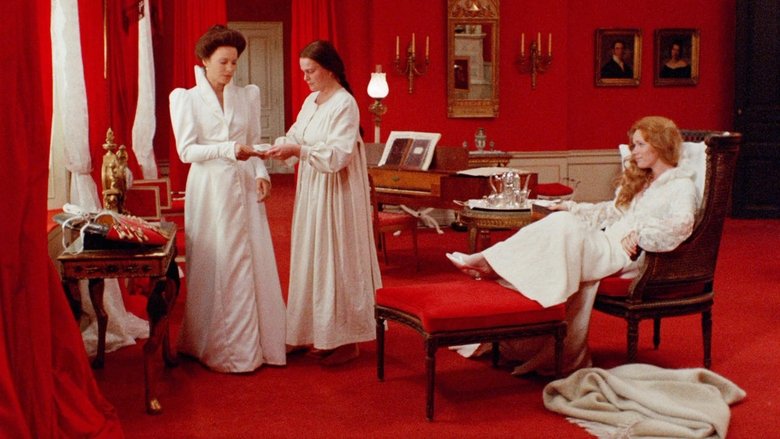
"Four women dressed in white in a mansion painted red... haunted by whispers and cries."
Cries and Whispers - Symbolism & Philosophy
Symbols & Motifs
The Color Red
Ingmar Bergman famously stated that he imagined the soul as being red on the inside. In the film, the pervasive crimson of the mansion's walls and carpets symbolizes the raw, unfiltered emotions of the characters, their inner turmoil, and the primal nature of suffering and passion. It also evokes blood, menstruation, and the physicality of both life and death.
The color red dominates the interior scenes, creating a womb-like yet claustrophobic atmosphere. The film frequently employs red fade-outs and fade-ins instead of traditional black, immersing the viewer in this symbolic color. This intense use of a single color was a deliberate and experimental choice by Bergman and his cinematographer, Sven Nykvist.
Touch
Physical touch in the film represents the presence or absence of genuine connection and empathy. The sisters' inability to touch one another or the dying Agnes signifies their emotional coldness and isolation. In contrast, Anna's gentle and constant physical care for Agnes is a powerful expression of love and compassion.
Karin recoils from Maria's touch, and Maria flees in terror when the resurrected Agnes tries to hold her. A brief, almost frantic moment of caressing between Karin and Maria after Agnes's death proves to be fleeting and superficial. The most profound moments of touch are between Anna and Agnes, culminating in a Pietà-like image of Anna cradling the dead Agnes in her arms.
The Ticking Clocks
The recurring sound of ticking clocks serves as a constant reminder of the passage of time and the inevitability of death. It heightens the sense of dread and anticipation within the quiet, suffocating mansion. The relentless sound underscores the characters' waiting for Agnes's death and the slow, agonizing nature of her decline.
The sound of ticking clocks is a prominent feature of the film's sound design, often being the only sound in otherwise silent scenes. This auditory motif contributes to the film's tense and claustrophobic atmosphere, emphasizing the characters' isolation and the slow march towards the inevitable.
Philosophical Questions
Can true empathy exist in the face of overwhelming, personal suffering?
The film explores this question through the contrasting behaviors of the sisters and the maid, Anna. Karin and Maria, consumed by their own emotional problems, are ultimately unable to offer genuine comfort to their dying sister. Their empathy is limited by their self-absorption and their fear of confronting the raw reality of death. Anna, who has also known profound loss, is the only one capable of selfless compassion. The film suggests that true empathy requires a transcendence of the self, which most of the characters are unable to achieve.
In the absence of divine comfort, what is the source of meaning in life?
"Cries and Whispers" consistently portrays a world where religion and God are silent or absent. The priest's crisis of faith is a testament to this. The film seems to suggest that if meaning is to be found, it is not in the supernatural, but in fleeting, authentic moments of human connection and compassion. Agnes's final diary entry, which describes a moment of simple happiness with her sisters as 'perfection,' posits that these transient experiences of love and togetherness are the ultimate source of meaning in a finite and often painful existence.
Core Meaning
"Cries and Whispers" is a profound meditation on the nature of human suffering, death, and the elusive possibility of finding solace and connection. Bergman explores the idea that in the face of mortality, social facades crumble, revealing the raw and often ugly truths of human relationships. The film suggests that genuine compassion and empathy, as embodied by the maid Anna, are the only true balms for the profound loneliness and pain of existence. It questions the efficacy of faith and societal conventions in providing comfort, ultimately positing that fleeting moments of genuine human connection are the closest we can come to grace and meaning. The pervasive use of the color red is central to the film's meaning, with Bergman himself stating it represents his childhood conception of the soul.