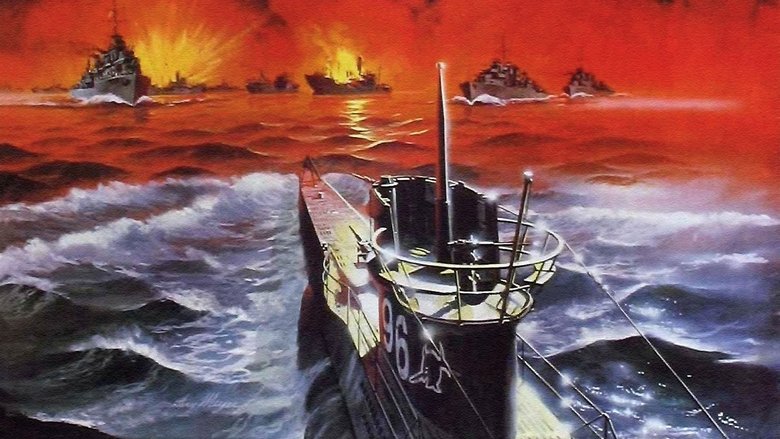

Das Boot
A claustrophobic, psychological descent into the harrowing reality of war, where the crushing depths of the ocean mirror the immense pressure on the human soul.
Das Boot
Das Boot

"On land they dreamed of being heroes. Beneath the sea they pray to be survivors."

17 September 1981 Germany 150 min ⭐ 8.1 (2,356)
Director: Wolfgang Petersen
Cast: Jürgen Prochnow, Herbert Grönemeyer, Klaus Wennemann, Hubertus Bengsch, Martin Semmelrogge
Drama War History
The Futility and Brutality of War Claustrophobia and Psychological Pressure Camaraderie and the Human Spirit Disillusionment and Loss of Ideology
Budget: $14,000,000
Box Office: $85,000,000

Das Boot - Ending Explained

⚠️ Spoiler Analysis

"Das Boot" follows the German submarine U-96 on a patrol in the Atlantic in 1941. After a period of monotonous searching, they engage an Allied convoy, sinking two ships but suffering a severe counter-attack from a destroyer that forces them to dive below their tested depth limit, causing significant damage.

Their mission takes a dramatic turn when they are given a new, seemingly suicidal order: to cross the heavily fortified Strait of Gibraltar and enter the Mediterranean. During their attempt, they are spotted and relentlessly attacked by a British fighter plane, leaving the U-boat critically damaged and unable to dive. In a desperate move, the Captain orders the boat to dive, but it sinks uncontrollably, crashing to the seabed at a depth of 280 meters.

The film's most suspenseful act unfolds as the crew, with limited oxygen and failing power, works frantically to repair the catastrophic damage. Against all odds, led by the Chief Engineer who overcomes a complete nervous breakdown, they manage to restore functionality, blow the ballast tanks, and surface. They limp back to their home port of La Rochelle, France.

The devastatingly ironic ending provides the film's core message. As the battered U-96 enters the harbor to a jubilant welcome, an Allied air raid begins. In the chaos, the submarine is destroyed and sinks at the dock. Lieutenant Werner, the correspondent, survives and witnesses the Captain, mortally wounded, watching his beloved boat go under for the final time before collapsing and dying on the pier. The survival of the crew through unimaginable horrors at sea is rendered meaningless by the random chance of war, solidifying the film's profound anti-war statement.

Alternative Interpretations

While overwhelmingly seen as a powerful anti-war film, some initial criticism, including from the novel's author Lothar-Günther Buchheim, suggested the film could be misinterpreted as a heroic war adventure. Buchheim felt Petersen's focus on action sequences and suspense diluted the book's darker, more mundane, and explicitly anti-war tone, turning it into a more conventional "American action flick."

Another perspective discusses the film's role in German national identity. Some analysts argue that by focusing on the 'common soldier' as a victim of circumstance, the film sidesteps broader questions of national guilt and the political horrors of the Nazi regime. It presents the crew as largely apolitical professionals just doing their jobs, which could be seen as a way of creating a more palatable version of Germany's past. However, most interpretations agree that the Captain's overt cynicism towards the regime and the film's bleak portrayal of the war's futility firmly place it in the anti-war, rather than nationalistic, camp.