Das Boot
A claustrophobic, psychological descent into the harrowing reality of war, where the crushing depths of the ocean mirror the immense pressure on the human soul.
Das Boot

Das Boot

"On land they dreamed of being heroes. Beneath the sea they pray to be survivors."

17 September 1981 Germany 150 min ⭐ 8.1 (2,356)
Director: Wolfgang Petersen
Cast: Jürgen Prochnow, Herbert Grönemeyer, Klaus Wennemann, Hubertus Bengsch, Martin Semmelrogge
Drama War History
The Futility and Brutality of War Claustrophobia and Psychological Pressure Camaraderie and the Human Spirit Disillusionment and Loss of Ideology
Budget: $14,000,000
Box Office: $85,000,000

Overview

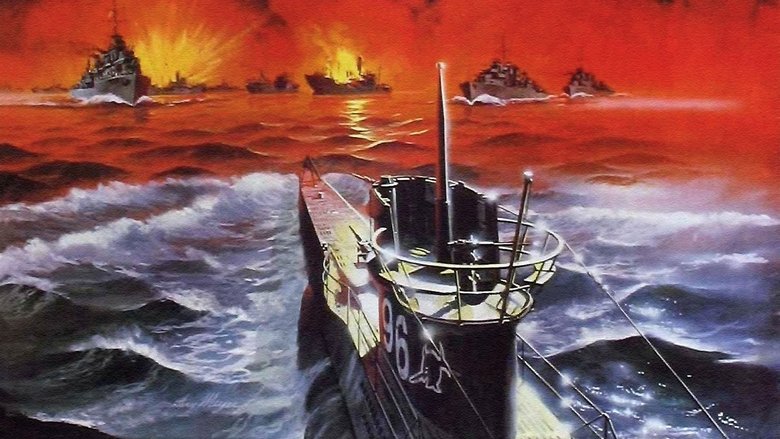
Set in 1941 during the Battle of the Atlantic, "Das Boot" chronicles the grueling patrol of the German submarine U-96 and its crew. The film immerses the audience in the claustrophobic and monotonous world of the submariners, led by their cynical, battle-hardened Captain (Jürgen Prochnow). From the rowdy celebrations before departure to the stark reality of life in a cramped steel tube, the narrative captures both the tedium of the hunt and the sheer terror of combat.

A war correspondent, Lieutenant Werner (Herbert Grönemeyer), is aboard to document the journey, and his perspective shifts from romantic notions of heroism to the grim, terrifying truth of war. The crew faces relentless storms, long periods of boredom, and sudden, violent encounters with Allied destroyers. Their initial confidence is eroded by near-death experiences, pushing them to their physical and psychological limits as they navigate the treacherous waters and the ever-present threat of a watery grave.


Core Meaning

Director Wolfgang Petersen's primary goal was to create a powerful anti-war statement by depicting the unglamorous, brutal reality of conflict. By focusing on the human experience of the German crew, the film forces the audience to see them not as faceless enemies, but as ordinary individuals trapped in extraordinary, horrific circumstances. The film strips away propaganda and patriotism, revealing the raw fear, camaraderie, and futility of their mission. Its message is that in war, there are no real winners, only survivors grappling with the psychological torment and the sheer waste of human life, a journey Petersen described as one "to the edge of the mind."

Thematic DNA

The Futility and Brutality of War 40%
Claustrophobia and Psychological Pressure 30%
Camaraderie and the Human Spirit 20%
Disillusionment and Loss of Ideology 10%

The Futility and Brutality of War

"Das Boot" is consistently cited as one of the most effective anti-war films ever made. It achieves this by refusing to glorify combat. The brief moments of excitement in sinking enemy ships are immediately followed by the terrifying sound of approaching destroyers and the ensuing depth charge attacks that nearly tear the U-boat apart. The film's infamous ironic ending, where the crew survives impossible odds only to be killed in a surprise air raid upon their safe return to port, powerfully underscores the senselessness and indiscriminate cruelty of war.

Claustrophobia and Psychological Pressure

The film masterfully uses its confined setting to build unbearable tension. The U-boat is not just a vessel but a metallic prison. Director Wolfgang Petersen and cinematographer Jost Vacano used a specially designed handheld camera to navigate the narrow corridors, making the audience feel as if they are trapped inside with the crew. The constant creaking of the hull under pressure, the dripping water, and the terrified faces of the men during depth charge attacks all contribute to a palpable sense of claustrophobia and impending doom.

Camaraderie and the Human Spirit

In the face of constant danger and psychological strain, the crew of U-96 develops a powerful bond. This camaraderie is their primary survival mechanism. They share crude jokes, memories of home, and moments of sheer terror. The leadership of the Captain, who is both tough and deeply protective of his men, is central to holding the crew together. The film explores how these bonds are forged in extreme adversity, becoming the only thing the men can rely on when stripped of ideology and hope.

Disillusionment and Loss of Ideology

The film contrasts the fresh-faced, idealistic young recruits with the weary, cynical veterans. The Captain openly expresses his disdain for the Nazi leadership. A key scene involves an encounter with a supply ship where the U-boat crew observes well-fed, fanatical Nazi officers living in comfort, a stark contrast to their own grim reality. Through the eyes of Lt. Werner, the war correspondent, we see the romantic ideals of war being brutally stripped away, replaced by the simple, desperate desire to survive.

Character Analysis

Der Alte (The Old Man)

Jürgen Prochnow

Archetype: The grizzled anti-hero and mentor
Key Trait: Pragmatic and Resilient

Motivation

His motivation is not patriotism or ideology, but a deep-seated responsibility for the lives of his young crew. He seeks to navigate the horrors of war and bring his men home, a goal that is ultimately and tragically thwarted.

Character Arc

The Captain begins the film as a cynical and world-weary commander, openly contemptuous of the Nazi regime and the war itself. His primary focus is the survival of his crew, whom he refers to as boys. Throughout the patrol, his resolve is tested to its absolute limit, particularly when the U-boat is trapped on the seabed. He never loses his composure, masterfully guiding his men through the crisis. His final act is watching his U-boat sink in the harbor, a tragic end for a man who did everything to keep his men and his vessel alive.

Leutnant Werner

Herbert Grönemeyer

Archetype: The Naive Observer
Key Trait: Idealistic then Traumatized

Motivation

Initially, his motivation is to write a propaganda piece about the heroic U-boat men. This quickly shifts to a basic, primal need to survive and understand the incomprehensible situation he is in.

Character Arc

As a war correspondent, Werner boards the U-96 with a romanticized view of submarine warfare, eager to capture heroic moments. He is initially an outsider, mocked by the crew. His arc is one of profound disillusionment. He witnesses the terror, the filth, and the humanity of the men firsthand. By the end, he is no longer an observer but a fellow survivor, stripped of his initial idealism and left with the grim reality of what he has experienced. His final gaze upon the dying Captain encapsulates the film's tragic message.

Der Leitende Ingenieur (LI) / The Chief Engineer

Klaus Wennemann

Archetype: The Stressed Technician
Key Trait: High-strung and Brilliant

Motivation

His entire world is the machinery of the U-boat. His motivation is a professional and personal obsession with keeping the boat functional, which is synonymous with keeping the crew alive.

Character Arc

The Chief Engineer, or LI, is the technical heart of the submarine. He lives in a state of perpetual stress, deeply devoted to his engines and the mechanical integrity of the boat. He has a near-breakdown when the boat is trapped on the seabed, believing all is lost. However, spurred by the Captain's unwavering leadership, he rallies himself and his team to perform a near-miraculous feat of engineering, repairing the sub and allowing them to surface. He represents the resilience of the human spirit under unimaginable pressure.

Symbols & Motifs

The U-Boat (U-96)

Meaning:

The submarine is the central symbol of the film, representing both a sanctuary and a tomb. It is the machine that enables their deadly work but also their only protection from the crushing pressure of the deep sea and the enemy above. Its groaning, leaking hull under duress becomes a metaphor for the crew's own breaking points and fragile mortality.

Context:

Throughout the film, the U-boat is treated almost as a living character. The crew works tirelessly to keep it alive, and in turn, it keeps them alive. The most intense scenes occur when the boat is damaged and resting on the seabed, its survival directly mirroring the crew's struggle against suffocation and despair.

The Ocean

Meaning:

The ocean symbolizes an indifferent, powerful, and hostile force. It is the battlefield, their hiding place, and their potential grave. Its storms reflect the external chaos of war, while its crushing depths represent the internal psychological pressures faced by the crew.

Context:

The film frequently shows the vast, unforgiving North Atlantic, emphasizing the crew's isolation. During the long, silent dives to escape destroyers, the ocean's pressure is a constant, terrifying presence, personified by the creaks and groans of the submarine's hull.

The Ending Air Raid

Meaning:

The final air raid symbolizes the ultimate irony and futility of war. After surviving impossible odds at sea—depth charges, a perilous journey through the Strait of Gibraltar, and being trapped on the ocean floor—their return to the perceived safety of the harbor is their undoing. It signifies that in war, there is no true safety or meaningful victory.

Context:

In the film's final moments, as the U-96 returns to La Rochelle to a hero's welcome, Allied bombers attack the harbor. The Captain is mortally wounded and watches his beloved submarine sink before he dies. This tragic conclusion hammers home the film's anti-war message that their entire harrowing journey was ultimately for nothing.

Memorable Quotes

Noch nicht, Kameraden! Noch nicht!

— The Captain

Context:

The U-boat has just survived a harrowing depth charge attack. As they surface in the storm, believing the enemy thinks they've been destroyed, the Captain yells this in a mix of relief, triumph, and defiance.

Meaning:

Translated as "Not yet, my friends! Not yet!", this quote is a defiant roar against the enemy and fate itself. The Captain shouts this after narrowly escaping a destroyer, imagining the British sailors celebrating their sinking prematurely. It embodies his and the crew's sheer will to survive against all odds.

Die werden auch noch ruhiger.

— The Captain

Context:

In a French bar before the patrol begins, the Captain observes the new, fanatical crewmen. Another captain, Thomsen, notes they have the "belief in our Führer in their eyes," to which the Captain responds with this somber prediction.

Meaning:

Translated as "They will know in time" or "They will quiet down.", this is a cynical and prophetic statement about the young, idealistic recruits who still believe in the war's glory. The Captain, speaking to another veteran commander, dismisses their bravado, knowing that the brutal reality of combat will soon strip them of their patriotic fervor.

Ich hab's mir ja so gewünscht. Hinein in den unerbittlichen Fortgang... Wo keine Mutter sich mehr um uns sorgt... keine Frau uns mehr in den Arm nimmt... Wo nur die Wirklichkeit regiert... mit ihrer ganzen Grausamkeit und ihrer ganzen Größe... Ich war ja betrunken von den Worten. Das ist sie, die Wirklichkeit.

— Leutnant Werner

Context:

During a moment of despair when the Chief Engineer has broken down and survival seems impossible, Werner confesses his foolish idealism to the Captain, contrasting the romantic language of war with the terrifying reality he is now facing.

Meaning:

"I asked for it... 'To be heading into the inexorable... where no mother will care for us... no woman crosses our path... where only reality reigns... with cruelty and grandeur.' I was drunk with those words. Well, this is reality." This quote marks the complete shattering of Werner's illusions about war. He realizes the horrifying truth behind the poetic, propagandistic words he once admired.

Philosophical Questions

Does shared humanity transcend political and national divides in wartime?

The film forces the audience, regardless of nationality, to connect with the German crew. We share their terror during depth charge attacks, their fleeting moments of joy, and their ultimate despair. By stripping away political context and focusing on the universal human desire to survive, the film asks whether the concept of 'enemy' is a political construct that dissolves in the face of shared suffering and mortality. We are left to ponder the tragedy that these men, who we come to know and root for, are tasked with killing other men just like them.

What is the nature of courage in a meaningless conflict?

The crew of U-96 displays immense courage, not for a cause they believe in, but for each other. The Captain's heroism is not ideological; it is the pragmatic courage of a leader keeping his men alive. The Chief Engineer's bravery lies in overcoming his own breakdown to fix a seemingly dead machine. The film suggests that true courage in a futile war is not about dying for a flag, but about the resilience to endure, to maintain one's humanity, and to protect one's comrades in the face of overwhelming horror.

Alternative Interpretations

While overwhelmingly seen as a powerful anti-war film, some initial criticism, including from the novel's author Lothar-Günther Buchheim, suggested the film could be misinterpreted as a heroic war adventure. Buchheim felt Petersen's focus on action sequences and suspense diluted the book's darker, more mundane, and explicitly anti-war tone, turning it into a more conventional "American action flick."

Another perspective discusses the film's role in German national identity. Some analysts argue that by focusing on the 'common soldier' as a victim of circumstance, the film sidesteps broader questions of national guilt and the political horrors of the Nazi regime. It presents the crew as largely apolitical professionals just doing their jobs, which could be seen as a way of creating a more palatable version of Germany's past. However, most interpretations agree that the Captain's overt cynicism towards the regime and the film's bleak portrayal of the war's futility firmly place it in the anti-war, rather than nationalistic, camp.

Cultural Impact

"Das Boot" was a landmark in German cinema and had a profound international impact. Released in 1981, it was one of the first major German films to confront World War II from the perspective of the German soldiers, not as monstrous villains, but as flawed, terrified human beings. This humanistic approach was controversial but ultimately praised for its powerful anti-war message and its attempt to realistically portray the past. The film shattered stereotypes and offered a nuanced view of the 'enemy,' forcing international audiences to empathize with the German crew.

It was a massive commercial and critical success, earning six Oscar nominations, an unprecedented achievement for a German film. This success helped launch Wolfgang Petersen's Hollywood career, where he went on to direct films like "Air Force One" and "The Perfect Storm." The film's gritty realism, claustrophobic cinematography, and groundbreaking sound design set a new standard for submarine and war films, influencing countless later productions like "The Hunt for Red October" and "U-571."

Audience Reception

Audience reception for "Das Boot" has been overwhelmingly positive since its release, and it consistently ranks as one of the greatest war and submarine films ever made. Viewers universally praise its intense atmosphere, realism, and suspense, with many calling it a nerve-wracking and emotionally draining experience. The claustrophobic cinematography and sound design are frequently highlighted for their effectiveness in immersing the audience in the U-boat. The performances, particularly Jürgen Prochnow's as the Captain, are celebrated for their authenticity. The main point of praise is its powerful anti-war message, achieved by humanizing the German crew and showing the brutal, unglamorous reality of their lives. Criticism is rare, but some viewers find the longer cuts (the Director's Cut or the full TV miniseries) to be slow-paced in parts, though most fans argue these versions provide essential character development that enhances the film's impact.

Interesting Facts

  • To ensure authenticity, director Wolfgang Petersen shot the film almost entirely in chronological sequence so the actors' physical deterioration, including beard growth and weight loss, would be genuine.
  • The interior U-boat set was a meticulously detailed replica mounted on a hydraulic gimbal, which could be violently shaken and tilted up to 45 degrees to simulate depth charge attacks.
  • Cinematographer Jost Vacano developed a special lightweight, gyroscopically-stabilized handheld camera to film inside the extremely narrow confines of the U-boat set, as a Steadicam was too large.
  • The actors were forbidden from going into the sun to maintain the pale complexion of submariners who rarely saw daylight.
  • With a budget of around 32 million Deutsche Marks, "Das Boot" was the most expensive German film ever made at the time of its release.
  • Heinrich Lehmann-Willenbrock, the actual commander of U-96 during the patrol that inspired the story, served as a consultant on the film.
  • Most of the main German actors were fluent in English and dubbed their own voices for the English-language version of the film.
  • The full-scale exterior model of the U-boat was once rented by Steven Spielberg for his film "Raiders of the Lost Ark" without the "Das Boot" production crew being informed.
  • The film received six Academy Award nominations, including for Best Director and Best Adapted Screenplay, a record for a German film.

⚠️ Spoiler Analysis

Click to reveal detailed analysis with spoilers

Frequently Asked Questions

Explore More About This Movie

Dive deeper into specific aspects of the movie with our detailed analysis pages

Comments (0)

Leave a comment

No comments yet. Be the first to share your thoughts!