Skip to content
Dead of Winter
A frostbitten survival thriller where grief hardens into grit: one widow, one buried scream in a snowbound cabin, and a white wilderness that swallows every cry for help.
Dead of Winter
Dead of Winter

"Wrong place. Wrong crime."

23 September 2025 Germany 98 min 6.4 (448)

Director: Brian Kirk

Cast: Emma Thompson, Judy Greer, Marc Menchaca, Laurel Marsden, Gaia Wise

Action Thriller Grief as fuel The unlikely hero and invisible women Nature as the true antagonist Desperation and moral collapse Obligation to a stranger
Box Office: $1,030,111

Dead of Winter — Ending Explained

⚠️ Spoiler Analysis

Full spoilers follow.

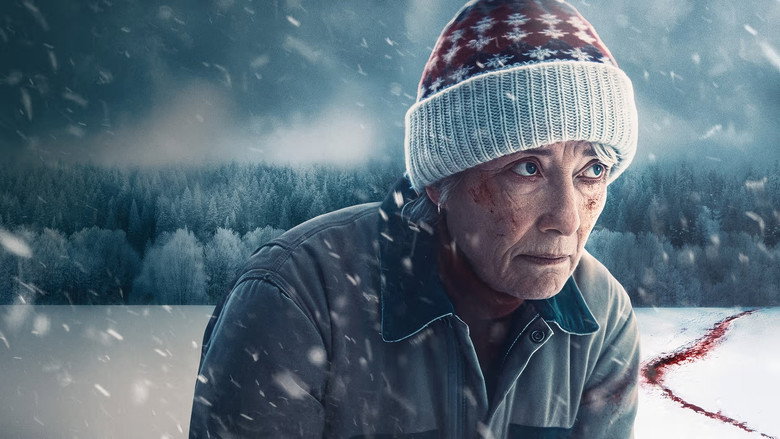
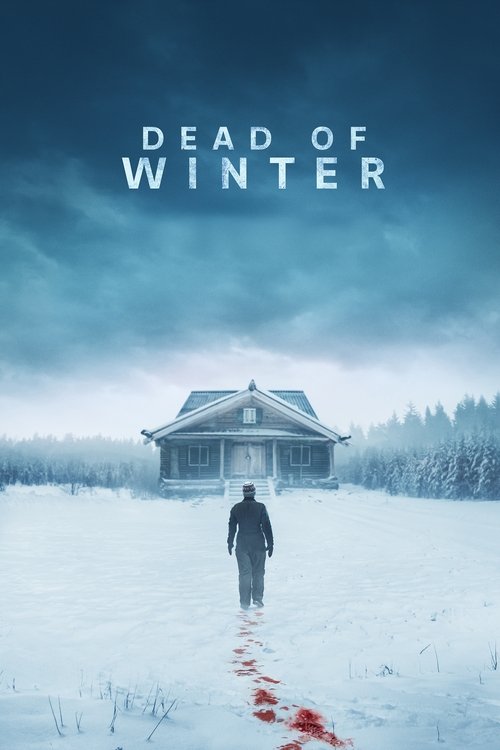
The setup is a bait-and-switch on genre. Barb's drive to Lake Hilda in northern Minnesota is a funeral, not an adventure: she is carrying a metal box of ashes belonging to her late husband, Karl, intending to scatter them at the lake. Getting lost on the backroads and stopping at a remote cabin for directions is the ordinary misfortune that detonates the plot — inside, she discovers a young woman, Leah, imprisoned in the basement by a couple who are armed and prepared to kill.

What follows strands Barb in a genuine wilderness problem: no cell service, no help within miles, a hostage she cannot carry and two captors who now know she has seen everything. The film's tension comes from resource scarcity rather than combat skill — Barb has no training, and every advantage she gains is improvised, borrowed from the environment, or handed to her by the captors' assumption that a woman her age poses no threat. That underestimation is the mechanism the entire thriller runs on.

The ending. The climax moves onto the ice. Wounded, Barb handcuffs herself to the woman in the purple coat — the antagonist audiences nicknamed the \"Purple Lady\" — and pulls them both into the freezing water. There is no escape planned and none attempted. As the two wounded women sink toward their deaths, Barb releases the metal box containing Karl's ashes into the water with her.

What that reveals in retrospect. The handcuffs recast everything before them. Barb does not disable her enemy and walk away; she ensures the threat ends by ending herself alongside it, because she cannot outrun, outfight or outlast the situation any other way. The released ashes complete the journey she began the film with — she reaches Lake Hilda after all, and performs the scattering she set out to perform, simply from beneath the surface rather than above it. Her private errand and her rescue mission are resolved in the same gesture.

This is where the film's title turns double. \"Dead of winter\" is the season, but it is also Barb's own late season — the winter of a life whose central relationship has already ended. The opening image of a woman driving alone with a box of remains was never just exposition; it was a statement that she had nothing waiting for her. The ending doesn't add a tragic twist so much as pay out a debt the first scene incurred. Leah's survival is the film's only unambiguous gain, and it is purchased entirely with Barb's remaining time — which the film quietly suggests she valued least of anyone on that lake.

Alternative Interpretations

The ending as sacrifice. The most straightforward reading of the climax — Barb handcuffing herself to her adversary and dragging them both beneath the ice — is heroic self-expenditure: a woman who has already lost her reason to live spending her last act on ensuring a young stranger's survival. Under this reading, releasing Karl's ashes as she sinks is a completed mission, not a defeat.

The ending as chosen death. A darker interpretation notes that Barb set out on this journey to bury her husband and never quite intended to come back to an empty life. The rescue gives her a socially legible reason to do what grief was already pulling her toward. The handcuffs then read less as tactics than as permission — the frozen lake is where she was always headed.

Grief-work as genre. Some viewers read the whole thriller as an externalised mourning process: the cabin, the captors and the ice function as the stages of a bereavement Barb cannot process in words. The villains are obstacles in a psychological journey as much as they are people.

A regional morality play. Others take the Fargo comparison seriously and read the film as a study of \"Minnesota nice\" — the courtesy that keeps Barb knocking on a stranger's door, and the same courtesy that lets a couple hide a captive under a friendly surface. The film's tonal unpredictability, praised in the critics' consensus, supports reading it as partly a black comedy of rural manners.

A meta-text about Emma Thompson. Given that Thompson executive-produced the film and has spoken about the difficulty of finding good parts at 66, some readings treat Barb's arc — an overlooked woman who turns out to be the only one capable of doing what needs doing — as an argument the actor is making about her own industry.

Explore More About This Movie

Dive deeper into specific aspects of the movie with our detailed analysis pages

Similar Movies