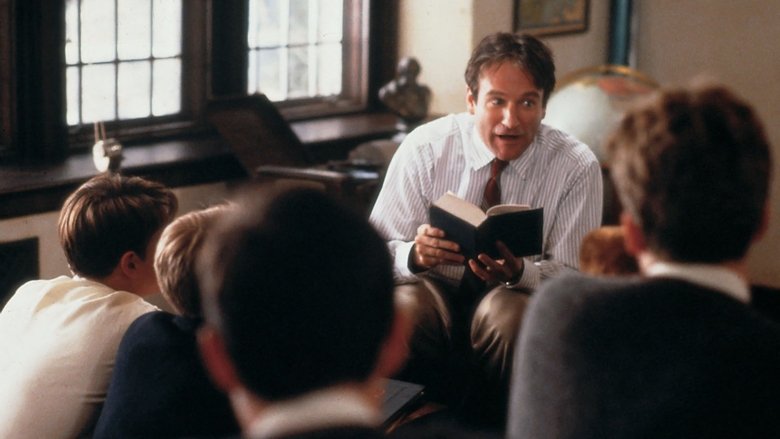
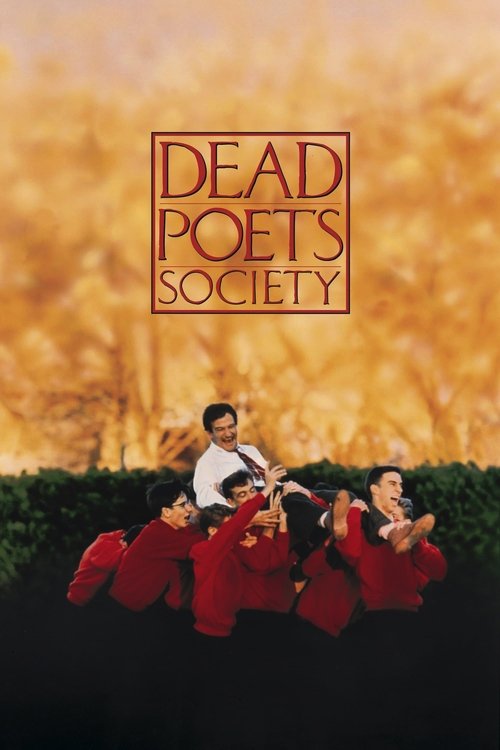
"He was their inspiration. He made their lives extraordinary."
Dead Poets Society - Ending Explained
⚠️ Spoiler Analysis
The central tragedy of "Dead Poets Society" is the suicide of Neil Perry. After defying his father, Mr. Perry, to star in a local production of "A Midsummer Night's Dream," Neil is confronted by his father, who withdraws him from Welton and enrolls him in Braden Military School to ensure he follows the path to becoming a doctor. Feeling completely trapped and unable to communicate his despair or stand up to his father, Neil takes his own life with his father's revolver. This event is the catalyst for the film's final act.
In the aftermath, Headmaster Nolan launches an investigation to find a scapegoat and preserve the school's reputation. Richard Cameron, a member of the society, betrays his friends to save himself, blaming Mr. Keating entirely for corrupting the boys and causing Neil's death. The other boys are pressured one by one into signing a pre-written letter confirming Cameron's story. Charlie Dalton is expelled for punching Cameron and refusing to cooperate.
In the final, iconic scene, Mr. Keating is fired and comes to the classroom to collect his belongings while Headmaster Nolan is teaching the class in the traditional, rigid Welton manner. As Keating is about to leave, Todd Anderson, who has struggled with shyness throughout the film, finally finds his voice. He confesses that the boys were forced to sign the letter. Despite Nolan's threats, Todd stands on his desk and recites, "O Captain! My Captain!" Several other members of the Dead Poets Society follow suit, standing on their desks in a final act of loyalty and defiance. Keating, visibly moved, simply says, "Thank you, boys. Thank you." The ending is bittersweet; Keating is gone and the system has seemingly won, but the act of the boys standing on their desks signifies that Keating's lessons of individualism and critical thinking have had a lasting impact and his spirit of rebellion will live on in them.
Alternative Interpretations
While widely celebrated as an inspirational film, "Dead Poets Society" has also been subject to critical alternative interpretations. One prominent critique argues that John Keating is not an inspirational hero but a reckless and irresponsible teacher. This view suggests that Keating's methods, while charismatic, are self-indulgent and fail to provide his impressionable students with the necessary guidance to navigate the consequences of their rebellion. He encourages them to defy authority but offers little practical advice on how to deal with the inevitable backlash, which ultimately contributes to Neil Perry's tragic end. Critic Roger Ebert, for instance, argued that at the end of the semester, the students "all really love is the teacher," not the poetry itself, and called the film "a collection of pious platitudes masquerading as a courageous stand."
Another interpretation posits that the film is not a simple story of heroic individuals versus a villainous system, but a more nuanced tragedy about the clash of ideals. In this reading, neither Keating's unchecked romanticism nor Nolan's rigid traditionalism is presented as a perfect model. Keating's philosophy, when naively adopted by the boys (e.g., Neil's dishonesty with his father, Charlie's reckless stunts), leads to disaster. This suggests the film is a cautionary tale about the dangers of idealism without pragmatism and the difficulty of enacting meaningful change within an entrenched system.
Finally, some have viewed the film through a queer theory lens, suggesting that the intense, homosocial bonds of the all-boys school and the passionate, artistic rebellion contain coded explorations of burgeoning sexuality and non-normative identity, even if never explicitly stated.