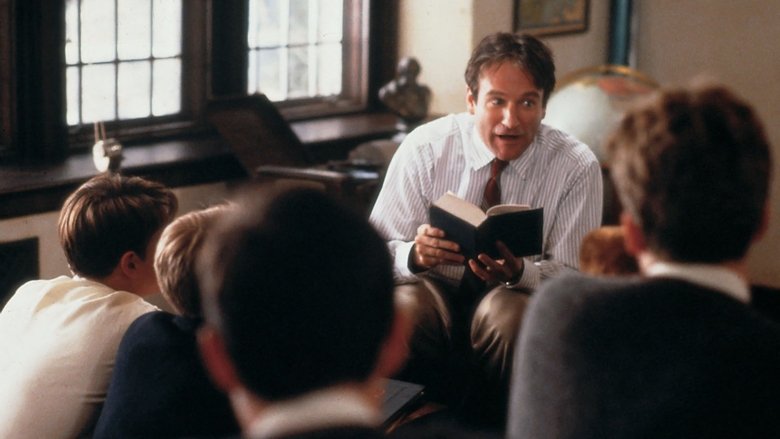
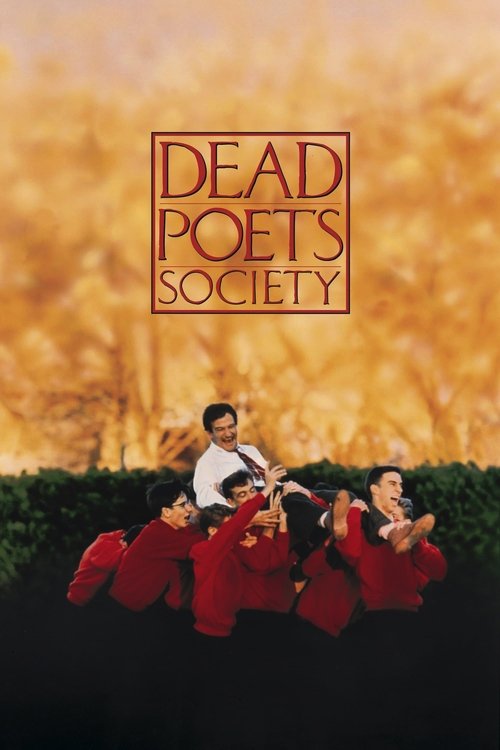
"He was their inspiration. He made their lives extraordinary."
Director: Peter Weir
Cast: Robin Williams, Robert Sean Leonard, Ethan Hawke, Josh Charles, Gale Hansen
Dead Poets Society — Movie Quotes
Memorable Quotes
Carpe diem. Seize the day, boys. Make your lives extraordinary.
Context
Keating says this during his first class with the boys. He has them look at pictures of former Welton students, now long dead, to impress upon them the fleeting nature of life and the importance of making the most of their time.
Meaning
This is the film's central thesis. It is a powerful call to action, urging the students to live in the present and to strive for a life of passion and meaning, rather than one of mundane conformity. It encapsulates Keating's entire philosophy of education and life.
We don't read and write poetry because it's cute. We read and write poetry because we are members of the human race. And the human race is filled with passion. And medicine, law, business, engineering, these are noble pursuits and necessary to sustain life. But poetry, beauty, romance, love, these are what we stay alive for.
Context
Keating delivers this speech to his class to justify the importance of their studies in his English class, contrasting it with the practical, career-focused education prioritized by Welton and their parents.
Meaning
This quote eloquently defines the film's view on the humanities. It argues that while practical pursuits are necessary for survival, it is art and passion that give life its meaning and purpose. It elevates the arts from a mere hobby to an essential component of the human experience.
O Captain! My Captain!
Context
Keating tells the boys they can call him "Mr. Keating" or, if they're slightly more daring, "O Captain! My Captain!" The line is reprised in the emotional final scene. As a disgraced Keating leaves the classroom, Todd Anderson stands on his desk and shouts the phrase, prompting several other boys to do the same, in a final, courageous salute to their mentor.
Meaning
This quote, from a Walt Whitman poem about Abraham Lincoln, is used as a term of respect and endearment for Mr. Keating. In the end, it becomes a powerful symbol of loyalty, defiance, and a final acknowledgment from the students that they have internalized his lessons of independent thought, even at the risk of expulsion.
I went to the woods because I wished to live deliberately, to front only the essential facts of life, and see if I could not learn what it had to teach, and not, when I came to die, discover that I had not lived.
Context
This is the passage the boys recite to open their meetings in the cave. It sets the tone for their secret gatherings and reinforces the "Carpe Diem" philosophy they are trying to embrace.
Meaning
This quote from Thoreau's "Walden" serves as the unofficial mantra for the resurrected Dead Poets Society. It encapsulates their mission to escape the superficial and structured life at Welton to experience a more authentic, meaningful existence. It's about sucking "out all the marrow of life."
Explore More About This Movie
Dive deeper into specific aspects of the movie with our detailed analysis pages