
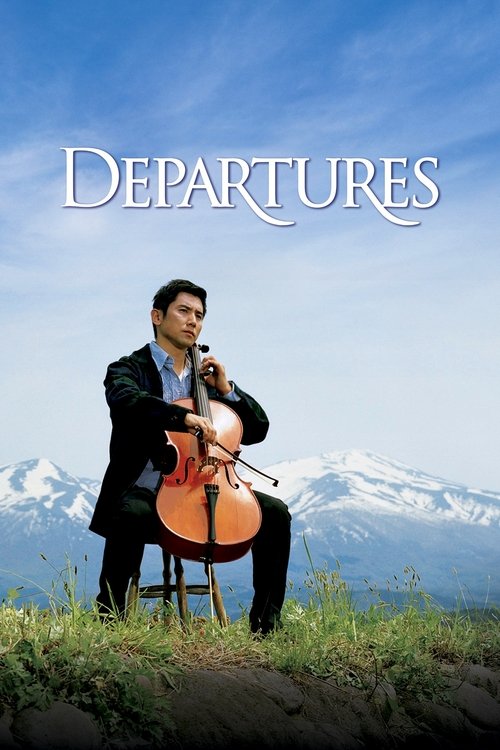
おくりびと
"The gift of last memories."
Director: Yojiro Takita
Cast: Masahiro Motoki, Ryoko Hirosue, Tsutomu Yamazaki, Kazuko Yoshiyuki, Kimiko Yo
Departures — Movie Quotes
Memorable Quotes
死んだ人のこと、きれいにして、旅立ちのお手伝いをする。厳かで、静かで、でも、何より、優しい。
Context
This is part of Daigo's internal monologue after watching Sasaki perform one of the first encoffining ceremonies. He is mesmerized by the grace and dignity of the ritual, which is in stark contrast to his own fear and the societal perception of the job. It is a pivotal moment in his journey toward accepting his new calling.
Meaning
English Translation: "To prepare the deceased and help them on their journey. It was calm, and precise, and more than anything, it was filled with affection." This quote encapsulates Daigo's epiphany about his profession. It marks the shift in his perception from seeing the job as grotesque to understanding it as a profound act of love and care.
困るんだよ、死んだって。生きてるもんが死んだもん喰ってんだ。うまいんだよ、これが。
Context
Sasaki says this to Daigo in his office greenhouse while they are about to eat fugu shirako (pufferfish roe), a delicacy that is itself potentially deadly. The moment is both humorous and profound, serving as a lesson for Daigo to embrace life fully and without fear, even as he works so closely with death.
Meaning
English Translation: "It's a corpse. The living eat the dead... Unless you want to die, you eat. And it's good." This quote bluntly states the film's philosophy on the cycle of life and death. Sasaki uses the act of eating to ground Daigo in the reality that life sustains itself through death, stripping away the sentimentality to reveal a fundamental, natural truth.
昔、文字が発明される前、自分の気持ちにあった石を選んで、贈る相手に渡したんだって。その石の触り心地や重さで、気持ちを伝えたんだ。
Context
Daigo explains this to his wife Mika as he gives her a small stone, trying to reconnect with her after their relationship has been strained by his job. He is recalling the tradition his father taught him, a pivotal moment that foreshadows the emotional climax of the film where a stone letter becomes the key to forgiving his father.
Meaning
English Translation: "Long ago, before writing, you'd send someone a stone that suited how you were feeling. From its weight and touch, they'd know how you felt." This explains the concept of the 'stone letters,' a central symbol in the film. It speaks to a form of pure, elemental communication that transcends words, representing the deep, often unspoken, bonds of family.
Explore More About This Movie
Dive deeper into specific aspects of the movie with our detailed analysis pages