Les Diaboliques
"See it, be amazed at it, but...BE QUIET ABOUT IT!"
Diabolique - Symbolism & Philosophy
Symbols & Motifs
The Swimming Pool
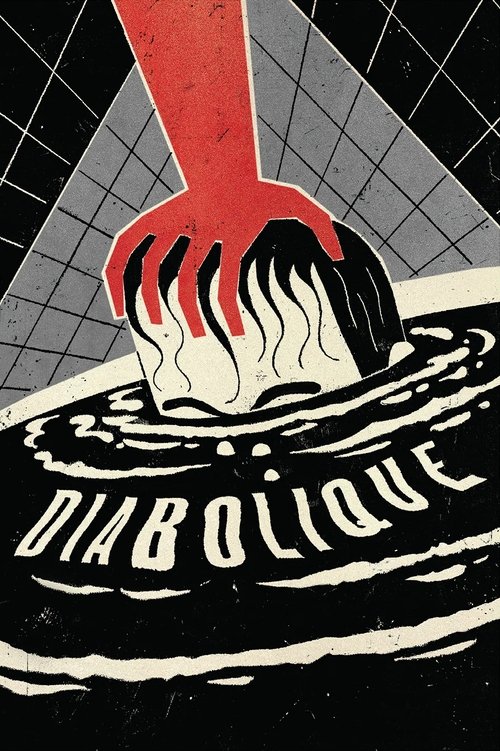
The filthy, stagnant swimming pool symbolizes the moral decay, hidden corruption, and secrets festering within the school and its inhabitants. Its murky water represents the obscured truth of the crime. It is intended to be a grave but ultimately reveals nothing, representing the void at the center of the women's plan and their decomposing morality.
The film opens with a shot of the pool, establishing its importance. It is the intended final resting place for Michel's body. The act of draining the pool becomes a moment of supreme tension, and its emptiness is the catalyst for the psychological horror that follows.
Water
Water is a recurring motif used for both cleansing and death. It symbolizes a means of purification (bathing) turned into an instrument of murder (the drowning). It is the element of the crime, the source of paranoia when the body disappears, and ultimately, the site of the final, terrifying revelation in the bathtub.
The murder is committed by drowning in a bathtub. The body is then transported to be submerged in the pool. The climax of the film returns to the bathtub, where a horrifying apparition rises from the water, bringing the motif full circle.
Christina's Heart Condition
Christina's weak heart is a literal representation of her fragile emotional and psychological state. It symbolizes her vulnerability to Michel's cruelty and Nicole's manipulation. Ultimately, her heart is the true target of the elaborate plot, a weapon to be turned against her through fear and shock.
Her heart condition is mentioned frequently throughout the film. She is seen clutching her chest during moments of stress. The entire conspiracy is designed to induce a fatal heart attack, making her physical weakness the key to the murderers' plan.
The Wicker Trunk
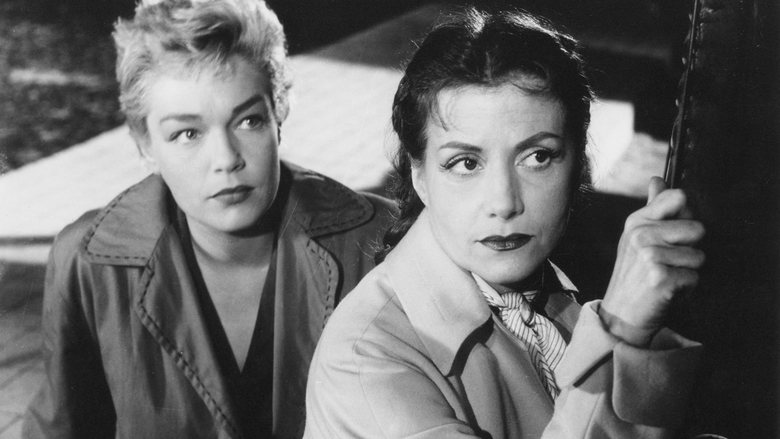
The wicker trunk, used to transport the body, functions as a makeshift coffin and a symbol of the heavy, inescapable burden of the crime. The difficult journey with the trunk, fraught with near-disasters, represents the perilous and morally taxing nature of the women's endeavor.
The scenes of Christina and Nicole struggling to carry the heavy trunk from Niort back to the school are filled with suspense. Its leakage and the difficulty of moving it underscore the grim reality and physical weight of their murderous act.
Philosophical Questions
Can committing an evil act for a 'good' reason ever be justified?
The film initially presents the murder of Michel as a justifiable act of liberation for two abused women. The audience is led to sympathize with their plight, positioning the crime as a necessary evil. However, the film systematically deconstructs this notion. The act of murder does not bring freedom but rather a new form of psychological prison built on paranoia and fear. It shows that engaging in evil, regardless of the motive, corrupts the soul and leads to unforeseen, terrifying consequences, ultimately suggesting that the ends cannot justify such diabolical means.
What is the true nature of evil?
"Diabolique" explores evil not as a supernatural force, but as a deeply human characteristic rooted in greed, sadism, and a complete lack of empathy. Michel's cruelty is mundane and petty, making it all the more chilling. Nicole's evil is cold and calculating. The film's ultimate horror lies in the revelation of their conspiracy, which is not a crime of passion but a meticulously planned, pitiless scheme. It posits that the most 'diabolical' acts are those born from a complete disregard for human life and suffering, carried out with methodical precision.
To what extent can fear and guilt manipulate human perception?
After the murder, Christina's perception of reality begins to warp under the weight of her guilt and fear. She is primed to believe that Michel's ghost is haunting her. The film brilliantly illustrates how a guilty conscience can make one vulnerable to suggestion and manipulation. The strange occurrences might have rational explanations, but in her terrified state, Christina interprets everything through the lens of supernatural retribution. The film is a powerful study of how internal psychological states can distort one's experience of the external world, making one the architect of one's own terror.
Core Meaning
At its heart, "Diabolique" is a cynical exploration of human cruelty, greed, and the corrupting nature of evil. Director Henri-Georges Clouzot crafts a world devoid of innocence, where every character is morally compromised and driven by base desires. The film suggests that the perfect crime is an illusion and that the psychological torment of guilt and paranoia can be a more severe punishment than legal justice. It delves into the dark intricacies of manipulation, demonstrating how easily the vulnerable can be preyed upon. The film serves as a bleak commentary on human nature, suggesting that the true "devils" are not supernatural beings but ordinary people capable of extraordinary malice.