Diabolique
A chilling French noir that submerges you in a decaying boarding school's dread, where a calculated murder unravels into a heart-stopping vortex of psychological terror.
Diabolique

Diabolique

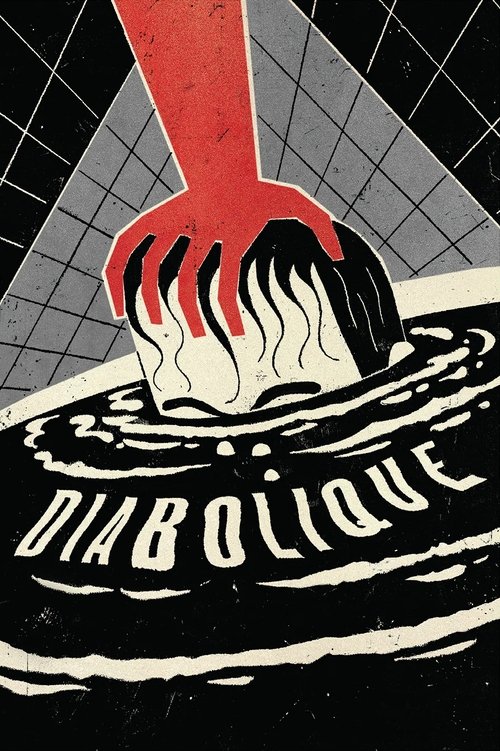
Les Diaboliques

"See it, be amazed at it, but...BE QUIET ABOUT IT!"

29 January 1955 France 117 min ⭐ 7.9 (1,037)
Director: Henri-Georges Clouzot
Cast: Véra Clouzot, Simone Signoret, Paul Meurisse, Charles Vanel, Jean Brochard
Thriller Mystery
Psychological Manipulation and Gaslighting The Corruptibility of the Innocent Appearance vs. Reality Moral Ambiguity and Misanthropy

Overview

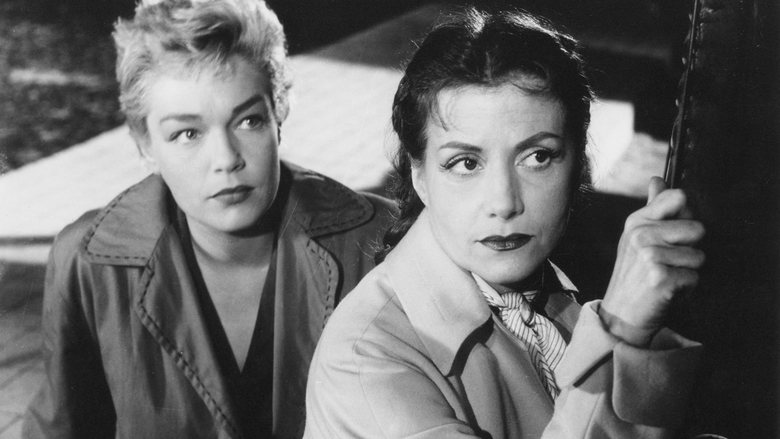
"Diabolique" ("Les Diaboliques") is a masterwork of French suspense directed by Henri-Georges Clouzot. The story is set in a dilapidated boys' boarding school run by the cruel and tyrannical Michel Delassalle. His long-suffering, frail wife, Christina, who owns the school, and his tough, pragmatic mistress, Nicole Horner, a teacher at the institution, are united by their mutual hatred for him.

Fed up with his constant abuse, the two women form an unlikely and tense alliance. Nicole, the stronger of the two, devises a meticulous plan to murder Michel and make it look like an accident. They lure him to a remote location, drown him in a bathtub, and transport his body back to the school, intending to dump it in the filthy swimming pool. However, their carefully constructed plot begins to fall apart when, after they've done the deed, the body mysteriously vanishes from the pool. This disappearance triggers a wave of paranoia and fear, as strange occurrences begin to plague the school, leading the women to question their sanity and wonder if Michel has somehow returned from the dead.
Core Meaning

At its heart, "Diabolique" is a cynical exploration of human cruelty, greed, and the corrupting nature of evil. Director Henri-Georges Clouzot crafts a world devoid of innocence, where every character is morally compromised and driven by base desires. The film suggests that the perfect crime is an illusion and that the psychological torment of guilt and paranoia can be a more severe punishment than legal justice. It delves into the dark intricacies of manipulation, demonstrating how easily the vulnerable can be preyed upon. The film serves as a bleak commentary on human nature, suggesting that the true "devils" are not supernatural beings but ordinary people capable of extraordinary malice.

Thematic DNA

Psychological Manipulation and Gaslighting 35%
The Corruptibility of the Innocent 25%
Appearance vs. Reality 25%
Moral Ambiguity and Misanthropy 15%

Psychological Manipulation and Gaslighting

The film is a masterclass in psychological manipulation. The central plot hinges on an elaborate scheme designed not just to kill, but to mentally shatter a victim. Christina is systematically made to doubt her own sanity through a series of inexplicable events: the disappearing body, the suit returned from the dry cleaners, and sightings of Michel by a student. This calculated campaign of terror is designed to exploit her fragile health and devout faith, pushing her to the brink of madness. The entire second half of the film becomes a chilling depiction of gaslighting before the term was widely known.

The Corruptibility of the Innocent

Christina represents a form of corrupted innocence. Initially presented as a pious and gentle soul, her participation in the murder plot, however reluctant, marks her descent into a world of moral decay. Her religious faith offers no protection and, in fact, becomes a tool for her tormentors to exploit. The film explores how abuse and desperation can push even the most morally upright individuals to commit heinous acts, blurring the line between victim and perpetrator.

Appearance vs. Reality

Nothing in "Diabolique" is as it seems. The alliance between Christina and Nicole appears to be a feminist pact against a male oppressor, but it is built on a foundation of deceit. Michel's death, the central event driving the plot, is itself a fabrication. Clouzot masterfully plays with the audience's perceptions, creating a narrative where reality is constantly shifting. The murky swimming pool serves as a potent metaphor for the obscured truths and hidden evils that lie just beneath the surface of the characters' lives.

Moral Ambiguity and Misanthropy

The film presents a deeply pessimistic and misanthropic view of humanity. There are no true heroes; every major character is driven by selfishness, greed, or malice. Michel is a sadist, Nicole is a ruthless conspirator, and Christina, despite her victimhood, becomes an accomplice to murder. The retired detective, Fichet, is not a bastion of justice but a weary, detached observer. Clouzot paints a grim portrait of a world where empathy is absent and cruelty is the norm.

Character Analysis

Christina Delassalle

Véra Clouzot

Archetype: The Innocent Victim / The Reluctant Accomplice
Key Trait: Fragility

Motivation

Her primary motivation is to escape the relentless cruelty and abuse of her husband, Michel. Fear and a desperate desire for freedom drive her to participate in a crime that conflicts with her pious nature.

Character Arc

Christina begins as a timid, devout, and abused wife, trapped in a miserable existence. Pushed by Nicole, she reluctantly agrees to the murder plot, marking a significant moral compromise. Her arc is a tragic descent into paranoia and terror as the consequences of her actions—or what she believes are the consequences—unravel her sanity and exploit her physical weakness, leading to her ultimate demise as the true target of the conspiracy.

Nicole Horner

Simone Signoret

Archetype: The Femme Fatale / The Mastermind
Key Trait: Deceptiveness

Motivation

Initially, her motivation appears to be revenge and liberation from Michel. However, her true motivation is greed; she conspires with Michel to murder Christina for her inheritance and ownership of the school.

Character Arc

Nicole is introduced as a strong, cold, and pragmatic mistress, also a victim of Michel's abuse. She is the calculating mind behind the murder plot, manipulating the more fragile Christina into action. Her arc is revealed to be a complete deception; she is not a fellow victim seeking revenge but a ruthless conspirator and Michel's true partner. Her supposed strength is a mask for her profound cruelty and greed.

Michel Delassalle

Paul Meurisse

Archetype: The Sadistic Tyrant / The Resurrected Villain
Key Trait: Cruelty

Motivation

His motivation is pure sadism and greed. He delights in tormenting both his wife and mistress and orchestrates the elaborate scheme to murder Christina for her fortune.

Character Arc

Michel is established from the outset as a despicable and cruel sadist who abuses everyone around him. He is presented as the deserving victim whose murder feels like a justified act. His 'arc' is the film's central twist: he is not a victim but the co-orchestrator of the plot. He feigns his own death to serve as a ghostly tormentor, engineering the entire ordeal to frighten his wife to death, revealing an even deeper layer of monstrous cruelty.

Alfred Fichet

Charles Vanel

Archetype: The Eccentric Detective
Key Trait: Persistence

Motivation

Professionally curious and methodical, Fichet is motivated by the puzzle of the disappearance. He is drawn into the case by chance at the morgue and his instincts tell him something is amiss, compelling him to uncover the truth.

Character Arc

Fichet appears midway through the film as a seemingly bumbling, semi-retired private detective who takes an interest in Michel's disappearance. He is persistent and observant despite his unassuming demeanor. His arc is that of the quiet observer who slowly pieces together the inconsistencies of the case, culminating in his presence at the film's climax to witness the confession and ensure justice is served, acting as the story's moral arbiter.

Symbols & Motifs

The Swimming Pool

Meaning:

The filthy, stagnant swimming pool symbolizes the moral decay, hidden corruption, and secrets festering within the school and its inhabitants. Its murky water represents the obscured truth of the crime. It is intended to be a grave but ultimately reveals nothing, representing the void at the center of the women's plan and their decomposing morality.

Context:

The film opens with a shot of the pool, establishing its importance. It is the intended final resting place for Michel's body. The act of draining the pool becomes a moment of supreme tension, and its emptiness is the catalyst for the psychological horror that follows.

Water

Meaning:

Water is a recurring motif used for both cleansing and death. It symbolizes a means of purification (bathing) turned into an instrument of murder (the drowning). It is the element of the crime, the source of paranoia when the body disappears, and ultimately, the site of the final, terrifying revelation in the bathtub.

Context:

The murder is committed by drowning in a bathtub. The body is then transported to be submerged in the pool. The climax of the film returns to the bathtub, where a horrifying apparition rises from the water, bringing the motif full circle.

Christina's Heart Condition

Meaning:

Christina's weak heart is a literal representation of her fragile emotional and psychological state. It symbolizes her vulnerability to Michel's cruelty and Nicole's manipulation. Ultimately, her heart is the true target of the elaborate plot, a weapon to be turned against her through fear and shock.

Context:

Her heart condition is mentioned frequently throughout the film. She is seen clutching her chest during moments of stress. The entire conspiracy is designed to induce a fatal heart attack, making her physical weakness the key to the murderers' plan.

The Wicker Trunk

Meaning:

The wicker trunk, used to transport the body, functions as a makeshift coffin and a symbol of the heavy, inescapable burden of the crime. The difficult journey with the trunk, fraught with near-disasters, represents the perilous and morally taxing nature of the women's endeavor.

Context:

The scenes of Christina and Nicole struggling to carry the heavy trunk from Niort back to the school are filled with suspense. Its leakage and the difficulty of moving it underscore the grim reality and physical weight of their murderous act.

Philosophical Questions

Can committing an evil act for a 'good' reason ever be justified?

The film initially presents the murder of Michel as a justifiable act of liberation for two abused women. The audience is led to sympathize with their plight, positioning the crime as a necessary evil. However, the film systematically deconstructs this notion. The act of murder does not bring freedom but rather a new form of psychological prison built on paranoia and fear. It shows that engaging in evil, regardless of the motive, corrupts the soul and leads to unforeseen, terrifying consequences, ultimately suggesting that the ends cannot justify such diabolical means.

What is the true nature of evil?

"Diabolique" explores evil not as a supernatural force, but as a deeply human characteristic rooted in greed, sadism, and a complete lack of empathy. Michel's cruelty is mundane and petty, making it all the more chilling. Nicole's evil is cold and calculating. The film's ultimate horror lies in the revelation of their conspiracy, which is not a crime of passion but a meticulously planned, pitiless scheme. It posits that the most 'diabolical' acts are those born from a complete disregard for human life and suffering, carried out with methodical precision.

To what extent can fear and guilt manipulate human perception?

After the murder, Christina's perception of reality begins to warp under the weight of her guilt and fear. She is primed to believe that Michel's ghost is haunting her. The film brilliantly illustrates how a guilty conscience can make one vulnerable to suggestion and manipulation. The strange occurrences might have rational explanations, but in her terrified state, Christina interprets everything through the lens of supernatural retribution. The film is a powerful study of how internal psychological states can distort one's experience of the external world, making one the architect of one's own terror.

Alternative Interpretations

The most debated element of "Diabolique" is the final scene. After the villains have been caught, a young student, Moinet, is seen with his slingshot. When a teacher asks how he got it back, the boy claims that Christina returned it to him. This leaves the ending open to several interpretations:

  • The Supernatural Ghost Ending: The most straightforward interpretation is that Christina's ghost has returned. Given her devout faith and unjust death, her spirit lingers to perform a final act of kindness for the boy. This reading pushes the film from a psychological thriller into the realm of the supernatural, suggesting a form of spiritual justice beyond the capture of the murderers.
  • The Ambiguous Psychological Ending: Another view is that the boy is simply lying or imagining it, as children do. This interpretation keeps the film grounded in its grim reality. The teacher dismisses the boy's claim, representing the adult world's refusal to believe in anything beyond the rational. The final shot is simply a final, unsettling question mark, a last touch of ambiguity from Clouzot that leaves the audience in a state of unease.
  • The Ultimate Trick Ending: A more complex, though less common, interpretation suggests that Christina faked her own death, somehow anticipating and outsmarting her would-be killers. According to this theory, she knew about the plot and played along, perhaps with the detective's help, to trap them. This would make her the ultimate manipulator. However, this reading is contradicted by the visual evidence of her terror and Michel checking her pulse.

Cultural Impact

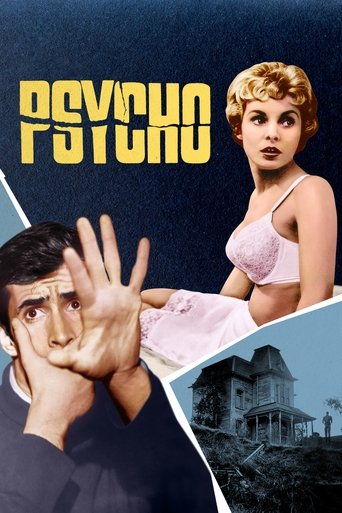
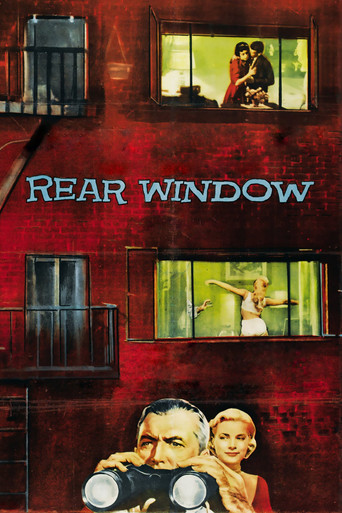
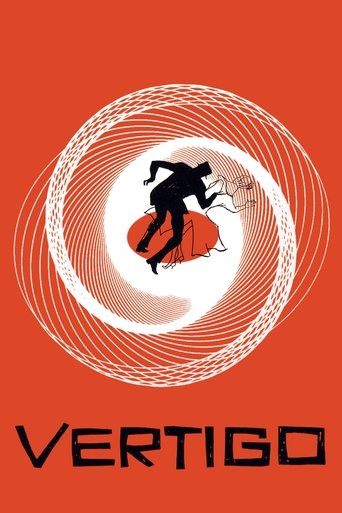
"Diabolique" had a profound and lasting impact on the thriller and horror genres. Released in 1955, it arrived as a jolt to audiences with its bleak, misanthropic tone and a plot structure that relied on a shocking, game-changing twist ending. This narrative device, while not entirely new, was executed with such perfection that it became a benchmark for suspense films. Its influence is most famously seen in Alfred Hitchcock's "Psycho" (1960), which adapted a similar structure of a mid-film shock and a stunning final reveal. Hitchcock himself admitted to being influenced by Clouzot's film.

The film's blend of psychological suspense with elements of Grand Guignol horror was groundbreaking, moving the genre away from supernatural monsters and toward the terror of human evil. It demonstrated that the most terrifying monsters are often ordinary people. Its success in the United States and the UK was phenomenal for a foreign-language film at the time, paving the way for other European thrillers to find international audiences. The film's gritty, decaying aesthetic and its focus on morally ambiguous characters also influenced the French New Wave, even though many of that movement's directors publicly criticized Clouzot's traditional style. Today, "Diabolique" is considered a masterpiece, a cornerstone of suspense cinema whose DNA can be found in countless thrillers that rely on intricate plotting and stunning narrative reversals.

Audience Reception

Upon its release, "Diabolique" was met with widespread acclaim from audiences and most critics, particularly in France and the United States, becoming a significant commercial success. Audiences were captivated by its relentless suspense and, most notably, its shocking twist ending, which generated immense word-of-mouth buzz. The film's distributors famously pleaded with viewers not to spoil the conclusion for others. Praise was directed at Henri-Georges Clouzot's masterful direction, which created an almost unbearable atmosphere of dread and decay. The performances of Simone Signoret and Véra Clouzot were also highly lauded. Some critics, however, found the film's misanthropy and calculated cruelty to be excessive and manipulative. In Britain, the reception was initially more hostile, with some reviewers finding the film too morbid and malevolent. Despite some initial detractors, its reputation has only grown, and it is now almost universally regarded by audiences and critics as a classic and a landmark of the suspense genre.

Interesting Facts

  • Director Henri-Georges Clouzot reportedly beat Alfred Hitchcock to the film rights for the novel, "Celle qui n'était plus," by only a few hours. Hitchcock was a great admirer of the finished film.
  • The film's shocking twist ending was so guarded that the final credits include a message asking the audience not to reveal it to their friends.
  • Véra Clouzot, the director's wife who played the frail Christina, suffered from a real-life heart condition. Tragically, she died of a heart attack just five years after the film's release, at the age of 46, in a chilling echo of her character's fate.
  • Author Robert Bloch, who wrote the novel "Psycho," cited "Diabolique" as his all-time favorite horror film. The film's influence on Hitchcock's "Psycho" (1960) is widely acknowledged by critics.
  • During filming, Clouzot was notoriously demanding. It is said that for one scene, he insisted Véra Clouzot and Simone Signoret consume genuinely spoiled fish to elicit authentic reactions of disgust.
  • The character of Inspector Fichet, with his rumpled raincoat and unassuming but persistent questioning, is often cited as a direct inspiration for Peter Falk's iconic TV detective, Columbo.
  • The film was a massive box office hit in France and a major international success, helping to popularize French cinema in the United States.

⚠️ Spoiler Analysis

Click to reveal detailed analysis with spoilers

Frequently Asked Questions

Explore More About This Movie

Dive deeper into specific aspects of the movie with our detailed analysis pages

Comments (0)

Leave a comment

No comments yet. Be the first to share your thoughts!