Skip to content
Doctor Strange
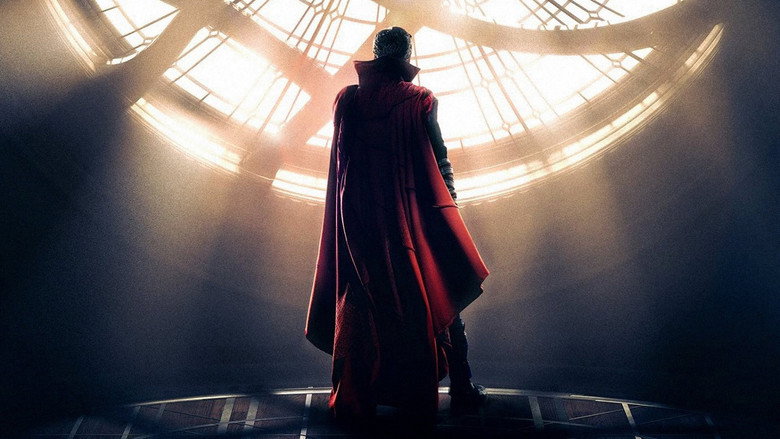
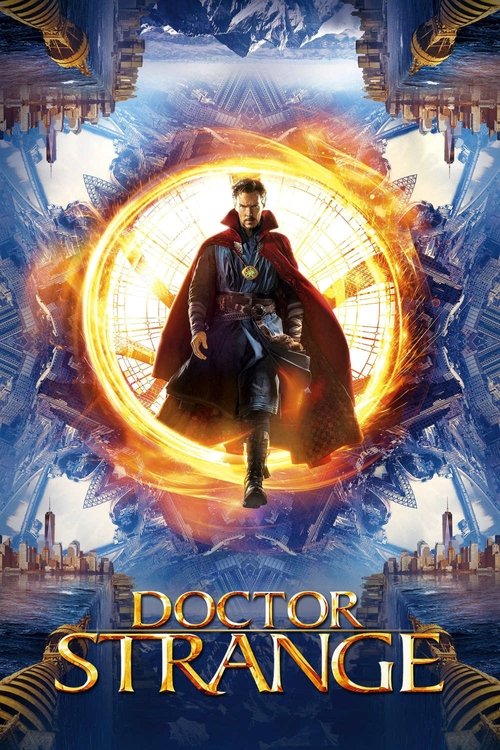
A kaleidoscopic metaphysical odyssey that plunges through existential grief into spiritual awakening. Mirrored skylines fracture and fold like origami under shimmering Mandalas of raw light, dissolving human vanity into the cosmic unknown.
Doctor Strange
Doctor Strange

"The impossibilities are endless."

25 October 2016 United States of America 115 min 7.4 (23,714)

Director: Scott Derrickson

Cast: Benedict Cumberbatch, Chiwetel Ejiofor, Rachel McAdams, Benedict Wong, Mads Mikkelsen

Fantasy Action Adventure Ego, Hubris, and Surrender of Control Time, Mortality, and Acceptance of Death Materialism vs. Mysticism / Science vs. Faith The Morality of Power and Broken Rules Redemption and Healing Beyond the Physical
Budget: $180,000,000
Box Office: $676,343,174

Doctor Strange — Ending Explained

⚠️ Spoiler Analysis

Strange discovers that the Ancient One, who strictly forbids her students from tapping into the Dark Dimension, has been drawing dark energy from Dormammu for centuries to maintain her immortality and protect Earth. This revelation shatters Mordo’s faith and validates Kaecilius’s claims of hypocrisy.

During a confrontation at the New York Sanctum, Kaecilius mortally wounds the Ancient One. Strange projects his astral form alongside hers as her physical body undergoes emergency surgery. She extends the final millisecond of her life, revealing that she has foreseen all possible futures up to this exact moment, and that Strange’s willingness to break rules is what makes him necessary.

In Hong Kong, Kaecilius completes the destruction of the Sanctum, causing the Dark Dimension to consume Earth. Strange uses the Eye of Agamotto to rewind time, reconstructing the city while fighting in reverse. Flying into the Dark Dimension, Strange confronts Dormammu directly. Because the Dark Dimension is a realm beyond time, Dormammu is utterly unfamiliar with temporal mechanics. Strange uses the Time Stone to cast a loop: every time Dormammu annihilates Strange, time resets to the exact moment Strange says, "Dormammu, I’ve come to bargain". Strange accepts being murdered thousands of times in excruciating ways, trapping Dormammu in an inescapable cage of time until the demon surrenders, banishing Kaecilius and sparing Earth.

Strange defeats the cosmic threat not by overpowering it, but through infinite self-sacrifice and weaponizing mortality itself against a timeless being. Disgusted by Strange and the Ancient One's reckless manipulation of natural laws, Mordo abandons the order. In the post-credits scene, Mordo visits Jonathan Pangborn, strips him of his magical mobility, and declares his new mission: Earth has "too many sorcerers".

Alternative Interpretations

The Allegory of Trauma and Chronic Disability: Rather than a fantasy adventure, some critics view the film as a psychological drama about coping with sudden, irreversible physical disability. Strange’s search for a magical "cure" transforms into an internal process of radical acceptance, realizing that healing does not mean erasing scars, but redefining purpose.

The Trap of Moral Dogmatism (Mordo’s Perspective): While Strange is positioned as the hero, an alternative ethical reading validates Mordo. Strange and the Ancient One casually bend universal rules to suit their immediate crises, proving Mordo’s argument that hypocrisy at the top corrupts the system and creates worse catastrophes later.

The Multiverse as a Metaphor for the Subconscious: The Astral Plane and Mirror Dimension can be read as externalizations of the human psyche. Strange’s clash with Kaecilius represents a battle against nihilistic despair, while his loop with Dormammu represents the ego wrestling with eternity and existential terror.

Explore More About This Movie

Dive deeper into specific aspects of the movie with our detailed analysis pages

Similar Movies