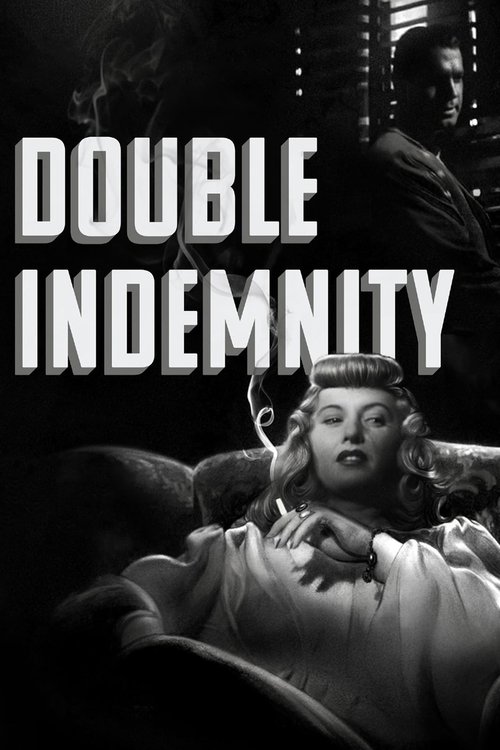
Double Indemnity
A rain-slicked noir odyssey of desire and deceit, where shadows cling like guilt and every whisper smells of honeysuckle and murder.
Double Indemnity
Double Indemnity

"It's love and murder at first sight!"

06 July 1944 United States of America 107 min ⭐ 8.1 (1,907)
Director: Billy Wilder
Cast: Fred MacMurray, Barbara Stanwyck, Edward G. Robinson, Porter Hall, Jean Heather
Crime Thriller
Greed and Moral Corruption The Femme Fatale and Seduction Deceit and Betrayal Fate and Fatalism
Budget: $927,262
Box Office: $2,500,000

Double Indemnity - Ending Explained

⚠️ Spoiler Analysis

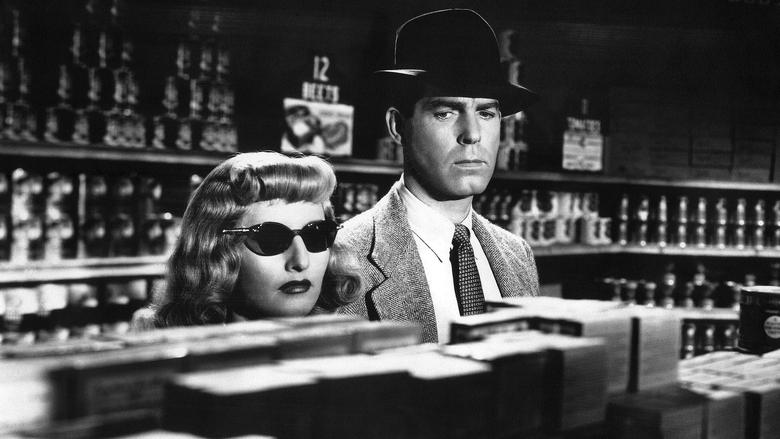
The central twist of "Double Indemnity" is not a last-minute reveal but a slow-burning realization for Walter Neff: he was never Phyllis's partner, only her pawn. After they successfully murder her husband, their relationship begins to fray. The first major turn is the revelation that Phyllis was previously a nurse suspected of killing her first husband's wife. Walter then discovers that Phyllis has been secretly seeing Lola's hot-tempered boyfriend, Nino Zachetti, grooming him as her next accomplice or potential fall guy.

The climax occurs when Walter goes to the Dietrichson house to kill Phyllis, knowing she plans to kill him. She shoots him first, but he stumbles towards her. In a moment of twisted confession, she admits she never loved him "until a minute ago, when I couldn't fire that second shot." Unmoved, Walter reveals his own betrayal: he has already set Nino up to be the prime suspect. As they embrace, he shoots her twice, killing her.

The final scene reveals the full context of the film's opening. Barton Keyes arrives at the office to find the mortally wounded Walter. Walter tries to flee but collapses. In their final exchange, Keyes tells Walter he knew he was the culprit, saying he was "closer than that" when Walter guessed the killer was across the desk. As Walter lies dying, Keyes lights his cigarette, a final act of friendship and a somber conclusion to their tragic story. The entire film is a confession, and the ending confirms that for all his cleverness, Walter was doomed from the moment he met Phyllis.

Alternative Interpretations

While the most common interpretation sees Walter Neff as a victim ensnared by the manipulative Phyllis, an alternative reading suggests Neff is a more active participant in his own downfall, perhaps even the primary architect. This perspective argues that Phyllis merely provides the opportunity for a crime Neff has subconsciously desired to commit for years. His confession reveals a long-standing fascination with beating the insurance system from the inside. In this light, Phyllis is less of a puppeteer and more of a catalyst, unleashing a darkness that was already latent within Walter.

Another interpretation focuses on the homoerotic subtext in the relationship between Walter and Barton Keyes. Their deep bond, mutual respect, and emotional intimacy—culminating in Walter's dying declaration, "I love you, too"—can be seen as the film's central relationship. From this perspective, Phyllis acts as the disruptive force, a destructive female presence that comes between the two men. Walter's crime is not just a betrayal of the company, but a profound personal betrayal of Keyes, and his death in Keyes's presence is a tragic, intimate reconciliation.