"It's love and murder at first sight!"
Double Indemnity - Symbolism & Philosophy
Symbols & Motifs
Venetian Blinds
The iconic use of shadows cast by Venetian blinds symbolizes the moral ambiguity and entrapment of the characters. The striped shadows create a visual metaphor for prison bars, suggesting that Walter and Phyllis are prisoners of their own scheme long before they are caught. The interplay of light and shadow reflects their divided natures and the dark, hidden aspects of their personalities.
This visual motif is used repeatedly in key scenes, particularly in Walter's apartment and the Dietrichson home. The shadows fall across the characters' faces and bodies, visually segmenting them and highlighting the fractured, duplicitous nature of their lives.
Phyllis's Anklet
The cheap, gold anklet Phyllis wears is a symbol of her seductive power and her underlying phoniness. It's the first thing that catches Walter's eye, representing the bait in her trap. It signifies a certain kind of dangerous, alluring femininity that is both enticing and a warning of the moral corruption that lies beneath her polished exterior.
The camera focuses on the anklet when Walter first meets Phyllis as she stands at the top of the stairs, clad only in a towel. This moment establishes her as the temptress and marks the beginning of Walter's infatuation and subsequent downfall.
The Dictaphone
Walter's confession into the Dictaphone symbolizes a desperate need for absolution and a final, futile attempt to control the narrative of his downfall. It frames the entire story as a memory, emphasizing the fatalism of the plot. By recording his story, he is both documenting his crime and acknowledging his inevitable end, turning his personal tragedy into a formal record.
The film opens and closes with Walter in his office, speaking into the Dictaphone. This framing device establishes the flashback structure and immediately informs the audience that the plan has failed, creating a sense of impending doom that hangs over the entire film.
The Supermarket
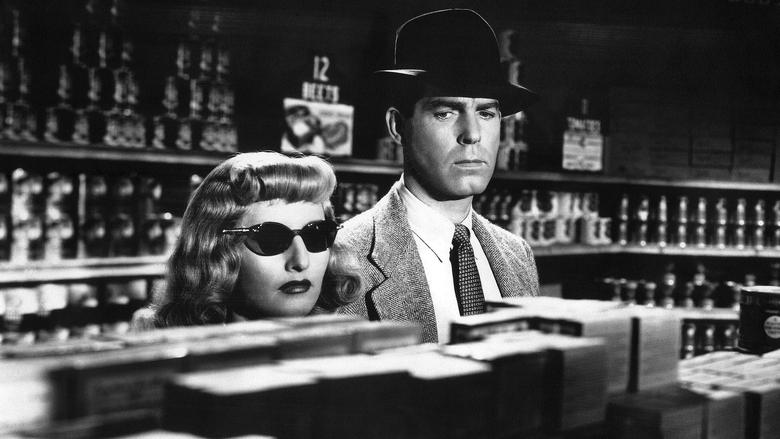
The clandestine meetings between Walter and Phyllis in a busy supermarket symbolize the transactional and mundane nature of their murderous plot. By discussing their dark plans amidst the bright, ordinary setting of a grocery store, the film juxtaposes the horrific nature of their crime with the banality of everyday life, suggesting that evil can lurk beneath the most commonplace surfaces.
Walter and Phyllis meet secretly in the aisles of a local supermarket to exchange information and plan their next moves. The stark lighting and public setting of these meetings create a tense and unsettling atmosphere, highlighting the risk and paranoia inherent in their conspiracy.
Philosophical Questions
Are ordinary people inherently capable of great evil?
The film explores this question through its protagonist, Walter Neff. He is not a hardened criminal but an ordinary, successful salesman. His descent into murder is portrayed as a gradual slide, initiated by temptation and fueled by his own ego. The film suggests that the capacity for evil is not limited to societal outliers but may lie dormant in anyone, waiting for the right combination of circumstances—lust, greed, and opportunity—to be unleashed. It challenges the audience to consider the fragility of their own moral foundations.
Can a relationship built on deceit ever result in genuine connection?
"Double Indemnity" answers this with a resounding no. The partnership between Walter and Phyllis is transactional from the start, based on mutual exploitation. While they share a powerful physical attraction, their bond is ultimately hollow. As soon as pressure is applied, it shatters into paranoia and betrayal. The film argues that without trust and honesty, any form of relationship, whether romantic or criminal, is doomed to self-destruct.
Is there such a thing as a 'perfect crime'?
Walter Neff is obsessed with this idea, believing his insider knowledge gives him the ability to pull it off. The film systematically deconstructs this fantasy. It shows how unforeseen variables, human error, and uncontrollable emotions inevitably lead to mistakes. More profoundly, it suggests that even if the crime isn't discovered by the authorities, the psychological toll—the guilt, suspicion, and paranoia—creates a prison from which the criminals cannot escape, making the notion of a 'perfect' outcome an illusion.
Core Meaning
At its core, "Double Indemnity" is a cynical and cautionary tale about the corrupting influence of greed and lust. Director Billy Wilder paints a bleak picture of the American Dream, suggesting that beneath the veneer of suburban respectability lies a dark potential for moral decay. The film explores the idea that ordinary people, when faced with overwhelming temptation, are capable of extraordinary evil. It's a powerful critique of a society where money and desire can eclipse morality, leading individuals down a path of self-destruction from which there is no return. The narrative serves as a stark warning that the perfect crime is a fallacy, and that betrayal is the inevitable consequence of a partnership founded on deceit.