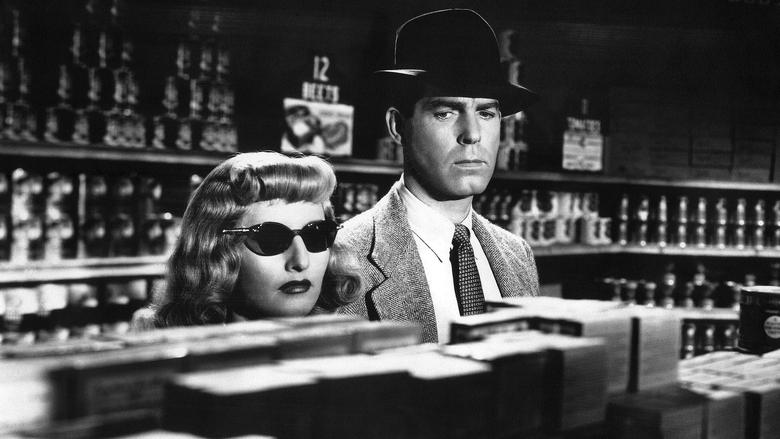
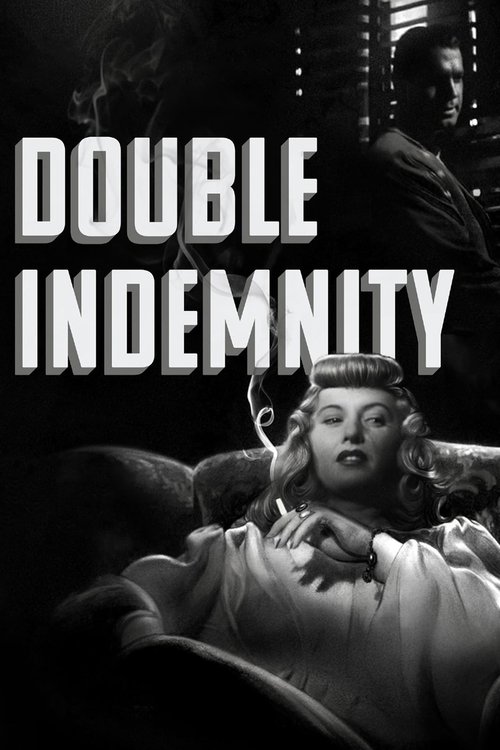
"It's love and murder at first sight!"
Director: Billy Wilder
Cast: Fred MacMurray, Barbara Stanwyck, Edward G. Robinson, Porter Hall, Jean Heather
Double Indemnity — Movie Quotes
Memorable Quotes
I killed him for money and for a woman, and I didn't get the money and I didn't get the woman.
Context
This is one of the first lines Walter speaks into the Dictaphone at the beginning of the film, immediately after stating his name and occupation. He is bleeding from a gunshot wound and knows he is dying, framing the entire story as a confession of a doomed man.
Meaning
This line, spoken in Walter's opening confession, encapsulates the utter failure and futility of his criminal endeavor. It's a stark, cynical summary of the entire plot, highlighting the tragic irony that he sacrificed his life and soul for rewards he would never obtain. It perfectly sets the film's bleak, fatalistic tone.
Yes, I killed him. I killed him for money - and a woman - and I didn't get the money and I didn't get the woman. Pretty, isn't it?
Context
Walter says this to Barton Keyes in the final scene, after Keyes has found him dying in the office. It is his final, verbal confession to his friend, summarizing the pathetic outcome of his life's greatest mistake.
Meaning
A slight variation of the opening line, this quote is delivered with a heavy dose of sarcasm and self-loathing at the film's climax. The addition of "Pretty, isn't it?" underscores his complete disillusionment and the grotesque absurdity of his situation. It's a bitter acknowledgment of how his 'perfect' plan has collapsed into a meaningless tragedy.
How could I have known that murder can sometimes smell like honeysuckle?
Context
Walter reflects on his first visit to the Dietrichson house. The memory of the honeysuckle smell is tied directly to his first encounter with Phyllis, the moment his descent began.
Meaning
This poetic line from Walter's narration juxtaposes the sweet, ordinary scent of honeysuckle with the horrific act of murder. It symbolizes his initial naivete and how beauty and innocence can mask deadly intentions. It captures the moment he was drawn into a dark world that was deceptively alluring on the surface.
We're both rotten.
Context
During a tense meeting, Walter confronts Phyllis with the knowledge that she has been seeing another man, Nino Zachetti. He realizes the full extent of her deception and their shared moral bankruptcy.
Meaning
This is a moment of stark realization for Walter. After Phyllis admits she was using him, he equates them both, acknowledging his own corruption. However, Phyllis's chilling reply, "Only you're a little more rotten," reveals her complete lack of a moral compass, as she coolly assesses their degrees of depravity.
I love you, too.
Context
After a tense conversation in Walter's office, Keyes berates him before storming out. Walter's quiet reply is delivered after Keyes has left, revealing his true feelings for the man he is actively deceiving. He repeats the sentiment in the film's final moments.
Meaning
This is Walter's poignant, ironic reply to Keyes's typically gruff dismissal. Beneath the surface, it reveals the genuine, albeit complicated, affection Walter feels for his friend and mentor. The line becomes tragic in the final scene when Keyes's actions prove his own deep-seated loyalty and friendship, a loyalty Walter betrayed.
Explore More About This Movie
Dive deeper into specific aspects of the movie with our detailed analysis pages