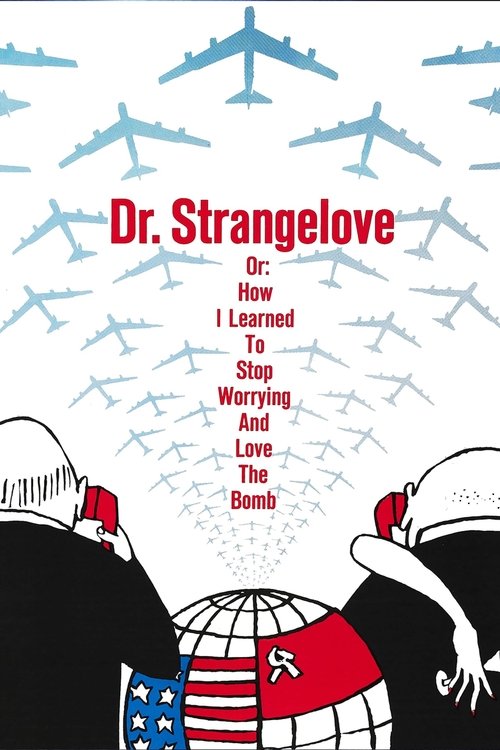
Dr. Strangelove or: How I Learned to Stop Worrying and Love the Bomb
A darkly comedic ballet of mutually assured destruction, where Cold War paranoia waltzes with absurd incompetence towards a blinding, inevitable atomic finale.
Dr. Strangelove or: How I Learned to Stop Worrying and Love the Bomb

"The hot-line suspense comedy."

29 January 1964 United Kingdom 95 min ⭐ 8.1 (5,899)
Director: Stanley Kubrick
Cast: Peter Sellers, George C. Scott, Sterling Hayden, Keenan Wynn, Slim Pickens
War Comedy
The Absurdity of War and Deterrence Human Fallibility and Technological Overreach Sex and Death Critique of the Military-Industrial Complex
Budget: $1,800,000
Box Office: $9,500,000

Dr. Strangelove or: How I Learned to Stop Worrying and Love the Bomb - Ending Explained

⚠️ Spoiler Analysis

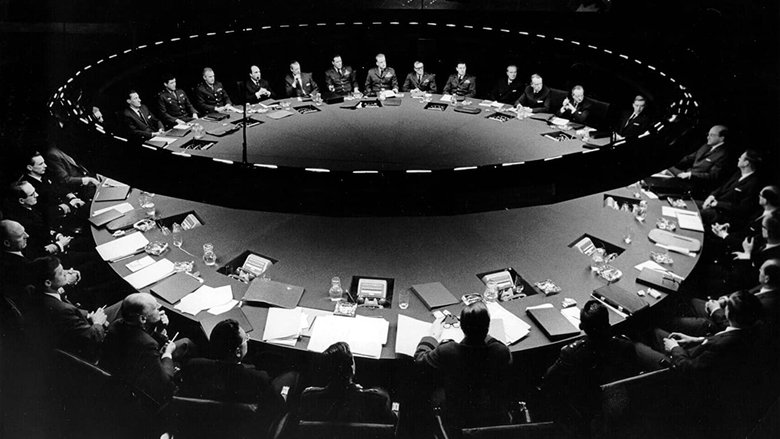
The entire plot of "Dr. Strangelove" is a slow, inevitable march towards a foregone conclusion: the end of the world. The central twist is not a single event, but the gradual realization by the characters and the audience that there is no way to stop the catastrophe. The critical turning point comes with the revelation of the Soviet's secret "Doomsday Machine," a device that will automatically trigger a worldwide nuclear holocaust if the USSR is attacked. This nullifies all of the frantic efforts in the War Room to recall the bombers or mitigate the damage. The point of no return is sealed when General Ripper commits suicide, taking the only recall code for the bombers with him.

The film's climax is twofold. First, Major T. J. "King" Kong's B-52 bomber, its communication systems damaged, successfully reaches its target. When the bomb bay doors malfunction, Kong manually releases the bomb, riding it down to its destination in a now-iconic, rodeo-like display of phallic triumphalism. This act triggers the Doomsday Machine. The second part of the climax occurs in the War Room. As the reality of their doom sinks in, Dr. Strangelove enthusiastically outlines a plan for humanity's survival, which involves a select group of elites living underground in mineshafts with a high female-to-male ratio for repopulation. His cold, eugenicist excitement culminates in him miraculously rising from his wheelchair and shouting "Mein Führer, I can walk!" This final line reveals the ultimate hidden meaning: the apocalypse is not just a failure of systems, but a horrifying rebirth of humanity's most monstrous, fascistic ideologies. The film then cuts to a montage of real nuclear explosions set to the ironically optimistic Vera Lynn song "We'll Meet Again," confirming that the Doomsday Machine has been activated and all life on Earth is being extinguished.

Alternative Interpretations

While the film's primary interpretation is a straightforward satire of Cold War politics, some alternative readings exist. One perspective views the film as a darker allegory about the inherent self-destructive nature of humanity, with the nuclear holocaust serving as a metaphor for a species-wide death drive. Dr. Strangelove's final, triumphant cry of "Mein Führer, I can walk!" can be interpreted not just as a resurgence of Nazism, but as the ultimate victory of humanity's most destructive and irrational impulses over reason and survival.

Another interpretation focuses on the film as a critique of masculinity. The male characters are almost all driven by ego, sexual anxiety (Ripper's impotence), and a phallic obsession with weaponry. From this viewpoint, the end of the world is the ultimate, tragic outcome of a patriarchal system that equates power with destructive capability. The proposed post-apocalyptic breeding program, with a 10:1 female-to-male ratio, is the final, absurd expression of this toxic masculinity, reducing women to a mere tool for repopulation in a world destroyed by men.